Representative Smith Ely
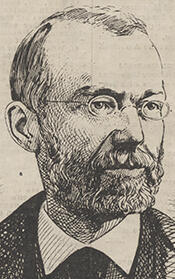
Here you will find contact information for Representative Smith Ely, including email address, phone number, and mailing address.
| Name | Smith Ely |
| Position | Representative |
| State | New York |
| District | 7 |
| Party | Democratic |
| Status | Former Representative |
| Term Start | March 4, 1871 |
| Term End | March 3, 1877 |
| Terms Served | 2 |
| Born | April 17, 1825 |
| Gender | Male |
| Bioguide ID | E000167 |
About Representative Smith Ely
Smith Ely Jr. (April 17, 1825 – July 1, 1911) was an American politician, the 83rd Mayor of New York City, and a member of the United States House of Representatives from New York in the 19th century. A Democrat, he served as a Representative from New York in the United States Congress from 1871 to 1877, contributing to the legislative process during two terms in office and representing the interests of his constituents during a significant period in American history.
Born on April 17, 1825, Ely came of age in a rapidly expanding New York, a setting that would shape his later public career. Details of his early family life and upbringing are not extensively documented in the surviving public record, but his subsequent professional and political trajectory indicates that he benefited from the educational and commercial opportunities available in the state during the mid-19th century. His early years coincided with the growth of New York City as a commercial and political center, a development that would frame much of his later work in municipal and national affairs.
Ely received a formal education that prepared him for a career in law and public life, reflecting the typical path of many 19th-century American officeholders. He studied in New York institutions and pursued legal training, gaining admission to the bar and entering practice. This legal background provided him with familiarity with statutory interpretation, municipal regulation, and the broader framework of state and federal law, all of which informed his later service in both local and national government. His professional activities before entering Congress helped establish his reputation as a capable and informed public figure within Democratic Party circles.
By the time of his election to the United States House of Representatives, Ely had become an established figure in New York politics. A member of the Democratic Party, he was elected as a Representative from New York and served in Congress from 1871 to 1877. His tenure in the House of Representatives spanned two terms and took place during the Reconstruction era and its immediate aftermath, a period marked by debates over federal authority, civil rights, economic policy, and the reintegration of the Southern states. In this context, Ely participated in the democratic process at the national level, contributing to legislative deliberations and representing the concerns of his New York constituents on issues of commerce, urban development, and governance.
Ely’s congressional service coincided with significant changes in both national politics and the life of New York City. As a Representative, he was part of a legislative body grappling with questions of industrial growth, financial stability, and the evolving role of the federal government. His work in Congress helped solidify his standing within the Democratic Party and positioned him for subsequent leadership roles in municipal government. The experience he gained in national affairs, including committee work and engagement with federal legislation, would later inform his approach to the complex administrative and political challenges of governing New York City.
Following his service in Congress, Ely continued his public career at the local level and was elected the 83rd Mayor of New York City. As mayor, he brought to the office the perspective of a former national legislator, applying his understanding of law and public administration to the management of a rapidly growing metropolis. His mayoralty placed him at the center of urban issues such as infrastructure, public services, and municipal finance at a time when New York was emerging as a leading global city. In this role, he remained aligned with the Democratic Party and continued to participate actively in the political life of both the city and the state.
In his later years, Ely remained a figure of note in New York’s political and civic landscape, his career reflecting the intertwined nature of local and national service in the 19th century. He lived to see the transformation of the United States into a modern industrial power and of New York City into a major international center. Smith Ely Jr. died on July 1, 1911, closing a long life marked by service as a lawyer, legislator, and mayor, and leaving a record of participation in both congressional and municipal governance during a formative era in American history.