Representative Sol Bloom
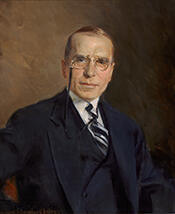
Here you will find contact information for Representative Sol Bloom, including email address, phone number, and mailing address.
| Name | Sol Bloom |
| Position | Representative |
| State | New York |
| District | 20 |
| Party | Democratic |
| Status | Former Representative |
| Term Start | December 3, 1923 |
| Term End | January 3, 1951 |
| Terms Served | 14 |
| Born | March 9, 1870 |
| Gender | Male |
| Bioguide ID | B000565 |
About Representative Sol Bloom
Sol Bloom (March 9, 1870 – March 7, 1949) was an American songwriter, entertainment impresario, and Democratic politician who represented New York in the United States House of Representatives from 1923 until his death in 1949. Over the course of 14 consecutive terms, he became a prominent figure in national politics, particularly in the field of foreign affairs, and played a significant role in shaping U.S. policy during the Great Depression, World War II, and the early Cold War.
Bloom was born on March 9, 1870, in Pekin, Illinois, to Polish-Jewish immigrant parents. When he was still a child, his family moved to San Francisco, California, where he grew up. In his early teens he was introduced to theater production and soon became involved in managing theatrical enterprises. By his youth he was managing theaters and staging boxing matches, including bouts featuring the famed heavyweight “Gentleman Jim” Corbett. Ambitious for more spectacular attractions, Bloom traveled to Europe and attended the Exposition Universelle of 1889 in Paris, where he was especially impressed by the dancers and acrobats of the “Algerian Village,” a colonial exhibit that influenced his later work as an impresario. He developed an ability to converse, at least sparingly, in four or five European languages and was also adept in sign language, skills that later aided his international political work.
Bloom first achieved national prominence in 1893, at the age of 23, when he was engaged to develop and manage the mile-long Midway Plaisance at the World’s Columbian Exposition in Chicago. Initially entrusted to a Harvard anthropology professor, the Midway was soon turned over to Bloom, who transformed it into a highly successful entertainment corridor of games, concessions, and exotic exhibitions, distinct from the more formal Beaux-Arts “Court of Honor” at the fair’s center. His work was so influential that the very term “midway” entered the American lexicon as a synonym for amusement areas at fairs and carnivals. Among the attractions was the “Street in Cairo,” where the North African belly dance was popularized in the United States as the “hootchy-kootchy dance,” accompanied by a tune Bloom improvised, “The Streets of Cairo, or the Poor Little Country Maid.” Although he did not copyright the melody, it became one of the most recognizable pieces of American popular music, with lyrics that circulated widely among children. Bloom also published and promoted “Coon, Coon, Coon,” one of the most famous and commercially successful songs in the then-prevalent coon song genre. According to later accounts, including Rachel Shteir’s study of early American girlie shows, Bloom’s exotic dance enterprises at the fair earned him an income comparable to that of President Grover Cleveland.
Bloom’s success at the Columbian Exposition brought him into the orbit of Chicago politics. His role at the fair had been encouraged by Mayor Carter Harrison Sr., who was assassinated just days before the exposition closed. In the years that followed, Bloom’s stature grew in Chicago’s rough-and-tumble First Ward under the Democratic bosses “Bathhouse” John Coughlin and “Hinky Dink” Kenna. He became the Chicago branch manager for M. Witmark & Sons, then the largest sheet music publisher in the United States, and by 1896 he was publishing music under his own name. He was an innovator in music publishing, introducing photolithographs to make sheet music covers more visually appealing and marketable. In 1897 he married Evelyn Hechheimer, a composer and singer, and the couple settled in a fashionable neighborhood on South Prairie Avenue in Chicago, where he promoted himself as “Sol Bloom, the Music Man.” At the turn of the twentieth century he received, with much publicity, the first musical copyright of the new century for the song “I Wish I Was in Dixie Land Tonight” by Raymond A. Browne. The Blooms later had a daughter, Vera, who became an author and lyricist and provided the words to the tango “Jalousie.”
In 1903 Bloom moved to New York City, where he broadened his business interests. He dabbled in real estate and built a national chain of music departments in department stores, selling, among other products, Victor Talking Machines. Having originally been aligned with the Republican Party, he shifted his political allegiance to the Democratic organization Tammany Hall after establishing himself in New York. This affiliation would prove decisive for his political career. When Representative-elect Samuel Marx of New York’s 19th Congressional District died in 1922, Tammany leaders turned to Bloom as a candidate. In a district on Manhattan’s Upper West Side that was usually Republican, Bloom, drawing heavily on support from Jewish and other immigrant communities, won the special election by a narrow margin of 145 votes. He took his seat in the 68th Congress in 1923 and continued to represent the West Side of Manhattan without interruption until his death in 1949.
As a member of the House of Representatives, Bloom participated actively in the legislative process during a transformative era in American history. A Democrat, he served 14 terms and became closely associated with issues of national commemoration and foreign affairs. He oversaw the congressional celebration of the George Washington Bicentennial in 1932 and later presided over the United States Constitution Sesquicentennial Exposition in 1937. In connection with the latter, he spearheaded the writing and publication of The Story of the Constitution by the United States Constitution Sesquicentennial Commission, helping to popularize constitutional history for a broad audience. His long tenure and loyalty to party leadership elevated him within the House hierarchy, and in 1939 he became chairman of the House Committee on Foreign Affairs, a position he held until 1947 and then again in 1949. Although a confidential 1943 analysis of the committee by Isaiah Berlin for the British Foreign Office characterized Bloom’s chairmanship as a product of seniority rather than specialized expertise, and described him as “easy-going, superficial, [and] glad-handish,” Berlin also noted Bloom’s unwavering loyalty to President Franklin D. Roosevelt’s foreign policies, his strong pro-British orientation, his intense—if emotional—patriotism, and his pronounced anti-Nazi and Europe-conscious outlook as a Jewish representative elected largely by Jewish and foreign-born constituents.
Bloom’s congressional service coincided with the New Deal, World War II, and the onset of the Cold War, and he became a central figure in the formulation of U.S. foreign policy. In the critical years leading up to and during World War II, he took charge of high-priority legislation for the Roosevelt administration, including the authorization of the Lend-Lease program in 1940, which provided vital military aid to Allied nations. He helped pilot the original Lend-Lease Act through the Foreign Affairs Committee and later introduced the act extending Lend-Lease for an additional year. During and after the war, he played a key role in shepherding congressional approval of the United Nations and the United Nations Relief and Rehabilitation Administration (UNRRA), which assisted millions of displaced persons in Europe. A strong supporter of Zionism, Bloom was deeply engaged with Jewish and European issues, though his approach was often aligned with mainstream American Jewish leadership and the established Zionist movement.
Bloom’s prominence extended beyond Congress to the international stage. He served as a member of the American delegation to the 1945 San Francisco conference that created the United Nations, where he was widely credited with suggesting the opening words of the Preamble to the United Nations Charter, “We, the Peoples of the United Nations…”. In January 1946 he represented the United States at the first meeting of the UN General Assembly in London. There he successfully advocated that the new United Nations assume the financial responsibilities of the earlier United Nations Relief and Rehabilitation Administration, a victory he later described as “the supreme moment” of his life. He also took part in the 1947 Inter-American Conference for the Maintenance of Continental Peace and Security in Rio de Janeiro (the Rio Conference), which helped define postwar hemispheric security arrangements. After Republicans gained control of the House and the Foreign Affairs Committee following the 1946 elections, Bloom, though no longer chairman, worked closely with the new Republican chairman, Charles Eaton, to secure congressional approval of the Truman Doctrine and the Marshall Plan, foundational policies of early Cold War containment.
Bloom’s record during the Holocaust years reflected both his influence and the controversies surrounding American Jewish leadership. In coordination with mainstream Jewish organizations, especially World Jewish Congress leaders Stephen Wise and Nahum Goldmann, he strongly opposed and sought to obstruct the efforts of the Hillel Kook–led Emergency Committee for the Rescue of European Jewry, commonly known as the Bergson Group. In the fall of 1943 he initiated a congressional hearing to investigate Kook and his group’s rescue-oriented campaigns and their demands that the United States take more direct action to save European Jews. Shortly before Yom Kippur that year, Bloom tried to dissuade approximately 400 Orthodox rabbis from marching in Washington, D.C., to appeal directly to President Roosevelt for measures to rescue Jews still trapped in Europe, arguing, along with some progressive Jewish leaders, that the rabbis’ appearance would seem too foreign and create an unseemly spectacle. The “Rabbis’ March” proceeded nonetheless, although Roosevelt, on the advice of a Jewish adviser, declined to meet the delegation. Bloom adhered to the mainstream Zionist view that the primary solution to the Jewish catastrophe lay in opening British Mandatory Palestine to Jewish immigration, a position Stephen Wise reiterated at the congressional hearing. Kook, by contrast, advocated rescuing Jews wherever they could find refuge, not only in Palestine, and later argued that this broader rescue agenda was a key reason his group’s efforts were obstructed. Despite this opposition, sustained pressure from the Bergson Group, combined with the advocacy of Treasury Secretary Henry Morgenthau Jr. and his staff, contributed to Roosevelt’s creation of the War Refugee Board (WRB) in January 1944. According to historian David Wyman, the WRB helped save or protect close to 200,000 people, though some scholars consider this an overestimate; among its notable achievements was persuading Swedish diplomat Raoul Wallenberg to go to Budapest, where he organized large-scale rescue operations for Hungarian Jews. In 1948 Bloom urgently lobbied President Harry S. Truman to recognize the newly declared State of Israel without delay, a step Truman took that same year.
Bloom’s personal life and public image contained colorful elements that reflected his show-business origins. He remained proud of his achievements as a music publisher and impresario and continued to be associated with popular entertainment even as he rose in national politics. His wife, Evelyn Bloom, who died in 1941, was herself a composer and singer, and their daughter Vera pursued a literary and musical career. Bloom’s flair for publicity occasionally led to lighter episodes, such as a widely publicized wager with Washington Senators pitching great Walter Johnson over whether Johnson could throw a silver dollar across the Rappahannock River in Fredericksburg, Virginia. After Johnson succeeded, Bloom invoked technicalities and refused to pay the bet, an incident that added to his reputation as a showman-politician. Throughout his career he remained closely identified with New York City’s West Side, where he represented a largely Jewish and immigrant constituency and where his name would later be commemorated in a public playground.
Sol Bloom died in Washington, D.C., on March 7, 1949, at the age of 78, while still serving in Congress. His death ended a 26-year tenure in the House of Representatives that spanned from the early 1920s through the immediate post–World War II era. In recognition of his service, the Sol Bloom Playground in Manhattan was named in his honor. His papers, most of them dating from 1935 to 1949 and documenting his legislative work, foreign policy activities, and involvement with the United Nations, are preserved at the New York Public Library. Bloom’s life and career have continued to attract scholarly interest, including biographical studies of his role as one of the most influential Jewish members of Congress during the Holocaust and the formative years of the United Nations.