Representative Solomon Gilman Comstock
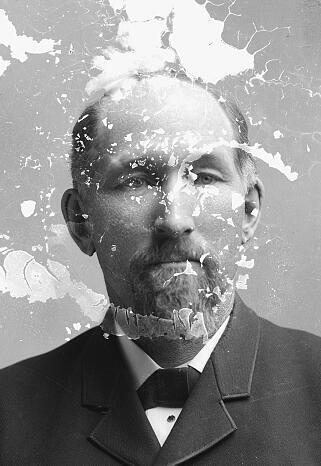
Here you will find contact information for Representative Solomon Gilman Comstock, including email address, phone number, and mailing address.
| Name | Solomon Gilman Comstock |
| Position | Representative |
| State | Minnesota |
| District | 5 |
| Party | Republican |
| Status | Former Representative |
| Term Start | December 2, 1889 |
| Term End | March 3, 1891 |
| Terms Served | 1 |
| Born | May 9, 1842 |
| Gender | Male |
| Bioguide ID | C000665 |
About Representative Solomon Gilman Comstock
Solomon Gilman Comstock (May 9, 1842 – June 3, 1933) was an American attorney, real estate developer, and Republican politician who served as a member of the United States House of Representatives for Minnesota’s 5th congressional district from 1889 to 1891. His single term in Congress took place during a significant period in American political and economic development in the late nineteenth century, during which he participated in the legislative process and represented the interests of his Minnesota constituents.
Comstock was born in Argyle, Penobscot County, Maine, on May 9, 1842. In 1845 he moved with his parents to Passadumkeag, Maine, where he was raised and attended rural schools. He pursued further education at East Corinth Academy, the Maine Wesleyan Seminary at Kents Hill, and Hampden Academy, institutions that provided him with a solid preparatory education. He then read law in Bangor, Maine, under the Honorable Samuel F. Humphrey, beginning his legal training in the traditional apprenticeship manner before seeking more formal legal study.
In 1868 Comstock continued his legal education at the University of Michigan in Ann Arbor, one of the leading law schools in the Midwest. The following year, in 1869, he moved west to Nebraska and settled in Omaha. There he was admitted to the bar in 1869 and commenced the practice of law. In 1870 he moved again, this time to Minneapolis, Minnesota, and in 1871 he relocated to the emerging railroad town of Moorhead, Minnesota. In Moorhead he initially worked as a railroad construction laborer, reflecting the frontier conditions of the region. When Clay County’s government was established in April 1872, in part in response to the killing of Slim Jim Shumway by Shang Stanton, Comstock was the only man in town with a law degree. As a result, he was appointed Clay County attorney, a position he held from 1872 to 1878, helping to organize and stabilize local legal and governmental institutions.
Comstock’s public career expanded into state politics while he continued his legal and business activities. He was elected to the Minnesota House of Representatives in 1875, 1876, 1878, and 1881, representing his district in the state legislature during a period of rapid settlement and development in western Minnesota. He then served in the Minnesota Senate from 1882 to 1888. During these years he also sought higher statewide office, running unsuccessfully for attorney general of Minnesota in 1882 and for lieutenant governor in 1884. In 1884 he retired from the active practice of law and turned his attention to the real estate business, capitalizing on the growth of Moorhead and the surrounding region.
In addition to his legislative work, Comstock played a notable role in the development of educational institutions in Minnesota. In 1882 he donated land for the Bishop Whipple School, an institution that later evolved into Concordia College in Moorhead. In 1885 he sponsored a bill and donated six acres of land to help create the Moorhead Normal School, established to train teachers and now known as Minnesota State University Moorhead. These contributions reflected his commitment to higher education and the training of teachers for the growing communities of the Upper Midwest.
Comstock was elected as a Republican to the Fifty-first Congress and served in the United States House of Representatives from March 4, 1889, to March 3, 1891, representing Minnesota’s 5th congressional district. His term coincided with the administration of President Benjamin Harrison and with major national debates over tariffs, economic policy, and western development. As a member of the House of Representatives, Solomon Gilman Comstock participated in the democratic process and contributed to the legislative work of the period while advocating for the interests of his Minnesota constituents. He was an unsuccessful candidate for reelection in 1890 to the Fifty-second Congress. Remaining active in party affairs, he served as a delegate to the Republican National Convention in 1892.
After leaving Congress, Comstock resumed and expanded his business pursuits in Moorhead. He returned to the real estate business and, in 1893, also engaged in the manufacture of farm implements, reflecting the agricultural character of the region. He continued his involvement in education as a member of the state normal school board from 1897 to 1905, helping oversee the system of teacher-training institutions in Minnesota. His influence thus extended beyond politics into the economic and educational development of the state.
On May 27, 1874, Comstock married Sarah Ann Ball in Fargo, in what was then Dakota Territory (now North Dakota). The couple had three children: Ada Louise Comstock Notestein (1876–1973), who became a prominent educator and college administrator; Jessie May Comstock (1879–1951); and George Madison Comstock (1886–1966). The family resided in Moorhead, where their home, the Historic Solomon G. Comstock House, later became a preserved historic house museum. Comstock’s prominence in the region is further reflected in the naming of Comstock, Minnesota, and Comstock Township in Marshall County, Minnesota, in his honor.
Solomon Gilman Comstock retired from active business and public life in his later years but continued to reside in Moorhead. He lived to see the continued growth of the institutions and communities he had helped to establish. He died in Moorhead, Minnesota, on June 3, 1933, at the age of ninety-one. He was buried in Prairie Home Cemetery in Moorhead, leaving a legacy as a lawyer, legislator, businessman, and civic benefactor in northwestern Minnesota.