Representative Solomon Van Vechten Van Rensselaer
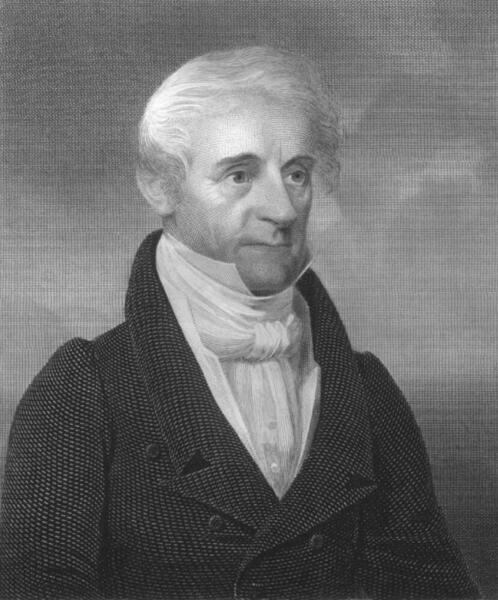
Here you will find contact information for Representative Solomon Van Vechten Van Rensselaer, including email address, phone number, and mailing address.
| Name | Solomon Van Vechten Van Rensselaer |
| Position | Representative |
| State | New York |
| District | 9 |
| Party | Federalist |
| Status | Former Representative |
| Term Start | December 6, 1819 |
| Term End | March 3, 1823 |
| Terms Served | 2 |
| Born | August 6, 1774 |
| Gender | Male |
| Bioguide ID | V000055 |
About Representative Solomon Van Vechten Van Rensselaer
Solomon van Vechten Van Rensselaer (August 9, 1774 – April 23, 1852) was a United States Representative from New York, a career military officer who served as a lieutenant colonel during the War of 1812, and postmaster of Albany for 17 years. He was born on August 9, 1774, in Greenbush, in the Province of New York, the son of Hendrick Kiliaen “Henry” Van Rensselaer (1744–1816) and Alida Bratt, members of the prominent Van Rensselaer family of the Hudson Valley. He completed his preparatory studies in East Greenbush, New York, before entering public service at a young age.
Van Rensselaer began his military career in the early national period. He was appointed a cornet in the United States Army in 1792, promoted to captain in July 1793, and advanced to major in January 1799. He was honorably discharged from the Army in June 1800. Soon thereafter he entered New York State service and became a key figure in the state militia establishment. He served as Adjutant General of New York from 1801 to 1809, again from 1810 to 1811, and once more from 1813 to 1821, overseeing the organization and readiness of the state’s military forces. During the War of 1812 he served as a lieutenant colonel of the New York State Militia, participating in the defense of the northern frontier during a critical period in the young nation’s history.
In January 1797, Van Rensselaer married his cousin, Harriet “Arriet” Van Rensselaer (1775–1840), the daughter of Philip Kiliaen Van Rensselaer (1747–1798), granddaughter of Robert Sanders, and the owner of the Cherry Hill mansion in Albany. Their marriage linked two branches of an influential New York family and established Cherry Hill as the center of their domestic and social life. Of their many children, only five daughters and one son survived to maturity. Their surviving children included Adaline “Alida” Van Rensselaer (1797–1858); Elizabeth Van Rensselaer (1799–1835), who married Richard Van Rensselaer (1797–1880); Rensselaer Van Rensselaer (1802–1850), who married Mary Euphemia Forman in 1840; Margarita Van Rensselaer (1810–1880); Harriet Maria Van Rensselaer (1816–1896), who married Dr. Peter Elmendorf (1815–1881); and Catharine Visscher Van Rensselaer (1817–1891), who married the Rev. Samuel W. Bonney (1815–1864) in 1856. Several of their children died young, including Van Vechten Van Rensselaer (1806–1812), Rufus King Van Rensselaer (1809–1809), and Stephen Van Rensselaer (1812–1813). As his sons all predeceased him, the Cherry Hill estate ultimately passed to his daughter Harriet Maria Elmendorf.
Van Rensselaer entered national politics as a member of the Federalist Party. Representing New York, he was elected as a Federalist to the Sixteenth and Seventeenth Congresses and served in the U.S. House of Representatives from March 4, 1819, to January 14, 1822. During his two terms in office he participated in the legislative process at a time of significant national development, representing the interests of his New York constituents as the country confronted issues of postwar expansion, internal improvements, and sectional tensions. He resigned his seat in Congress on January 14, 1822, returning to state and local responsibilities after nearly three years of federal legislative service.
Following his resignation from Congress, Van Rensselaer assumed a long‑tenured role in federal administration at the local level. He was appointed postmaster of Albany, New York, in 1822 and held that position until 1839, overseeing the city’s postal operations during a period of rapid growth and increasing commercial activity. He again served as postmaster from 1841 to 1843, bringing his total service in that office to 17 years. His prominence in state affairs was further reflected in his selection as a delegate from New York at the opening of the Erie Canal on November 4, 1825, an event that symbolized New York’s emergence as a commercial hub and that had lasting economic and political consequences for the state and the nation.
Like many members of New York’s landed elite in the late eighteenth and early nineteenth centuries, Van Rensselaer was a slaveholder. He owned slaves in Albany, and although he opposed the extension of slavery into newly acquired territories, he continued to hold enslaved people until New York’s gradual emancipation law ended legal slavery in the state in 1827. His life thus reflected both the entrenched nature of slavery in early New York and the gradual legal and political movement toward its abolition in the northern states.
Solomon van Vechten Van Rensselaer died near Albany on April 23, 1852, at the age of 77. He was interred in the North Dutch Church Cemetery in Albany and was later reinterred in Albany Rural Cemetery, the principal burial ground for many of the region’s leading families. His longtime home in Albany, the Cherry Hill mansion, was listed on the National Register of Historic Places in 1971. With his sons having predeceased him, Cherry Hill and much of his personal legacy within the family passed through his daughter Harriet Maria Elmendorf, ensuring the continuation of the Van Rensselaer presence in the social and historical life of Albany.