Representative Sonny Bono
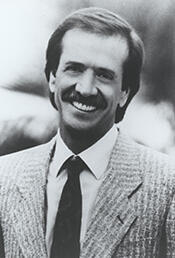
Here you will find contact information for Representative Sonny Bono, including email address, phone number, and mailing address.
| Name | Sonny Bono |
| Position | Representative |
| State | California |
| District | 44 |
| Party | Republican |
| Status | Former Representative |
| Term Start | January 4, 1995 |
| Term End | January 3, 1999 |
| Terms Served | 2 |
| Born | February 16, 1935 |
| Gender | Male |
| Bioguide ID | B000622 |
About Representative Sonny Bono
Salvatore Phillip “Sonny” Bono (February 16, 1935 – January 5, 1998) was an American singer, songwriter, actor, and Republican politician who became a United States Representative from California. He was born in Detroit, Michigan, the son of Santo Bono, who was born in Montelepre, Palermo, Italy, and Zena “Jean” (née DiMercurio) Bono, who was also of Italian descent. The youngest of three children, with two sisters, Fran and Betty, he acquired the nickname “Sonny” from his mother, who affectionately called him “Sono,” a term that evolved over time. When he was seven, the family moved to Inglewood, California, and his parents divorced soon afterward. Bono decided early in life to pursue a career in music, began writing songs as a teenager, and at age sixteen wrote “Koko Joe,” which was recorded by Don and Dewey in 1958 and later covered by several other artists, including the Righteous Brothers.
Bono attended Inglewood High School but did not graduate, leaving school to focus on his ambitions in the music industry. During these early years he supported himself with a variety of jobs, including work as a waiter, truck driver, construction laborer, and butcher’s helper, while continuing to write songs and seek opportunities in the recording business. His determination to enter the music field led him to Specialty Records, where he began his professional career as a songwriter. There, his song “Things You Do to Me” was recorded by Sam Cooke, giving him an early credential in the industry.
In the early 1960s, Bono went on to work for record producer Phil Spector as a promotion man, percussionist, and general assistant. Within Spector’s production team he co-wrote “Needles and Pins” with Jack Nitzsche, a song that would become widely known through later recordings. Bono’s greatest commercial success in music came through his partnership with his second wife, Cher, with whom he formed the duo Sonny & Cher in the mid-1960s. He wrote, arranged, and produced many of their hit records, including the chart-topping single “I Got You Babe” and the enduring hit “The Beat Goes On.” He also played a major role in Cher’s early solo career, writing and producing successful singles such as “Bang Bang (My Baby Shot Me Down)” and “You Better Sit Down Kids.” Under a pseudonym, he co-wrote “She Said Yeah,” later covered by the Rolling Stones on their 1965 album “Out of Our Heads.” As a solo artist, his single “Laugh at Me” reached No. 10 on the Billboard Hot 100 in 1965, and his follow-up single “The Revolution Kind” reached No. 70 that same year; his solo album “Inner Views” was released in 1967. Bono remains the only member of Congress to have scored a number-one pop single on the U.S. Billboard Hot 100 chart.
Bono’s entertainment career extended into television and film. With Cher, he starred in the CBS variety program “The Sonny & Cher Comedy Hour,” which ran from 1971 to 1974 and helped cement their status as major television personalities. Around the time the show was developed, he grew the distinctive mustache he would wear for the rest of his life. After their separation, he headlined his own series, “The Sonny Comedy Revue,” on ABC in 1974. The duo, though divorced, reunited professionally for “The Sonny and Cher Show,” which aired from 1976 to 1977. Their final appearance together occurred on “Late Night with David Letterman” on November 13, 1987, where they performed “I Got You Babe.” Bono also pursued acting roles, appearing in television series such as “The Man from U.N.C.L.E.” (with Cher), “Fantasy Island,” “Charlie’s Angels,” “The Love Boat,” “The Six Million Dollar Man,” and “CHiPs.” He played a rock star in the 1975 television film “Murder on Flight 502,” appeared in the 1980 miniseries “Top of the Hill,” and portrayed mad bomber Joe Selucci in “Airplane II: The Sequel” (1982) and Peter Dickinson in the horror film “Troll” (1986). In John Waters’s film “Hairspray” (1988), he played racist entrepreneur Franklin Von Tussle. While serving as mayor, he appeared as the Mayor of Palm Springs in several episodes of the series “P.S. I Luv U” (1991–1992), and he later appeared as Mayor Frank Berkowitz in a 1993 episode of “Lois & Clark: The New Adventures of Superman.” He also made a cameo as himself in the film “First Kid” (1996). Bono guest-starred as himself on “The Golden Girls” episode “Mrs. George Devereaux,” originally broadcast on November 17, 1990, in which he appeared in a dream sequence vying for Dorothy Zbornak’s affection. A portrait of Bono appeared in the VeggieTales segment “I Love My Lips” in the episode “Dave and the Giant Pickle.” In recognition of his musical legacy, he was inducted into the Michigan Rock and Roll Legends Hall of Fame in 2011.
Bono’s entry into politics stemmed from his frustration with local government bureaucracy when he attempted to open a restaurant in Palm Springs, California. This experience led him to seek public office, and he successfully ran for mayor of Palm Springs, serving as the city’s 16th mayor from 1988 to 1992. As mayor, he was instrumental in founding the Palm Springs International Film Festival, which grew into a major cultural event and is held annually in his memory. In 1992, he sought the Republican nomination for the United States Senate from California but lost the primary to Bruce Herschensohn, who was subsequently defeated in the general election by Democrat Barbara Boxer. Bono and Herschensohn became close friends after the campaign. In 1994, Bono initially considered a campaign for lieutenant governor of California but shifted his focus to the U.S. House of Representatives when Republican Representative Al McCandless announced his retirement.
Sonny Bono served as a Representative from California in the United States Congress from January 3, 1995, until his death on January 5, 1998, representing California’s 44th congressional district. A member of the Republican Party, he contributed to the legislative process during two terms in office and participated actively in the democratic process on behalf of his constituents during a significant period in American political life. In the House of Representatives, he was one of twelve co-sponsors of legislation to extend the length of terms for copyright protection. Although the House bill he co-sponsored did not come to a vote in the Senate, a similar Senate measure passed after his death and became the United States Copyright Term Extension Act of 1998, which extended copyright terms by twenty years. The act was named in his honor and is commonly known as the Sonny Bono Copyright Term Extension Act; his widow and congressional successor, Mary Bono, was one of its original sponsors. The law has also been referred to derisively as the “Mickey Mouse Protection Act.” In Congress, Bono also championed environmental and regional issues, notably advocating for the restoration of the Salton Sea in southeastern California and bringing national attention to the ecological challenges facing the lake. In 1998, Speaker of the House Newt Gingrich appeared at the shore of the Salton Sea to support Bono’s efforts. Journalists David Maraniss and Michael Weisskopf later credited Bono with being among the first to recognize Gingrich’s public relations difficulties in 1995, drawing on his own experience as a celebrity to advise the Speaker that he needed to adapt to the different media dynamics facing public figures with celebrity status.
In his personal life, Bono was married four times and had four children. He married his first wife, Donna Rankin, on November 3, 1954; their daughter Christine (“Christy”) was born on June 24, 1958, and the couple divorced in 1962. In 1964, he and Cheryl Sarkisian, later known as Cher, had an unofficial wedding and legally married in 1969 after the birth of their daughter, Chastity Sun Bono, who later, as a trans man, legally changed his name to Chaz Salvatore Bono. Their romantic relationship ended in 1972, but they remained married for several years to preserve their public image. The marriage deteriorated amid Bono’s infidelity and controlling behavior, and by 1973 they were still living in the same home while dating other people. After competing legal filings in 1974 and a contentious custody dispute, their divorce was finalized in 1975. Despite the turmoil, they eventually co-parented amicably, and Bono later apologized to Cher for his conduct during their marriage. On New Year’s Eve 1981, he married actress and model Susie Coelho; they divorced in 1984. In 1986, he married Mary Whitaker, with whom he had two children: son Chesare Elan, born in 1988, and daughter Chianna Maria, born in 1991. Mary Bono was widowed by his death and subsequently succeeded him in Congress. Bono was also a godparent of Anthony Kiedis, lead singer of the Red Hot Chili Peppers, reflecting his long-standing friendship with Kiedis’s father, Blackie Dammett.
Bono’s religious and spiritual affiliations included an interest in Scientology, which he pursued in part under the influence of actress Mimi Rogers. He and his wife Mary both took Scientology courses, but he identified as a Roman Catholic on official documents, campaign materials, and websites. After his death, Mary Bono stated that he had attempted to distance himself from the Church of Scientology and that the organization had made it difficult for him to do so; the Church denied any estrangement. Bono was also known for his advocacy on behalf of the Salton Sea beyond his congressional work; a park at the Sea was named in his honor, and he appeared in the 2005 documentary “Plagues & Pleasures on the Salton Sea,” narrated by John Waters, which examined the lives of residents in communities such as Bombay Beach, Niland, and Salton City and the environmental problems affecting the region.
Sonny Bono died on January 5, 1998, in a skiing accident near South Lake Tahoe, California, while still serving in the U.S. House of Representatives. His death brought an abrupt end to a public career that had spanned popular music, television, local government, and national office. In the months following his passing, Congress enacted the copyright term extension legislation that would bear his name, and his widow, Mary Bono, was elected to fill his vacant seat in California’s 44th congressional district.