Senator Spark M. Matsunaga
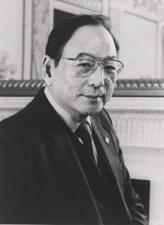
Here you will find contact information for Senator Spark M. Matsunaga, including email address, phone number, and mailing address.
| Name | Spark M. Matsunaga |
| Position | Senator |
| State | Hawaii |
| Party | Democratic |
| Status | Former Representative |
| Term Start | January 9, 1963 |
| Term End | January 3, 1991 |
| Terms Served | 14 |
| Born | October 8, 1916 |
| Gender | Male |
| Bioguide ID | M000250 |
About Senator Spark M. Matsunaga
Spark Masayuki Matsunaga (October 8, 1916 – April 15, 1990) was an American politician, attorney, and decorated World War II veteran who represented Hawaii in the United States Congress from 1963 until his death in 1990. A member of the Democratic Party, he served in the U.S. House of Representatives and later as United States Senator for Hawaii from 1977 to 1990. Over the course of 10 terms in Congress, he became known for his advocacy of peace initiatives, his leadership in securing reparations for Japanese Americans interned during World War II, and his efforts to elevate the arts and culture through the creation of the position of United States Poet Laureate.
Born Masayuki Matsunaga on October 8, 1916, in Hanapepe on the island of Kauaʻi in the Territory of Hawaii, Matsunaga was the son of Japanese immigrants who had come to the United States from Japan. He grew up in a Japanese-American community and, at the age of eight, acquired the nickname “Sparky” after Spark Plug, a character in the comic strip Barney Google and Snuffy Smith; the name “Spark” remained with him throughout his life. He attended local schools in Hawaii and went on to the University of Hawaiʻi, where he received a bachelor’s degree with honors in education in 1941, shortly before the United States entered World War II.
Following the Japanese attack on Pearl Harbor on December 7, 1941, Matsunaga, an American of Japanese ancestry (AJA) serving in the Hawaii National Guard, became part of a reorganization of AJA soldiers into a new Army unit known as the Hawaiian Provisional Infantry Battalion. On June 5, 1942, the battalion departed Honolulu Harbor aboard the U.S. Army transport ship Maui, and on June 12, 1942, just before arriving in Oakland, California, the unit learned it had been redesignated the 100th Infantry Battalion (Separate), a unit independent of any regiment. The battalion adopted “Remember Pearl Harbor” as its motto. The exemplary training record of the 100th Infantry Battalion at Camp McCoy, together with the service of the Varsity Victory Volunteers in Hawaiʻi, led the War Department to authorize the formation of the 442nd Regimental Combat Team on February 1, 1943. Matsunaga served with the renowned 442nd Regimental Combat Team in the European Theater and was twice wounded in battle in Italy. He was released from the Army with the rank of captain, and his wartime experiences deeply informed his later commitment to peace and civil rights.
After the war, Matsunaga pursued legal studies on the mainland. He enrolled at Harvard Law School and graduated in 1951, earning his law degree and entering the legal profession. Returning to Hawaii, he worked as a prosecutor and entered public life in the islands’ territorial government. He served as a member of the Hawaii territorial House of Representatives, gaining experience in legislative procedure and building a reputation as a capable and energetic lawmaker during the years leading up to Hawaii’s admission as a state in 1959.
With statehood and the reorganization of Hawaii’s political institutions, Matsunaga moved onto the national stage. After Daniel Inouye was elected to the United States Senate, Matsunaga succeeded him as Hawaii’s sole member of the U.S. House of Representatives, beginning his congressional service in 1963. When Hawaii was divided into congressional districts for the 1970 elections, he was elected to represent Hawaii’s 1st congressional district, comprising Honolulu’s inner ring, and he held that seat until 1976. During his years in the House, he participated actively in the legislative process during a significant period in American history marked by the civil rights movement, the Vietnam War, and major social and economic changes, consistently representing the interests of his Hawaii constituents.
In 1976, with Republican Senator Hiram Fong retiring, Matsunaga sought a seat in the United States Senate. He won the Democratic Party nomination by defeating his House colleague, Representative Patsy Mink, and then prevailed in the general election over former Republican governor William Quinn. He took office as United States Senator for Hawaii in 1977 and served in that capacity until his death in 1990. As a senator, Matsunaga became widely recognized for his legislative initiatives promoting peace and reconciliation. In 1984, after many years of effort, Congress passed a bill he championed establishing the United States Institute of Peace. He also spent 22 years introducing legislation to create the position of United States Poet Laureate; in 1985, Congress finally passed a bill authorizing the position of Poet Laureate Consultant in Poetry to the Library of Congress. Matsunaga was instrumental in the passage of landmark redress legislation for people of Japanese descent who had been detained in the United States during World War II. The measure, which he strongly supported, provided $1.25 billion in reparations, including payments of $20,000 to each surviving detainee, and contained a formal apology from the United States government.
During his Senate tenure, Matsunaga participated in numerous major confirmation and policy votes. In matters concerning the Supreme Court, he voted to confirm Sandra Day O’Connor, Antonin Scalia, and Anthony Kennedy, all of whom were confirmed unanimously by the Senate. He opposed the nomination of William Rehnquist to be Chief Justice of the United States and voted against the nomination of Robert Bork to be associate justice; Bork’s nomination was ultimately rejected by a 58–42 vote. In 1989, Matsunaga also voted against President George H. W. Bush’s nomination of John Tower to be Secretary of Defense amid concerns over Tower’s alleged alcohol abuse and womanizing; the Senate rejected that nomination by a 53–47 vote. Known on Capitol Hill for his sense of humor as well as his seriousness of purpose, he was involved in a widely recounted incident at a 1981 White House reception for Japanese Prime Minister Zenko Suzuki, when Secretary of State Alexander Haig, apparently mistaking him for a member of the Japanese delegation, asked if he spoke English. Matsunaga replied, “Yes, Mr. Secretary, I do — and I had the honor of voting for your confirmation the other day.”
Matsunaga married Helene Hatsumi Tokunaga, and the couple had three daughters and two sons. In his later years, he continued his full schedule of Senate duties even as he faced serious health challenges. He was diagnosed with prostate cancer, and by January 1990 he announced that the disease had metastasized to his bones. Seeking treatment, he traveled to Toronto General Hospital in Toronto, Ontario, Canada, where he died on April 15, 1990, at the age of 73, while still in office. His flag-draped casket lay in state in the rotunda of the Hawaii State Capitol in Honolulu, and he was interred with military honors at the National Memorial Cemetery of the Pacific.
Matsunaga’s legacy has been preserved in numerous ways. In 1997, his widow donated his papers to the University of Hawaiʻi at Mānoa. The collection, comprising approximately 1,200 boxes of documents, photographs, videos, and memorabilia, covers his 28 years in Congress and includes extensive professional and personal materials from his pre-congressional life, notably records from his service in the 100th Infantry Battalion and the 442nd Regimental Combat Team. A bronze statue honoring him stands in the Spark M. Matsunaga International Children’s Garden for Peace at the Storybook Theatre of Hawaii in his hometown of Hanapepe, Kauaʻi. His portrait appears on U.S. Series I Savings Bonds in the $10,000 denomination as of 1999. An elementary school in Germantown, Maryland, and a Department of Veterans Affairs Medical Center in Honolulu have been named in his honor, reflecting his national stature and enduring influence as a warrior, peacemaker, and long-serving representative of Hawaii in the United States Congress.