Senator Spencer Jarnagin
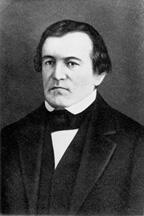
Here you will find contact information for Senator Spencer Jarnagin, including email address, phone number, and mailing address.
| Name | Spencer Jarnagin |
| Position | Senator |
| State | Tennessee |
| Party | Whig |
| Status | Former Representative |
| Term Start | December 4, 1843 |
| Term End | March 3, 1847 |
| Terms Served | 1 |
| Gender | Male |
| Bioguide ID | J000059 |
About Senator Spencer Jarnagin
Spencer Jarnagin (1792 – June 25, 1851) was a United States Senator from Tennessee from 1843 to 1847 and a member of the Whig Party. He served one term in the Senate, where he contributed to the legislative process during a significant period in American history, representing the interests of his Tennessee constituents and participating actively in the democratic process.
Jarnagin was born in 1792 in a part of eastern Tennessee that was shortly to become Grainger County. He pursued higher education at Greenville College (now Tusculum University) and graduated in 1813. After reading law, he was admitted to the bar in 1817. He established himself as a practicing attorney in East Tennessee, beginning a legal career that would underpin his later prominence in state and national politics.
Jarnagin entered public life in the Tennessee State Senate, where he served from 1833 to 1835. In addition to his legislative service, he was closely associated with higher education in the state; from 1836 to 1851 he served on the Board of Trustees of East Tennessee College, the institution that would later become the University of Tennessee. In 1837 he moved to Athens, Tennessee, where he continued the practice of law and became a leading Whig figure in the region. His standing in the Whig Party was further demonstrated when he served as a presidential elector on the Whig ticket of William Henry Harrison and John Tyler in the 1840 United States presidential election.
In 1841 Jarnagin was nominated for the United States Senate by the Whig caucus in the Tennessee General Assembly. His election, however, was delayed by a determined partisan struggle. A group of Democratic legislators, later celebrated by Tennessee Democrats as the “Immortal Thirteen,” refused to attend legislative sessions on the senatorial election, thereby preventing a quorum and blocking his confirmation. As a result, the Senate seat remained vacant for more than two and a half years, and almost half of the term elapsed before the impasse was broken.
Jarnagin finally assumed office as a United States Senator from Tennessee on October 17, 1843, and served until March 3, 1847. During his tenure, he sat as a Whig senator in a period marked by intense national debates over territorial expansion and sectional issues. In the Senate he served as chairman of the Committee on Revolutionary Claims, overseeing matters related to claims arising from the American Revolution. His four-year term constituted his entire service in Congress, but it placed him at the center of important legislative deliberations of the 1840s.
At the close of his term in 1847, the Whig Party in Tennessee nominated Jarnagin for a second term in the Senate. He was not reelected, however, as Democrats in the legislature proved more willing to accept another Whig, John Bell, who ultimately succeeded him in the Senate seat. Jarnagin subsequently sought a position on the Tennessee Supreme Court, but this campaign was also unsuccessful, marking the end of his bids for high public office.
After leaving the Senate, Jarnagin moved to Memphis, Tennessee, where he resumed the practice of law. He continued his professional work there until his death. Jarnagin died from cholera at 1 a.m. on June 25, 1851, in Memphis. He was interred in Elmwood Cemetery in that city, closing a career that had spanned state legislative service, educational leadership, and a contested but consequential term in the United States Senate.