Senator Spessard Lindsey Holland
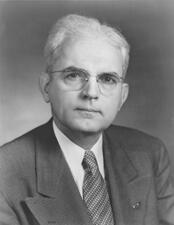
Here you will find contact information for Senator Spessard Lindsey Holland, including email address, phone number, and mailing address.
| Name | Spessard Lindsey Holland |
| Position | Senator |
| State | Florida |
| Party | Democratic |
| Status | Former Representative |
| Term Start | September 25, 1946 |
| Term End | January 3, 1971 |
| Terms Served | 5 |
| Born | July 10, 1892 |
| Gender | Male |
| Bioguide ID | H000720 |
About Senator Spessard Lindsey Holland
Spessard Lindsey Holland (July 10, 1892 – November 6, 1971) was an American lawyer and politician who served as the 28th governor of Florida from 1941 to 1945 and as a United States senator from Florida from 1946 to 1971. A Southern Democrat, he was the first person born in Florida to serve both as governor and as U.S. senator for the state. Over five terms in the Senate, he contributed to the legislative process during a significant period in American history and notably introduced the Twenty-fourth Amendment to the United States Constitution, which abolished the poll tax in federal elections.
Holland was born at his family’s home at 390 East Church Street in Bartow, Florida, on July 10, 1892, one of three children of Benjamin Franklin Holland and Fannie Virginia (known by her middle name, Virginia) Spessard. His father, a Confederate veteran of the American Civil War, had served in the Georgia State Line under Company I of the 2nd Regiment, where Benjamin’s own father was the orderly sergeant. Benjamin Holland, born in Carroll County, Georgia, in 1846, joined the Georgia State Line in January 1864 at age 17 and was wounded at the Battle of Kennesaw Mountain. In 1882 he moved to Bartow, Florida, where he created the first abstract company in Polk County and later served on the school board, as a county commissioner, and as county treasurer. Virginia Spessard moved to Bartow in 1889 and taught at the Summerlin Institute (now Bartow High School) before marrying Benjamin in Monroe County, West Virginia, in September 1890. Growing up in this civically engaged household, Holland attended local public schools and graduated from the Summerlin Institute in 1909.
Holland pursued higher education at Emory College (now Emory University) in Atlanta, Georgia, graduating magna cum laude in 1912. He then taught high school in Warrenton, Georgia, from 1912 to 1914 before returning to Florida to continue his education. In 1916 he enrolled in the law school at the University of Florida, where he also taught in the university’s “sub-freshman department,” essentially its high school division. As a student, he became the first elected student body president and was active in the debating society. Holland was also an accomplished athlete, participating in track and field, football, basketball, and baseball at Emory and the University of Florida. His performance as a pitcher in an exhibition game against the Philadelphia Athletics was so impressive that manager Connie Mack offered him a professional contract, which Holland declined. He qualified for a Rhodes Scholarship and became a junior partner in the Huffaker & Holland law firm in Bartow, but his academic and professional plans were interrupted by World War I.
With the United States’ entry into World War I, Holland volunteered for military service and was commissioned as a second lieutenant in the Coast Artillery Corps. Sent to France, he initially served in the brigade’s Judge Advocate General’s Corps as an assistant adjutant. At his request, he was later transferred to the 24th Aero Squadron, Signal Corps of the Army Air Corps, where he served as a gunner and aerial observer alongside Lieutenant George E. Goldthwaite. In this role, Holland flew reconnaissance missions behind enemy lines, gathering intelligence and taking aerial photographs. He participated in major engagements including the Meuse-Argonne Offensive, Champagne, St. Mihiel, and operations near Lunéville, and he was credited with downing two enemy aircraft. On one mission his plane crash-landed in a shell crater. For extraordinary heroism at Bois de Banthville, France, on October 15, 1918, he was awarded the Distinguished Service Cross on December 11, 1918, in a citation signed by General John J. Pershing. Holland was promoted to captain, and after the Armistice he toured the United States on behalf of the Victory Loan Drive. He later reported to Fort Monroe, Virginia, where he resigned his commission in July 1919 and returned to Bartow to resume his legal career.
Holland’s return to private practice was brief. In late 1919 he accepted appointment as Polk County prosecutor. The following year he was elected county judge, beginning a four-year term in 1920. He was re-elected in 1924 and served until the end of his second term in 1929. After leaving the bench, Holland returned to private practice and joined William F. Bevis in forming the law firm of Holland & Bevis. The firm expanded steadily and ultimately evolved into Holland & Knight, a large international law firm. Holland entered state-level politics in 1932, when he was elected to the Florida Senate. Serving eight years in that body, he became known for his strong advocacy of public education. As a member of the school committee, he helped draft and cosponsor the Florida School Code and supported measures to raise teachers’ salaries and improve retirement benefits. He also backed workers’ compensation, tax reductions, and unemployment insurance. Although he supported discriminatory practices that limited African-American voting, he strongly opposed both the sales tax and the poll tax, viewing the latter as a form of wealth-based discrimination that burdened poor whites and poor African Americans alike. Working with fellow state senator Ernest R. Graham, he helped secure repeal of the poll tax in Florida state elections in 1937, arguing publicly that the tax facilitated political machine corruption and depressed voter turnout.
On December 4, 1939, Holland announced his candidacy for governor of Florida, having considered but rejected a campaign for the U.S. Senate. His gubernatorial platform called for expanding assistance to the elderly by increasing taxes on horse and dog tracks, improving highway safety, maintaining the state ban on poll taxes in state elections, advancing the creation of Everglades National Park, providing state financial aid for economic development, regulating salary buyers, repealing the gross receipts tax, and improving working conditions. He also emphasized a tough stance on crime and support for tourism, and he aligned himself with the progressive policies of President Franklin D. Roosevelt’s New Deal, endorsing programs such as Social Security and rural electrification that he believed benefited moderate-income and middle-class Floridians. In the initial Democratic primary, Holland placed first but failed to secure a majority, forcing a runoff against Francis P. Whitehair. The runoff campaign was contentious, with Whitehair accusing Holland of representing an “invisible government” of corporate interests and Holland charging that Whitehair was the product of a political machine. Holland prevailed in the runoff, and in the general election he faced Republican nominee John F. Walter, who ultimately withdrew in a period when the Republican Party was a distinct minority in Florida. Holland won the governorship by a wide margin.
Holland was sworn in as governor on January 7, 1941. Under the 1885 Florida Constitution, the governorship was institutionally weak, limited to a single four-year term and constrained by the independently elected and re-electable Cabinet. Nevertheless, Holland used the office to address both domestic and wartime concerns. Even during his campaign, he had stressed the need for preparedness in the face of growing global conflict, and as governor he reviewed $7 million in State Road Department contracts from the administration of his predecessor, Fred P. Cone, to align state infrastructure spending with defense needs. He and his wife attended President Roosevelt’s third inauguration and, while in Washington, D.C., he worked with federal officials and Florida’s congressional delegation to secure additional funds for defense-related road construction. Under his leadership, Florida saw a substantial increase in military activity and the establishment and expansion of bases as the United States mobilized for World War II. He also supported measures to stabilize and improve the financial condition of the state’s public school system and undertook various fiscal reforms.
Holland’s administration confronted the issue of racial violence, particularly lynching, which had drawn national scrutiny in the 1940s. Shortly after he took office, on May 12, 1941, A.C. Williams, a 22-year-old African American accused of rape and robbery, was abducted and lynched in Quincy, Florida. Amid pressure from the federal government and organizations such as the Association of Southern Women for the Prevention of Lynching, Holland ordered an investigation and appointed Maurice Tripp as special investigator. A spokesperson indicated that Holland would decide on any action against local law enforcement after reviewing the lengthy inquest record. Tripp submitted his report on May 25, 1941, and the case was referred to the U.S. Department of Justice in July 1942, but the perpetrators were never identified. Following the attack on Pearl Harbor and the U.S. entry into World War II, Holland coordinated state defenses with federal authorities, promoted additional military installations, and placed the Florida Highway Patrol on standby to assist the Federal Bureau of Investigation in detaining Japanese Americans and foreign nationals. The war affected Holland’s family personally: his son Spessard Holland Jr. served as a Marine in the South Pacific; the family planted a victory garden and kept a chicken coop at the Governor’s Mansion; his daughter Mary volunteered as an aircraft spotter; and his daughter Ivanhoe and his wife Mary sewed quilt squares for U.S. troops. The mansion also hosted British soldiers training in Florida, with the First Lady corresponding with their mothers overseas.
World War II also reshaped Florida’s economy and infrastructure during Holland’s governorship. In early 1942, German Admiral Karl Dönitz launched Operation Drumbeat, sending U-boats against shipping along the Eastern Seaboard and Gulf Coast. U-boat activity off Florida’s coasts, which continued with only a brief lull until April 1942, depressed tourism and revived interest in constructing the Cross Florida Barge Canal. Holland adopted a neutral stance on the controversial canal project, in contrast to U.S. senators Charles O. Andrews and Claude Pepper, who strongly supported it. In the 1942 general election, although not on the ballot himself, Holland campaigned vigorously across the state to generate interest in a slate of nine proposed constitutional amendments. He strongly backed three: a measure to streamline the process for amending the state constitution, a gas tax amendment, and an amendment creating a state freshwater fish and game commission. All nine amendments passed with little opposition. In 1943, calls arose for a special legislative session to revise absentee voting laws for Floridians serving in the military and to repeal the cigarette tax. State Senator Wallace E. Sturgis of Ocala, joined by Senate president pro tempore Ernest F. Householder and others, pressed for the session. Holland resisted, arguing that the existing absentee voting law functioned adequately for initial primaries, though not for closely timed runoffs, and opposing repeal of the cigarette tax, which he viewed as an important revenue supplement amid uncertain wartime conditions. The controversy over a special session became a significant issue in the 1944 Democratic gubernatorial primaries. During his term, Holland also promoted more favorable railroad freight rates at a conference in Denver, Colorado, to assist Florida’s economy.
An avid outdoorsman and early environmental advocate, Holland played a key role in the state’s acquisition of Everglades wetlands and marshlands in 1944, negotiations that helped pave the way for the establishment of Everglades National Park in 1947. His term as governor ended on January 2, 1945, when Millard F. Caldwell succeeded him. The following year, on the death of U.S. Senator Charles O. Andrews, Governor Caldwell appointed Holland on September 25, 1946, to fill the vacancy until the term expired in January 1947. Holland won election in November 1946 to a full term in the United States Senate and was subsequently re-elected in 1952, 1958, and 1964, serving continuously from 1946 until his retirement in January 1971. As a senator from Florida during a transformative era in American politics, he participated actively in the legislative process, representing his constituents’ interests and working on national issues ranging from taxation and infrastructure to civil rights and constitutional reform. His most notable federal legislative achievement was his sponsorship and introduction of the Twenty-fourth Amendment, which eliminated the poll tax in federal elections, extending at the national level the anti–poll tax stance he had taken in Florida decades earlier.
Spessard Lindsey Holland retired from the Senate at the conclusion of his final term in January 1971, ending nearly half a century of public service that encompassed local, state, and federal office. He died on November 6, 1971, closing a career that had begun in the courtrooms of Polk County and extended through the governor’s mansion in Tallahassee to the floor of the United States Senate.