Representative Stanyarne Wilson
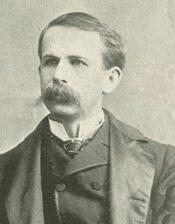
Here you will find contact information for Representative Stanyarne Wilson, including email address, phone number, and mailing address.
| Name | Stanyarne Wilson |
| Position | Representative |
| State | South Carolina |
| District | 4 |
| Party | Democratic |
| Status | Former Representative |
| Term Start | December 2, 1895 |
| Term End | March 3, 1901 |
| Terms Served | 3 |
| Born | January 10, 1860 |
| Gender | Male |
| Bioguide ID | W000612 |
About Representative Stanyarne Wilson
Stanyarne Wilson (January 10, 1860 – February 14, 1928) was a Democratic Representative from South Carolina who served three terms in the United States House of Representatives from 1895 to 1901. He was born in Yorkville (now York), York County, South Carolina, where he spent his early years before pursuing formal education and a career in law and public service. His life and career unfolded during a significant period in American history, marked by the aftermath of Reconstruction and the political and economic transformation of the South.
Wilson attended King’s Mountain Military School in South Carolina, receiving a disciplined preparatory education that was typical for young men of his background in the post–Civil War South. He later enrolled at Washington and Lee University in Lexington, Virginia, where he continued his studies and laid the foundation for his legal career. He studied law and, despite being a minor, was admitted to the bar in 1880 by an act of the South Carolina legislature, an indication of both his precocity and the regard in which he was held by state authorities.
In 1881 Wilson settled in Spartanburg, South Carolina, where he began the practice of law. Alongside his legal work, he developed broad business interests, involving himself in cotton manufactures, gold mining, iron works, and agriculture. These pursuits connected him closely to the economic life of the region and informed his understanding of the issues facing his constituents. His entry into public office came through the South Carolina House of Representatives, in which he served from 1884 to 1886 and again from 1890 to 1892. He subsequently served in the South Carolina Senate from 1892 to 1895, participating in state-level legislative debates during a period of political realignment and the entrenchment of Democratic control in the state.
Wilson’s prominence in state politics was further underscored by his role as a member of the South Carolina constitutional convention in 1895. That same year he advanced to national office, being elected as a Democrat to the Fifty-fourth Congress. He was reelected to the Fifty-fifth and Fifty-sixth Congresses, serving in the United States House of Representatives from March 4, 1895, to March 3, 1901. During his three consecutive terms in Congress, Wilson contributed to the legislative process and participated in the democratic governance of the nation at a time of industrial expansion, regional tension, and evolving federal policy. As a member of the House of Representatives, he represented the interests of his South Carolina constituents and took part in deliberations that reflected both local concerns and national issues.
After leaving Congress in 1901, Wilson returned to Spartanburg and continued the practice of law, maintaining his professional and civic presence in the community where he had long resided. In 1913 he moved to Richmond, Virginia, where he resumed his legal career in a new setting while remaining identified with his South Carolina roots and prior public service. His later years were spent largely in legal practice rather than elective office, reflecting a return to the profession that had first brought him to prominence.
In January 1928 Wilson returned to Spartanburg, South Carolina. He died there on February 14, 1928. Stanyarne Wilson was interred in the Church of the Advent Cemetery in Spartanburg. His career, spanning state and national legislatures as well as significant private business and legal activity, placed him among the influential Democratic figures who shaped South Carolina’s political and economic life at the turn of the twentieth century.