Representative Stephanie N. Murphy
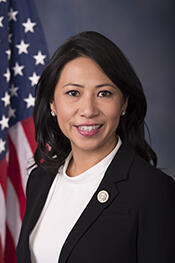
Here you will find contact information for Representative Stephanie N. Murphy, including email address, phone number, and mailing address.
| Name | Stephanie N. Murphy |
| Position | Representative |
| State | Florida |
| District | 7 |
| Party | Democratic |
| Status | Former Representative |
| Term Start | January 3, 2017 |
| Term End | January 3, 2023 |
| Terms Served | 3 |
| Born | September 16, 1978 |
| Gender | Female |
| Bioguide ID | M001202 |
About Representative Stephanie N. Murphy
Stephanie N. Murphy is an American public servant and veterinary scientist whose career has spanned academic medicine, biomedical research administration, and elected office in the United States Congress. A member of the Democratic Party, she served as a Representative from Florida in the United States House of Representatives from January 3, 2017, to January 3, 2023, contributing to the legislative process during three consecutive terms in office. Her professional work outside Congress has centered on neuroscience, comparative medicine, and the study of sex differences in stroke, as well as the oversight of national research infrastructure programs in the biomedical sciences.
Murphy pursued an extensive scientific education that laid the foundation for her later academic and administrative roles. She received both her Doctor of Veterinary Medicine (V.M.D.) and Doctor of Philosophy (Ph.D.) degrees from the University of Pennsylvania in Philadelphia, Pennsylvania. Her graduate and professional training focused on comparative medicine and neuroscience, preparing her for a career at the intersection of clinical practice and laboratory research. Following completion of her doctoral studies, she undertook a postdoctoral fellowship in the Department of Comparative Medicine at Johns Hopkins University in Baltimore, Maryland, further refining her expertise in laboratory animal medicine and experimental models of neurological disease. She subsequently became a diplomate of the American College of Laboratory Animal Medicine, reflecting board certification and professional recognition in that specialty.
Murphy began her academic career at Johns Hopkins University, where she joined the Department of Anesthesiology & Critical Care Medicine as an assistant professor. In this role, she combined clinical responsibilities with research on neuroprotection, sex steroids, and ischemic brain injury. In 2003, she moved to Oregon Health & Science University (OHSU) in Portland, Oregon, joining the research faculty as a professor of anesthesiology & perioperative medicine. At OHSU, she developed a sustained research program supported by funding from the National Institutes of Health (NIH) and other sources over more than 17 years, focusing on sex differences and sex steroids in stroke. Her work contributed to a growing body of evidence that biological sex and hormonal status significantly influence vulnerability to, and recovery from, cerebral ischemia.
Over the course of her scientific career, Murphy published numerous articles, reviews, and book chapters related to her research and clinical interests. Among her notable publications are studies such as “Neuroprotective Effects of Female Gonadal Steroids in Reproductively Senescent Female Rats,” published in Stroke in January 2000, which examined the protective role of female gonadal hormones in experimental models of brain ischemia. She coauthored “A G-Protein-Coupled Estrogen Receptor Is Involved in Hypothalamic Control of Energy Homeostasis,” published in the Journal of Neuroscience on May 24, 2006, which explored estrogen signaling in the regulation of energy balance. Her work also included “Inhalational Anesthetics as Neuroprotectants or Chemical Preconditioning Agents in Ischemic Brain,” published in the Journal of Cerebral Blood Flow & Metabolism on June 1, 2007, and “GPR30 Contributes to Estrogen-Induced Thymic Atrophy,” published in Molecular Endocrinology on March 1, 2008. Collectively, these studies advanced understanding of how estrogen receptors, anesthetic agents, and sex-specific mechanisms modulate neural and immune responses to injury.
In 2014, Murphy transitioned from a primarily university-based role to a leadership position within the federal biomedical research enterprise. That year, she was appointed director of the Division of Comparative Medicine (DCM) in the Office of Research Infrastructure Programs at the National Institutes of Health, headquartered in Bethesda, Maryland. As director of DCM, she has overseen national resources that support comparative medicine and translational research, including the human tissue and organ research resource. She serves as the primary contact for R24 applications, a key NIH mechanism for resource-related research projects, and provides scientific and administrative guidance for programs that enable investigators across the United States to access specialized animal models, tissues, and other infrastructure critical to biomedical discovery. Her portfolio at NIH reflects her longstanding expertise in neuroscience, comparative medicine, and laboratory animal science.
Parallel to her scientific and administrative career, Murphy entered electoral politics and was elected to the United States House of Representatives from the State of Florida. A member of the Democratic Party, she began her congressional service on January 3, 2017, representing her Florida district in the 115th Congress. She was subsequently reelected, serving in the 116th and 117th Congresses and completing three full terms in office, with her service concluding on January 3, 2023. During this period, she participated in the democratic process at the federal level, contributing to deliberations on national policy and legislation. As a member of the House of Representatives, she represented the interests of her constituents in Florida during a significant period in American history, marked by intense debates over economic policy, public health, and national security, and she played a role in shaping legislative responses to these challenges.
Murphy’s congressional tenure coincided with major national events, including changes in presidential administrations, evolving foreign policy priorities, and the federal response to domestic and international crises. Within this context, she engaged in committee work, floor debates, and the development and consideration of bills and resolutions, bringing to bear her background in science and research administration on issues related to health, innovation, and evidence-based policymaking. Her dual experience in federal research leadership and elected office positioned her to understand both the scientific and legislative dimensions of public policy.
After leaving Congress on January 3, 2023, Murphy’s earlier and ongoing contributions to biomedical science and research infrastructure have continued to define a substantial part of her professional legacy. Through her leadership at the National Institutes of Health’s Division of Comparative Medicine and her extensive body of peer-reviewed work, she has influenced the direction of research on sex differences in stroke, estrogen signaling, and neuroprotection, while her six years in the U.S. House of Representatives reflect a parallel commitment to public service in the legislative arena.