Representative Stephen Brundidge
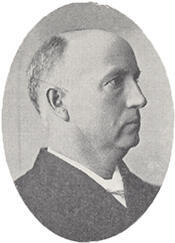
Here you will find contact information for Representative Stephen Brundidge, including email address, phone number, and mailing address.
| Name | Stephen Brundidge |
| Position | Representative |
| State | Arkansas |
| District | 2 |
| Party | Democratic |
| Status | Former Representative |
| Term Start | March 15, 1897 |
| Term End | March 3, 1909 |
| Terms Served | 6 |
| Born | January 1, 1857 |
| Gender | Male |
| Bioguide ID | B000979 |
About Representative Stephen Brundidge
Stephen Brundidge Jr. (January 1, 1857 – January 14, 1938) was an American lawyer and Democratic politician who represented Arkansas in the United States House of Representatives for six consecutive terms from 1897 to 1909. Born in Searcy, White County, Arkansas, he was the son of Stephen and Minerva Brundidge. He spent his early years in his native city, where he was educated by private tutors and in the public schools, laying the foundation for a professional career in law and public service that would span several decades.
Brundidge pursued legal studies in Arkansas, reading law in the offices of William R. Coody and Dandridge McRae. He was admitted to the bar in 1879, marking the formal beginning of his legal career. He initially commenced the practice of law in Newport, Arkansas, but in 1880 he returned to his hometown of Searcy, Arkansas, where he continued to build his law practice. In 1881, he married Nellie Margurite Morris of Jacksonport, Arkansas. The couple had four children, two of whom survived to adulthood, and Searcy remained the center of his family and professional life.
Brundidge’s public career began in earnest with his election as prosecuting attorney of the first judicial district of Arkansas in 1886. He was reelected to that office in 1888 and served until 1890, handling criminal prosecutions and gaining experience in public affairs and courtroom advocacy. After leaving the prosecutor’s office, he resumed the private practice of law in Searcy. From 1890 to 1892, he served as a member of the Democratic State central committee, participating in party organization and strategy at the state level and further solidifying his position within Arkansas’s Democratic Party.
Elected as a Democrat to the Fifty-fifth Congress and to the five succeeding Congresses, Brundidge served as a Representative from Arkansas in the United States Congress from March 4, 1897, to March 3, 1909. During this twelve-year period, he represented the interests of his Arkansas constituents in the House of Representatives and contributed to the legislative process during six terms in office. His service in Congress occurred during a significant period in American history, encompassing the Spanish–American War, the beginning of the Progressive Era, and important national debates over economic policy, regulation, and governance. As a member of the House, he participated in the democratic process at the federal level and helped to articulate and advance the priorities of his district and his party.
In 1908, Brundidge chose not to be a candidate for renomination to the House of Representatives. Instead, he sought higher office as the Democratic candidate for Governor of Arkansas, though he was unsuccessful in that campaign. Following his gubernatorial bid, he returned to Searcy and resumed the practice of law, continuing his long-standing professional engagement with the legal community. He remained active in politics, and in 1918 he was an unsuccessful candidate for election to the United States Senate, reflecting his continued prominence within Arkansas Democratic circles even after leaving Congress.
Stephen Brundidge Jr. spent his later years in Searcy, where he maintained his legal practice and his connections to public life until advanced age. He died in Searcy, White County, Arkansas, on January 14, 1938, at the age of 81 years and 13 days. He was interred at Oak Grove Cemetery in Searcy. His career, spanning local prosecution, party leadership, six terms in the U.S. House of Representatives from 1897 to 1909, and subsequent statewide campaigns, marked him as a significant figure in Arkansas’s political history during the late nineteenth and early twentieth centuries.