Senator Stephen Decatur Miller
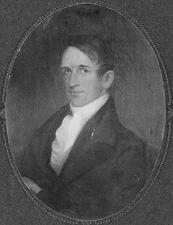
Here you will find contact information for Senator Stephen Decatur Miller, including email address, phone number, and mailing address.
| Name | Stephen Decatur Miller |
| Position | Senator |
| State | South Carolina |
| Party | Nullifier |
| Status | Former Representative |
| Term Start | December 4, 1815 |
| Term End | December 31, 1833 |
| Terms Served | 3 |
| Born | May 8, 1787 |
| Gender | Male |
| Bioguide ID | M000755 |
About Senator Stephen Decatur Miller
Stephen Decatur Miller (May 8, 1787 – March 8, 1838) was an American politician from South Carolina who played a notable role in state and national politics during the early nineteenth century. He was born in the Waxhaw settlement, South Carolina, a frontier region along the border with North Carolina, and came of age in the post-Revolutionary era as the new republic was consolidating its institutions. His early life in this backcountry community helped shape his later identification with the interests of South Carolina’s agrarian and states’ rights constituencies.
Miller pursued formal education at South Carolina College in Columbia, from which he graduated in 1808. After completing his studies, he read law and was admitted to the bar, establishing a legal practice in Sumterville, South Carolina. His work as an attorney in this growing upcountry town brought him into close contact with local planters, merchants, and small farmers, and provided a foundation for his entry into public life. Through his legal practice and community involvement, he gained recognition as a capable advocate and spokesman for his region.
Miller’s political career advanced steadily in the 1810s and 1820s. He entered national politics as a member of the United States House of Representatives, representing South Carolina from 1817 to 1819. He later rose to statewide prominence and was elected the 52nd Governor of South Carolina, serving from 1828 to 1830. His governorship coincided with intensifying sectional tensions over federal economic policy, particularly the protective tariff, and he emerged as a strong critic of federal measures he and many of his constituents viewed as harmful to Southern agricultural interests.
Stephen Decatur Miller’s service in the United States Congress spanned both chambers and occurred during a significant period in American history. He first served as a U.S. Representative from South Carolina from 1817 to 1819, participating in the legislative process in the aftermath of the War of 1812 as the nation debated issues of economic development and federal power. Later, as a member of the Nullifier Party, he served as a United States Senator from South Carolina from 1831 to 1833. In this capacity, he contributed to the legislative process during three terms in office, participating in the democratic process and representing the interests of his constituents at a time when South Carolina was at the center of the nullification controversy. His Senate career was closely tied to the movement that asserted a state’s right to nullify federal laws deemed unconstitutional, particularly the tariff acts.
Miller’s Senate campaign and tenure were marked by his outspoken opposition to federal tariffs. Running on a platform of abolishing tariffs, he articulated a forceful states’ rights and anti-tariff philosophy. In a widely noted speech at Stateburg, South Carolina, in September 1830, during his successful campaign for the Senate, he declared that “There are three and only three ways, to reform our congressional legislation. The representative, judicial and belligerent principle alone can be relied on; or as they are more familiarly called, the ballot box, the jury box and the cartouche box.” This statement encapsulated his belief in a graduated spectrum of political remedies, from electoral and legal means to, if necessary, armed resistance, and it reflected the intensity of South Carolina’s opposition to federal tariff policy in the years leading up to the Nullification Crisis.
In his personal life, Miller married twice. His first marriage was to Elizabeth Dick, with whom he had three children; Elizabeth died in 1819, and none of their children survived to adulthood. In 1821 he married Mary Boykin, a young woman sixteen years his junior. Despite the considerable age difference, contemporary accounts and later biographical studies describe their marriage as happy and passionate. The couple had four children together. Their daughter Mary Boykin Miller would later marry James Chesnut, Jr., who became a United States Senator from South Carolina and a Confederate general. Mary Boykin Miller Chesnut achieved lasting renown for her diary, which offered a vivid, firsthand account of life in South Carolina during the Civil War.
After the height of his political career, Miller renounced active politics in 1833 and turned to agricultural pursuits. Leaving South Carolina, he moved westward to Mississippi, where he took up farming near Raymond in Hinds County. The transition from public office to plantation agriculture reflected a broader pattern among Southern political leaders of the period, but Miller’s venture did not bring him lasting financial security. He died in Raymond, Mississippi, on March 8, 1838, leaving his wife and children in debt. His life and career have been documented in a variety of biographical sources, including the Biographical Directory of the United States Congress, the National Governors Association, the SCIway biography of Stephen Decatur Miller, and later works such as Elisabeth Muhlenfeld’s “Mary Boykin Chesnut: A Biography,” as well as memorial records such as his entry at Find a Grave.