Representative Steve Driehaus
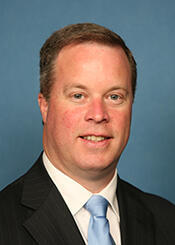
Here you will find contact information for Representative Steve Driehaus, including email address, phone number, and mailing address.
| Name | Steve Driehaus |
| Position | Representative |
| State | Ohio |
| District | 1 |
| Party | Democratic |
| Status | Former Representative |
| Term Start | January 6, 2009 |
| Term End | January 3, 2011 |
| Terms Served | 1 |
| Born | June 24, 1966 |
| Gender | Male |
| Bioguide ID | D000609 |
About Representative Steve Driehaus
Steven Leo “Steve” Driehaus (born June 24, 1966, in Cincinnati, Ohio) is an American politician and public servant who represented Ohio in the United States House of Representatives from 2009 to 2011. A member of the Democratic Party, he served one term in Congress during a significant period in American history, participating in the legislative process and representing the interests of his constituents in Ohio’s 1st congressional district. Over the course of his career, he has been known as a centrist Democrat with a reputation as an anti-abortion fiscal conservative, and he has held a variety of roles in state government, international development, and community-based civic work.
Driehaus grew up on Cincinnati’s west side and graduated in 1984 from Elder High School in Cincinnati, where he served as class president. He went on to study political science at Miami University in Oxford, Ohio, earning a Bachelor of Arts degree in 1988. Soon after completing his undergraduate studies, he joined the Peace Corps and served from 1988 to 1990 as a volunteer in Senegal. In that role, he worked with village groups and local schools as a natural resource volunteer, promoting sustainable environmental practices and gaining early experience in international development and grassroots community engagement.
Following his return from Senegal, Driehaus pursued graduate education in public affairs. He enrolled at Indiana University Bloomington, where he earned a Master of Public Administration (MPA) in 1995. During and after his graduate studies, he built a professional career that combined international education, public policy, and community development. He served as Associate Director of the Center for International Education and Development Assistance at Indiana University, where he coordinated the South African Internship Program sponsored by the United States Information Agency, then the largest professional exchange program between the United States and South Africa. After returning to Cincinnati, he directed and later consulted for the Community Building Institute, a collaborative initiative of Xavier University and United Way & Community Chest that promoted citizen-led, asset-based community development. He also taught part-time as a political science instructor at Xavier University, was active in the Price Hill Civic Club, and served on the Board of Seton High School. Driehaus began his political career in the 1990s as an aide to Cincinnati City Council Member Todd Portune and to former U.S. Representative and Cincinnati Mayor Charlie Luken.
Driehaus entered elective office in 2000, when he ran for the Ohio House of Representatives from the 33rd District, which then included Delhi Township, Price Hill, Sayler Park, and other parts of western Hamilton County. The seat was open because incumbent Jerome Luebbers was term-limited. After his election, subsequent redistricting in 2002 transformed his constituency into the 31st District, surrendering many Republican-leaning areas and consolidating a more Democratic base. From 2001 to 2009, Driehaus served four consecutive terms in the Ohio House of Representatives, representing the 31st District, which included Cincinnati wards 19–22, 25 and 26, as well as the communities of Cheviot, Cleves, North Bend, and Addyston. This state legislative district lay fully within Ohio’s 1st congressional district and, along with the 32nd and 33rd districts, formed part of Ohio Senate District 9 in south-central Hamilton County. He faced no opposition in any of his Democratic primaries and won each of his general elections with at least 57 percent of the vote. During his tenure, he rose to leadership as Minority Whip at the beginning of his third term in January 2005, a position he held until December 2007, when he resigned the post to focus on a congressional campaign. In the Ohio House, he took a leadership role on issues such as election law and redistricting reform and expressed concern about information privacy in the state. His work earned him recognition as legislative “Rookie of the Year” by The Cincinnati Enquirer during his first term, and in 2008 he was named Democratic Legislator of the Year by both the ARC of Ohio and the Ohio Association of Election Officials.
Although the Democratic Congressional Campaign Committee (DCCC) had identified Driehaus as its preferred candidate for Ohio’s 1st congressional district in the 2006 U.S. House elections, he chose instead to seek re-election to the Ohio House, where he had just been elected Minority Whip. He successfully defended his state seat in 2006, defeating Scott Gehring by a two-to-one margin. After the 2006 cycle, term limits prevented him from seeking a fifth term in the state legislature, and he began planning a run for Congress in 2008. Ohio’s 1st congressional district, which included the western four-fifths of Cincinnati and suburbs north and west of the city in Hamilton and Butler counties, was marginally Republican based on the 2000 and 2004 presidential elections, having voted about one percentage point more Republican than the nation as a whole. Nonetheless, the district was viewed as a maturing, suburban area trending more Democratic as it grew denser, and it contained a substantial African-American electorate—about 27 percent of voters—one of the highest such shares in any Republican-held district in the 109th Congress. The district had narrowly favored Democratic Governor Ted Strickland and U.S. Senator Sherrod Brown in 2006, while President George W. Bush had carried it over John Kerry by just one percentage point in 2004.
In the 2008 election cycle, Driehaus was recruited and strongly supported by national Democratic leaders, including Nancy Pelosi, Steny H. Hoyer, James E. Clyburn, and Chris Van Hollen, whose early contributions were reflected in his 2007 second-quarter financial filings after his formal announcement on May 3, 2007. The race quickly drew national attention; Time magazine listed it among the 15 congressional races to watch in 2008, and the DCCC designated it one of 13 priority contests in its effort to unseat Republican incumbents. The campaign unfolded against the backdrop of the 2008 financial crisis and the subprime mortgage crisis, with home foreclosures and economic security emerging as central issues. As of mid-October 2008, The Rothenberg Political Report rated the contest a toss-up, and a SurveyUSA poll suggested that African-American turnout would likely determine the outcome. On November 4, 2008, Driehaus defeated seven-term Republican incumbent Steve Chabot with 52 percent of the vote, aided by a roughly 16,000-vote margin in Hamilton County. In the same election, Barack Obama carried the district with 55 percent of the vote.
Driehaus served as U.S. Representative for Ohio’s 1st congressional district from January 3, 2009, to January 3, 2011. During his single term in the U.S. House of Representatives, he contributed to the legislative process at a time of major national debates over economic recovery, financial regulation, and health care reform. He was appointed to the House Committee on Financial Services, where he served on the Subcommittee on Housing and Community Opportunity, the Subcommittee on International Monetary Policy and Trade, and the Subcommittee on Oversight and Investigations. He also served on the Committee on Oversight and Government Reform, including the Subcommittee on Information Policy, Census, and National Archives and the Subcommittee on National Security and Foreign Affairs. As a member of Congress, he continued to be viewed as a centrist Democrat, combining socially conservative positions—particularly on abortion—with a focus on fiscal responsibility and community development. His tenure in Congress thus reflected both his party affiliation and his longstanding reputation as an anti-abortion fiscal conservative.
In the 2010 midterm elections, Driehaus sought re-election and faced a rematch with his Republican predecessor, former Congressman Steve Chabot, along with Libertarian candidate James Berns and Green Party candidate Richard Stevenson. Public opinion polls showed Chabot with a consistent lead, and the DCCC eventually withdrew its financial support for Driehaus’s television advertising, signaling diminished national confidence in his prospects. On November 2, 2010, Chabot defeated Driehaus by a margin of 52 percent to 45 percent. Driehaus’s departure from Congress on January 3, 2011, ended his one term as a U.S. Representative; until the inauguration of Greg Landsman in 2023, he was the last Democrat to represent Cincinnati in Congress. His service in Congress, though limited to a single term, occurred during a consequential era in American politics, and he participated fully in the democratic process and in representing the interests of his constituents in Ohio’s 1st district.
Following his congressional service, Driehaus remained active in public affairs and international service. In October 2012, he filed a criminal complaint in Ohio against the Susan B. Anthony List, alleging that the organization had violated state law prohibiting false statements in campaign advertisements; he later asked that the complaint be withdrawn. He subsequently brought a civil lawsuit against the group, claiming it had caused his “loss of livelihood” by defaming him through statements that he supported taxpayer-funded abortion because of his vote for the Affordable Care Act. The case, reported at 805 F. Supp. 2d 412 (2011), was ultimately decided in favor of the Susan B. Anthony List. In March 2011, drawing on his earlier Peace Corps experience in Senegal, Driehaus was selected to serve approximately two and a half years as the Peace Corps’ director of HIV and AIDS education in Eswatini (then commonly known as Swaziland). He completed staff training and was sworn in for this role on June 29, 2011, relocating to Eswatini with his wife and three children. This later phase of his career extended his longstanding commitment to international development, public service, and community-focused work beyond elected office.