Representative Steve Largent
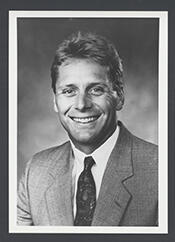
Here you will find contact information for Representative Steve Largent, including email address, phone number, and mailing address.
| Name | Steve Largent |
| Position | Representative |
| State | Oklahoma |
| District | 1 |
| Party | Republican |
| Status | Former Representative |
| Term Start | January 3, 1993 |
| Term End | February 15, 2002 |
| Terms Served | 5 |
| Born | September 28, 1954 |
| Gender | Male |
| Bioguide ID | L000096 |
About Representative Steve Largent
Stephen Michael “Steve” Largent (born September 28, 1954, in Tulsa, Oklahoma) is an American former professional football wide receiver and politician who later served as a United States Representative from Oklahoma. Raised in Oklahoma, Largent developed an early aptitude for football that would shape the first major phase of his public life. Despite family and financial hardships in his youth, including responsibility for helping care for his mother and three younger brothers during a difficult period at home, he emerged as a standout athlete whose discipline and resilience became defining traits throughout his career in sports and politics.
Largent attended the University of Tulsa, where he studied biology and played college football for the Tulsa Golden Hurricane. He quickly distinguished himself as one of the nation’s premier receivers. In 1974, he recorded 884 receiving yards and 14 touchdown catches, and in 1975 he had 51 receptions for 1,000 yards and 14 touchdowns, earning All-American recognition. His collegiate success, however, did not immediately translate into high draft status in the National Football League. In the 1976 NFL Draft, he was selected in the fourth round with the 117th overall pick by the Houston Oilers. After four preseason games, Oilers head coach Bum Phillips informed Largent that he would be released, leaving Largent fearing that his professional football career might end before it began.
Largent’s fortunes changed when his former college offensive coordinator, Jerry Rhome—then quarterbacks and receivers coach for the expansion Seattle Seahawks—persuaded Seahawks head coach Jack Patera to trade a 1977 eighth-round draft pick to Houston for Largent. His first practice with Seattle went poorly, as he was suffering from nine days of sleep deprivation while struggling financially to support his family, but he nonetheless made the roster for the Seahawks’ inaugural 1976 season. Largent went on to spend his entire 14-year NFL career with the Seahawks. Though not considered particularly fast, he became renowned for his precise route-running, sure hands, and ability to get open. Between 1976 and 1981, he and quarterback Jim Zorn, a fellow rookie in 1976, combined for more completions and yardage than any other quarterback–receiver duo in the league. Largent became the first Seahawk selected to the Pro Bowl in 1978 and ultimately earned seven Pro Bowl selections and one first-team All-Pro honor. He led the NFL in receiving yards in 1979 with 1,237 yards and again in 1985 with 1,287 yards, a franchise record that stood until 2020.
Over the course of his career, Largent established himself as one of the greatest wide receivers in NFL history. Known by the nickname “Yoda” for his ability to catch virtually anything thrown his way, he credited a skeet-shooting technique—focusing on the edge of the target—for his ability to track the tip of the football, an approach that helped him excel in an era when receivers and defensive backs typically did not wear gloves. He successfully adjusted from catching passes from left-handed quarterback Jim Zorn to right-handed quarterback Dave Krieg. Largent’s toughness was also on display in memorable moments, including a 1987 game against the Detroit Lions during the NFL Players Association strike, when he recorded 15 receptions for 261 yards and three touchdowns against replacement players, and a 1988 rematch with the Denver Broncos in which he delivered a hard, retaliatory hit on defensive back Mike Harden, who earlier that season had knocked Largent unconscious and caused a concussion and two cracked teeth. When he retired after the 1989 season, Largent held all major NFL receiving records, including most career receptions (819), most career receiving yards (13,089), most career touchdown receptions (100), and a then-record streak of 177 consecutive regular-season games with a reception. He was the first receiver in NFL history to record 100 touchdown receptions, a mark that stood until 1992, and he remained the NFL’s active leader in receiving yards from 1987 until his retirement. The Seahawks retired his jersey number 80 in 1992, making him the first player in franchise history to receive that honor, and his University of Tulsa number 83 was retired on October 26, 2008. Largent was inducted into the Pro Football Hall of Fame in Canton, Ohio, in 1995 in his first year of eligibility, and in 1999 he was ranked number 46 on The Sporting News list of the 100 Greatest Football Players, the only Seahawk on the list.
Following his retirement from professional football, Largent transitioned into politics as a member of the Republican Party. In 1994, Oklahoma’s 1st District Congressman Jim Inhofe resigned to run in a special election for the U.S. Senate seat vacated by Senator David Boren. A special election was called pursuant to Oklahoma statute, and Governor David Walters designated that the winner would both complete the remainder of Inhofe’s term in the 103rd Congress and then serve in the 104th Congress. Largent ran as the Republican candidate and won the election to succeed Inhofe, taking office in the U.S. House of Representatives on November 29, 1994. He represented Oklahoma’s 1st congressional district, based in the Tulsa area, and was reelected to the three succeeding Congresses, never receiving less than 60 percent of the vote in this heavily Republican district. In total, Steve Largent served as a Representative from Oklahoma in the United States Congress from 1994 to 2002. A member of the Republican Party, Steve Largent contributed to the legislative process during five terms in office. His service in Congress occurred during a significant period in American history, as Republicans gained control of the House for the first time in 40 years. As a member of the House of Representatives, Steve Largent participated in the democratic process and represented the interests of his constituents while aligning himself with the conservative wing of his party.
Largent’s voting record in Congress was solidly conservative, and he was widely regarded as one of the “true believers” in the Republican freshman class of 1994, devoting much of his attention to issues important to conservative Christians. One of his first legislative initiatives was a “parental rights” bill, which ultimately died in committee after encountering opposition, including from some fellow Christian conservatives. He also introduced a bill that would have abolished the federal tax code at the end of 2001. Largent opposed ending the 1995 federal government shutdown and played a role in the unsuccessful effort to remove Newt Gingrich as Speaker of the House. He introduced legislation to ban adoptions by gay and lesbian parents in Washington, D.C., and had earlier, in a 1993 letter, written that “many homosexual practices are immoral and downright repugnant.” In 2000, he faced accusations of anti-Catholic bias arising from his questioning of a candidate for House chaplain, allegations he denied. After Republicans lost five seats in the 1998 midterm elections, Largent attempted to capitalize on dissatisfaction with House Majority Leader Dick Armey by challenging him for the leadership post. Although Armey’s standing within the caucus had weakened, many members considered Largent too conservative, and Armey retained his position on the third ballot. When Speaker-elect Bob Livingston of Louisiana later stepped aside, Armey’s diminished support prevented him from mounting a credible bid for the speakership.
In 2002, Largent chose not to seek reelection to the House and instead ran for governor of Oklahoma. He resigned his House seat on February 15, 2002, to focus fully on the gubernatorial race. Largent easily won the Republican nomination and entered the general election as the perceived favorite against Democratic state senator Brad Henry. However, the race proved far closer than expected, and Largent ultimately lost by just under 7,000 votes. Analysts have attributed his defeat to several factors, including the presence of a well-funded independent candidate, Gary Richardson, a former Republican, who drew votes from Largent’s base; Henry’s support of legal cockfighting, which helped him secure a late endorsement from rural cockfighting interests in an election where the legality of cockfighting was itself on the ballot; and a widely publicized incident in which Largent responded with a vulgarity, “bullshit,” to an Oklahoma City television reporter who repeatedly questioned his whereabouts on September 11, 2001. Largent had been on a hunting trip that day and did not learn of the terrorist attacks until later, and his response became a campaign issue.
After leaving elective office, Largent moved into industry leadership and advocacy. In November 2003, he became president and chief executive officer of CTIA – The Wireless Association, an international nonprofit membership organization founded in 1984 that represents all sectors of wireless communications, including cellular, personal communication services, and enhanced specialized mobile radio. He served in that role until May 2014, helping guide the wireless industry through a period of rapid technological change and expansion. Over the years, Largent has also received recognition outside of sports and politics. In 1990, he was honored with the Golden Plate Award of the American Academy of Achievement, and in 1996 People magazine named him to its list of “Most Beautiful People.” Largent and his wife, Terry, have four children: sons Kyle, Kelly, and Kramer James (born November 11, 1985), and daughter Casie. Their son Kramer was born with spina bifida, an experience that has informed Largent’s interest in disability and health-related issues. Largent’s life and career are documented in numerous public sources, including his profile at the Pro Football Hall of Fame, his career statistics on NFL.com and Pro Football Reference, his entry in the Biographical Directory of the United States Congress, and his appearances on C-SPAN, reflecting a public legacy that spans professional sports, national politics, and industry leadership.