Representative Sydney Anderson
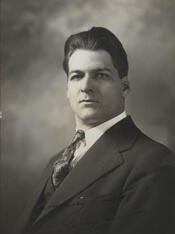
Here you will find contact information for Representative Sydney Anderson, including email address, phone number, and mailing address.
| Name | Sydney Anderson |
| Position | Representative |
| State | Minnesota |
| District | 1 |
| Party | Republican |
| Status | Former Representative |
| Term Start | April 4, 1911 |
| Term End | March 3, 1925 |
| Terms Served | 7 |
| Born | September 18, 1881 |
| Gender | Male |
| Bioguide ID | A000233 |
About Representative Sydney Anderson
Sydney Anderson (September 18, 1881 – October 8, 1948) was a United States Representative from Minnesota and a prominent Republican legislator during the early twentieth century. He was born in Zumbrota, Minnesota, where he attended local primary schools before entering military service. In 1898, during the Spanish–American War, he served as a private in Company D, Fourteenth Regiment, Minnesota Volunteer Infantry, an experience that introduced him at a young age to national service and public duty.
After his military service, Anderson completed his secondary education, graduating from high school in 1899. He then pursued higher education at Highland Park College in Des Moines, Iowa, and subsequently attended the University of Minnesota in Minneapolis. During this period he studied law, preparing for a professional career in the legal field. Following his legal studies, he moved first to Kansas City, Missouri, and later to Lanesboro, Minnesota, where he engaged in the practice of law from 1904 to 1911, establishing himself as a young attorney with growing political interests.
Anderson’s formal political career began with his challenge to an established party leader. In 1910, at the age of 29, he ran in the Republican primary for Congress against incumbent James Albertus Tawney. Aligning himself with the Progressive wing of the Republican Party, he campaigned on a platform calling for drastically reduced tariffs and opposition to “Cannonism,” the term used for the centralized control of the House of Representatives under Speaker Joseph G. Cannon. His candidacy attracted the support of prominent Progressives, including former President Theodore Roosevelt and conservation leader Gifford Pinchot, and he successfully defeated Tawney in the primary, paving the way for his election to Congress.
Sydney Anderson served as a Representative from Minnesota in the United States Congress from March 4, 1911, to March 3, 1925. A member of the Republican Party, he was elected to seven consecutive terms, serving in the 62nd, 63rd, 64th, 65th, 66th, 67th, and 68th Congresses. During this significant period in American history, which encompassed the Progressive Era, World War I, and the early 1920s, Anderson contributed to the legislative process and participated actively in the democratic governance of the nation. As a member of the House of Representatives, he represented the interests of his Minnesota constituents while also engaging with broader national issues, consistent with his reform-oriented Republican background.
Within Congress, Anderson’s most notable leadership role came in the early 1920s. He chaired the Congressional Joint Commission of Agricultural Inquiry in 1921 and 1922, a body tasked with examining the economic conditions affecting American agriculture in the postwar period. His work on this commission reflected both his Midwestern roots and the growing concern in Congress over farm prices, rural credit, and the structural challenges facing agricultural producers. Despite his successful tenure and rising influence, Anderson declined to be a candidate for reelection in 1924 to the 69th Congress, choosing instead to transition from public office to positions in the private and quasi-public sectors.
Even before leaving Congress, Anderson began to shift his focus toward transportation and industry. He served as vice chairman of the research council of the National Transportation Institute in Washington, D.C., in 1923 and 1924, reflecting his interest in national transportation policy and infrastructure. In 1924 he became president of the Millers’ National Federation, with offices in Chicago, Illinois, and Washington, D.C., a post he held until 1929. His experience in this role led naturally to a senior executive career in the grain and milling industry. Beginning in 1930, he served as vice president, secretary, and later as a member of the board of directors of General Mills, Inc., in Minneapolis, positions he held from 1930 until his death in 1948. During World War II and the immediate postwar years, he further extended his influence in transportation policy as president of the Transportation Association of America, based in Chicago, from 1943 to 1948.
Sydney Anderson died in Minneapolis, Minnesota, on October 8, 1948, at the age of 67. He was buried in Lakewood Cemetery in Minneapolis. His career spanned military service, the law, seven terms in the United States House of Representatives, and prominent leadership roles in national transportation and industrial organizations. Through his congressional service and later executive positions, Anderson played a sustained role in shaping agricultural, transportation, and industrial policy during a transformative era in American history.