Representative Taul Bradford
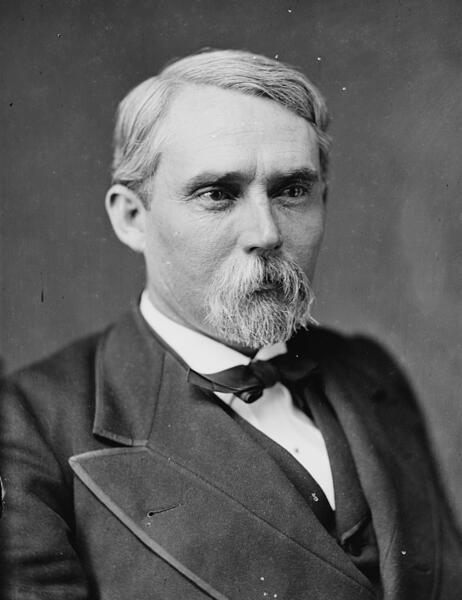
Here you will find contact information for Representative Taul Bradford, including email address, phone number, and mailing address.
| Name | Taul Bradford |
| Position | Representative |
| State | Alabama |
| District | 3 |
| Party | Democratic |
| Status | Former Representative |
| Term Start | December 6, 1875 |
| Term End | March 3, 1877 |
| Terms Served | 1 |
| Born | January 20, 1835 |
| Gender | Male |
| Bioguide ID | B000738 |
About Representative Taul Bradford
Taul Bradford (January 20, 1835 – October 28, 1883) was an attorney, Confederate Army officer, and Democratic politician from Talladega, Alabama, who served one term as a United States Representative during the post–Civil War Reconstruction era. Born in Talladega, the county seat of Talladega County, Alabama, he was the son of Jacob Tipton Bradford (1807–1866) and Louisiana (née Taul) Bradford (1808–1863). His given name, “Taul,” honored his mother’s birth family. Through his mother he was the grandson of Micah Taul, who moved from Tennessee to Alabama in 1846 and established a cotton plantation near Mardisville, Alabama, situating the family within the planter society of the antebellum South. Bradford received his early education in local schools in and around Talladega.
Bradford pursued higher education at the University of Alabama in Tuscaloosa, where he studied law and graduated in 1854. The following year, in 1855, he was admitted to the bar, marking the formal beginning of his legal career. He returned to his native Talladega to establish a law practice, building a professional reputation in the community in the decade preceding the Civil War. His training and early work as an attorney laid the foundation for his later public service at both the state and federal levels.
With the outbreak of the American Civil War, Bradford entered military service in the Confederate States Army. He was first commissioned as a major in the Tenth Regiment, Alabama Infantry. Although the precise dates of his service with this regiment are not documented, the unit endured heavy combat and suffered casualties of more than one-third by the time it ultimately furled its colors at Appomattox. Bradford resigned from this initial commission and later reentered Confederate service as a lieutenant colonel of the Thirtieth Regiment, Alabama Infantry. He again resigned before the end of the war, though the exact dates of his second period of service are not clearly recorded.
In the years following the Civil War, during the later phase of Reconstruction, Bradford transitioned from military to political life. A member of the Democratic Party, he was elected to the Alabama State House of Representatives, serving in 1871 and 1872. His legislative work at the state level occurred at a time when Alabama was grappling with the political, social, and economic consequences of the war and Reconstruction policies. This experience in state government helped position him for national office and reflected his growing prominence within Alabama’s Democratic Party.
Bradford was elected as a Democrat to the Forty-fourth Congress from Alabama in the elections of 1874. He served as a Representative in the United States House of Representatives from March 4, 1875, to March 3, 1877. During this single term in Congress, he participated in the legislative process at a critical juncture in American history, as the nation moved toward the end of Reconstruction and debated the reintegration of the former Confederate states and the future of civil and political rights in the South. As a member of the House of Representatives, Taul Bradford represented the interests of his Alabama constituents and contributed to the democratic process as part of the federal legislative branch. He did not stand for renomination in 1876, concluding his congressional service after one term in office.
After leaving Congress, Bradford returned to Talladega and resumed the practice of law. He continued his legal work there for the remainder of his life, maintaining his role as a prominent attorney in his hometown. Bradford died in Talladega, Alabama, on October 28, 1883. He was interred in Oak Hill Cemetery in Talladega, where his burial marked the close of a life that had spanned the antebellum period, the Civil War, Reconstruction, and the early years of the post-Reconstruction South.