Representative Ted Strickland
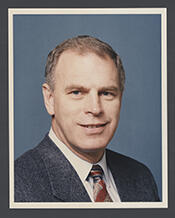
Here you will find contact information for Representative Ted Strickland, including email address, phone number, and mailing address.
| Name | Ted Strickland |
| Position | Representative |
| State | Ohio |
| District | 6 |
| Party | Democratic |
| Status | Former Representative |
| Term Start | January 5, 1993 |
| Term End | January 3, 2007 |
| Terms Served | 6 |
| Born | August 4, 1941 |
| Gender | Male |
| Bioguide ID | S001004 |
About Representative Ted Strickland
Theodore “Ted” Strickland (born August 4, 1941, in Lucasville, Scioto County, Ohio) is an American politician and psychologist who served as a U.S. Representative from Ohio and as the 68th governor of Ohio. A member of the Democratic Party, he was one of nine children born to Carrie (Carver) Strickland and Charles Orville Strickland. Raised in a modest household in rural southern Ohio, he graduated from Northwest High School in 1959. Strickland was the first member of his family to attend college, an experience that shaped his later focus on education and opportunity in public life.
Strickland pursued higher education at Asbury College in Wilmore, Kentucky, where he received a Bachelor of Arts degree in history with a minor in psychology in 1963. He continued his studies at the University of Kentucky in Lexington, earning a Master of Arts degree in guidance counseling in 1966. In 1967, he completed a Master of Divinity (M.Div.) at Asbury Theological Seminary, reflecting his deep engagement with both faith and counseling. Strickland later returned to the University of Kentucky and, in 1980, earned a Ph.D. in counseling psychology. He is an ordained minister in the United Methodist Church and is married to Frances Strickland, an educational psychologist.
Before entering elected office, Strickland worked in a variety of roles that combined counseling, education, and ministry. He served as a counseling psychologist at the Southern Ohio Correctional Facility in Lucasville, Ohio, gaining firsthand experience with the criminal justice and corrections systems. He also worked as an administrator at a Methodist children’s home and later became a professor of psychology at Shawnee State University in Portsmouth, Ohio. In addition, he served as a minister at a Methodist church in Portsmouth, further grounding his public service in pastoral and community work.
Strickland first sought election to the United States House of Representatives from Ohio’s 6th congressional district in 1976, 1978, and 1980, but was unsuccessful in those early campaigns, losing twice to long-time Republican incumbent William H. Harsha and later to Harsha’s successor and former campaign manager, Bob McEwen. He ran again in 1992 for the 6th District seat, once more facing McEwen, who had been politically damaged by his association with the House banking scandal. The newly configured 6th District, created after Ohio lost two congressional seats following the 1990 census, stretched from Lebanon in Warren County to Marietta in Washington County, encompassing multiple media markets and lacking major urban centers or unifying regional institutions, making it a challenging district in which to campaign. Despite these obstacles, Strickland narrowly defeated McEwen in the general election on November 3, 1992, receiving 122,720 votes to McEwen’s 119,252, a margin of 3,468 votes—just over 1.4 percent—and began serving in January 1993 in the 103rd Congress.
Ted Strickland served as a Representative from Ohio in the United States Congress from 1993 to 2007. A member of the Democratic Party, he contributed to the legislative process during six terms in office. His service in Congress occurred during a significant period in American history. As a member of the House of Representatives, Strickland participated in the democratic process and represented the interests of his constituents. He was among the many Democrats who lost their seats in the Republican surge of 1994, narrowly losing to businessman Frank Cremeans after his first term. Strickland reclaimed the 6th District seat in 1996 in another close race and returned to Congress in January 1997 with the 105th Congress. He faced a strong challenge from Lieutenant Governor Nancy Hollister in 1998 but turned it back, and in subsequent elections he was reelected by increasingly large margins, running unopposed in 2004. During his tenure, he served on the House Committee on Energy and Commerce and the House Committee on Veterans’ Affairs, where he focused on issues affecting working families, health care, energy policy, and veterans.
Strickland successfully ran for governor of Ohio in 2006, when Republican Governor Bob Taft was term-limited and could not seek re-election. He selected former Ohio attorney general and 1998 Democratic gubernatorial nominee Lee Fisher as his running mate and won the Democratic primary on May 2, 2006, with 80 percent of the vote. His campaign received endorsements from organizations including the Fraternal Order of Police and the Ohio Federation of Teachers, and in September 2006 a group calling itself Republicans for Strickland publicly announced its support for his candidacy. In the November 7, 2006 general election, Strickland defeated Republican secretary of state Ken Blackwell, Libertarian economist Bill Peirce, and Green Party candidate Bob Fitrakis, winning by 961,174 votes and receiving about 60 percent of the vote. He was sworn in as the 68th governor of Ohio on January 8, 2007, and, as of 2026, remains the most recent Democrat to have served as governor of the state.
As governor, Strickland confronted significant fiscal challenges, particularly during the national economic downturn of 2007–2009. In June 2007, Ohio lawmakers approved a $52 billion budget for the 2008–2009 fiscal biennium. Facing a revenue shortfall in January 2008, Strickland ordered a $733 million reduction in state spending, including job cuts and the closure of state mental health facilities. He implemented an additional $540 million in cuts in September 2008 and, in December 2008, announced a $640 million budget gap. In 2009, he signed legislation postponing the final phase of a scheduled series of state income tax reductions from 2009 to 2011, using an anticipated $844 million in tax refunds to help close the budget deficit. During his tenure, Ohio’s rainy day fund was drawn down from $1 billion to 89 cents to balance the budget; some estimates indicated that the state would have faced a $7 billion deficit had such measures and cuts not been taken. Strickland also signed a renewable portfolio standard in 2008 requiring that 25 percent of Ohio’s electricity come from renewable sources by 2025, and he issued an executive order that year overhauling business regulations. In 2010, he supported the renewal of the state’s Third Frontier program to promote high-technology economic development.
Strickland’s governorship included major initiatives in higher education, veterans’ affairs, health care, and public safety, as well as controversial decisions in areas such as criminal justice and gambling. In 2007, he signed an executive order creating the University System of Ohio, unifying the state’s public higher education institutions under a coordinated framework. He sought to reduce funding for school voucher programs, arguing for strengthening public schools, and opposed federally subsidized abstinence-only sex education. In 2007, he signed legislation exempting military veterans’ retirement benefits from state taxation and issued an executive order establishing a council to oversee the creation of the Ohio Department of Veterans Services as a cabinet-level agency. In 2008, he signed an executive order creating the Ohio G.I. Promise, which granted in-state tuition rates at public colleges and universities to all veterans using G.I. Bill benefits, though he vetoed separate legislation that would have provided small cash bonuses to veterans of the Persian Gulf, Iraq, and Afghanistan wars from the state’s rainy day fund. He also signed an executive order requiring insurance companies to offer policyholders the option of adding or retaining unmarried dependent children on their health insurance policies up to age 28.
On criminal justice and public safety, Strickland took a nuanced approach. Regarding capital punishment, he delayed three executions for further review and commuted five death sentences, but declined to commute three others, including that of Kenneth Biros, whose scheduled execution on March 20, 2007, was later stayed by the U.S. Court of Appeals for the Sixth Circuit before ultimately being carried out in December 2009. In later years, Strickland expressed regret that he had not halted executions entirely as governor and, in 2020, endorsed legislation to abolish the death penalty in Ohio, stating that “the system of justice is not perfect, and death is final.” In 2008, he signed Ohio’s “castle doctrine” legislation, which established a legal presumption that a person acts in self-defense when using deadly force against someone unlawfully entering their home or occupied vehicle, a measure supported by the National Rifle Association. During his tenure, a constitutional amendment passed allowing casinos in Cincinnati, Cleveland, Toledo, and Columbus. Although initially opposed to casino gambling, Strickland reconsidered the issue in light of revenue shortfalls and also explored the use of video lottery terminals at Ohio racetracks as a potential revenue source, at one point indicating he would seek judicial clarification of whether the executive branch had authority to implement such terminals through the Ohio Lottery Commission.
Strickland’s administration also dealt with high-profile controversies and administrative challenges. In June 2007, a state government computer backup tape containing the names and Social Security numbers of approximately 64,000 state employees, 84,000 welfare recipients, and tens of thousands of other individuals was stolen, drawing widespread media attention. In response, Strickland issued an executive order revising state data-handling practices to improve security. During the 2008 presidential campaign, his director of the Ohio Department of Job and Family Services, Helen Jones-Kelley, authorized database searches on Samuel Joseph “Joe” Wurzelbacher, known as “Joe the Plumber,” after he publicly questioned then-Senator Barack Obama. The searches were deemed unauthorized; Strickland suspended Jones-Kelley without pay and she was investigated by the Ohio attorney general. She resigned in December 2008, and Strickland appointed Douglas E. Lumpkin as her successor. In 2010, Strickland opposed legislation that would have legalized medical cannabis in Ohio, though after leaving office he reversed his position and, by 2015, publicly supported legalizing recreational cannabis use.
In the 2010 gubernatorial election, Strickland sought a second term but was narrowly defeated by Republican former U.S. Representative John Kasich. After leaving office in January 2011, Strickland remained active in public policy and Democratic politics. In April 2014, he became president of the Center for American Progress Action Fund, the advocacy arm of the Center for American Progress, a prominent progressive public policy research and advocacy organization based in Washington, D.C. He left that position in February 2015 and soon thereafter announced his candidacy for the United States Senate in Ohio, challenging incumbent Republican Senator Rob Portman in the 2016 election cycle. Strickland lost that race by a margin of approximately 20 percentage points. Throughout his later career, he has continued to speak and advocate on issues including economic fairness, education, criminal justice reform, and the abolition of the death penalty, maintaining a significant presence in Ohio and national Democratic politics.