Representative Terry L. Bruce
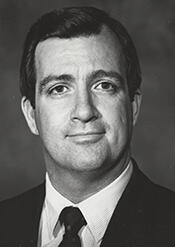
Here you will find contact information for Representative Terry L. Bruce, including email address, phone number, and mailing address.
| Name | Terry L. Bruce |
| Position | Representative |
| State | Illinois |
| District | 19 |
| Party | Democratic |
| Status | Former Representative |
| Term Start | January 3, 1985 |
| Term End | January 3, 1993 |
| Terms Served | 4 |
| Born | March 25, 1944 |
| Gender | Male |
| Bioguide ID | B000971 |
About Representative Terry L. Bruce
Terry Lee Bruce (born March 25, 1944) is an American politician, lawyer, and educator from Illinois who served as a Democratic Representative in the United States Congress from 1985 to 1993. He was born in Olney, Illinois, on March 25, 1944, and has maintained close ties to his hometown throughout his life. A resident of Olney for much of his career, Bruce later raised his family there with his wife, Charlotte (1944–2024), with whom he had two daughters, Emily and Ellen.
Bruce attended the University of Illinois at Urbana–Champaign, where he completed his undergraduate studies before enrolling in the University of Illinois College of Law. He was admitted to the bar in 1969. Early in his professional life, he gained experience in public service and legislative work by serving at the United States Department of Labor on issues related to farmworkers and by working as an intern on the staff of Illinois politician Tom McGloon. He also served on the staffs of U.S. Representative George Shipley and Illinois State Senator Philip Benefiel, experiences that helped shape his understanding of both federal and state legislative processes. When he announced his candidacy for the Illinois Senate in November 1969, Bruce was practicing law as an attorney in Olney.
Bruce’s formal political career began in the Illinois General Assembly. His initial election to the Illinois Senate came in 1971, when he won the seat representing the 55th District, a race made possible in part by the retirement of incumbent Senator Paul W. Broyles. Following redistricting, he stood for reelection in 1972 in the 54th District, facing a challenge from Henry Hendren. During his tenure in the Illinois Senate, which lasted from 1971 to January 3, 1985, Bruce emerged as a prominent figure in the Democratic caucus. He was a leader of the Democratic Study Group, which he jokingly referred to as the “Crazy 8,” and he served as assistant majority leader from 1975 to 1984. In 1977, he sought the presidency of the Illinois Senate, running against Thomas Hynes to succeed Cecil Partee; after 186 ballots, Hynes prevailed over Bruce’s Democratic faction and the Republican caucus. Bruce was also among those legislators who opposed an “eleventh-hour” action in 1981—ultimately accepted—to increase compensation for members of the Illinois General Assembly. He resigned from the Illinois Senate effective January 3, 1985, and local Democratic leaders appointed former state legislator William L. O’Daniel to fill the vacancy created by his departure.
Bruce’s path to the U.S. House of Representatives was shaped by earlier congressional politics in downstate Illinois. In 1977, when Democratic incumbent George E. Shipley chose to retire after ten terms in the U.S. House rather than run in the 1978 election, Bruce sought to succeed him in Illinois’s 22nd congressional district. He defeated Don Watson, Shipley’s brother-in-law, for the Democratic nomination, but in the general election he faced Republican Dan Crane, the brother of Chicago-area Congressman Phil Crane. Amid voter apathy toward Bruce’s candidacy and Crane’s ability to win several traditionally Democratic strongholds in the district, Bruce was defeated in that 1978 race. Crane later became embroiled in scandal, and on July 14, 1983, the House Ethics Committee recommended that he be reprimanded for having engaged in a sexual relationship with a 17-year-old female House page.
In the 1984 election cycle, Bruce again sought a seat in Congress and ran against Dan Crane, this time in Illinois’s 19th congressional district. Capitalizing on the changed political climate following Crane’s reprimand and drawing on his long record in state government, Bruce defeated Crane in the general election. He was elected to the Ninety-ninth Congress and to the three succeeding Congresses, serving four terms in the U.S. House of Representatives from January 3, 1985, to January 3, 1993. During this period, he represented Illinois’s 19th congressional district and participated in the legislative process during a significant era in American history, contributing to debates and policymaking on behalf of his constituents. As a member of the House of Representatives, Bruce took part in the democratic process at the federal level and worked to represent the interests and concerns of the people of his district over the course of his eight years in office.
Bruce’s congressional career came to an end following redistricting prior to the 1992 elections, when his district was effectively merged with that of fellow Democratic incumbent Glenn Poshard. In the ensuing primary contest, Bruce was unsuccessful in securing renomination, losing to Poshard. His departure from Congress on January 3, 1993, concluded a combined legislative career of more than two decades in state and federal office, during which he had served continuously in elected legislative positions from 1971.
After leaving Congress, Bruce turned his attention to higher education administration and community college governance. From 1996 to 2019, he served as the chief executive officer of Illinois Eastern Community Colleges (IECC), a four-college system that includes Wabash Valley College in Mount Carmel, Olney Central College in Olney, Lincoln Trail College in Robinson, and Frontier Community College in Fairfield. In this role, he oversaw the administration and development of institutions serving a broad region of southeastern Illinois, further extending his public service into the realm of education. His leadership at IECC spanned more than two decades, reflecting a sustained commitment to expanding educational opportunities and strengthening local institutions.
Bruce also played a significant role in statewide community college policy. In September 2012, Governor Pat Quinn appointed him to the Illinois Community College Board (ICCB), where he succeeded former board member Dianne Meeks. He continued to serve on the ICCB with a term scheduled to expire on June 30, 2021, and at one point held the position of vice chairman of the board. Governor Bruce Rauner later reappointed him to the ICCB for a term from March 20, 2015, until June 30, 2015, to succeed Rodolfo Valdez. Through these appointments and his long tenure in community college leadership, Bruce remained active in public affairs in Illinois well into the twenty-first century, maintaining his longstanding engagement with education, governance, and civic life while residing in Olney.