Representative Thaddeus Coleman Pound
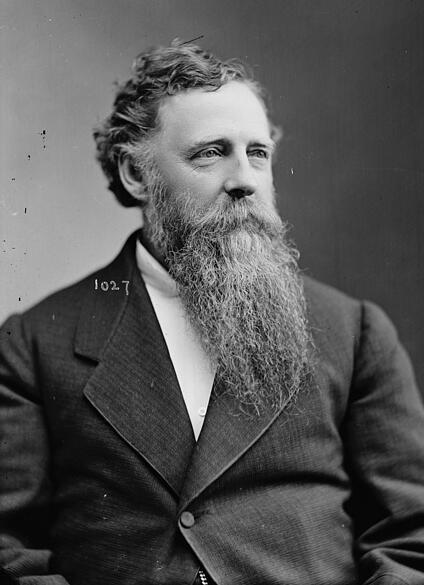
Here you will find contact information for Representative Thaddeus Coleman Pound, including email address, phone number, and mailing address.
| Name | Thaddeus Coleman Pound |
| Position | Representative |
| State | Wisconsin |
| District | 8 |
| Party | Republican |
| Status | Former Representative |
| Term Start | October 15, 1877 |
| Term End | March 3, 1883 |
| Terms Served | 3 |
| Born | December 6, 1833 |
| Gender | Male |
| Bioguide ID | P000476 |
About Representative Thaddeus Coleman Pound
Thaddeus Coleman Pound (December 6, 1832 – November 20 or 21, 1914) was an American businessman and Republican politician from Wisconsin who became a significant figure in both state and national government in the late nineteenth century. Born in Elk, Warren County, Pennsylvania, he moved west as a young man and settled in the lumbering region of Wisconsin, where he established himself in business and public affairs. His family would later gain additional renown through his grandson, the poet Ezra Pound, of whom he was the paternal grandfather.
Pound’s early life was shaped by the frontier conditions of the upper Midwest. After leaving Pennsylvania, he settled in what became Chippewa Falls, Wisconsin, a community that grew rapidly with the expansion of the lumber industry. There he entered the lumber trade and related enterprises, gaining experience in commerce, land, and transportation that would underpin both his business career and his political influence. His brother, Albert Pound, also became active in public life and served in the Wisconsin State Assembly, indicating the family’s broader engagement in politics and civic leadership.
Although details of Pound’s formal education are limited, his rise in business and politics reflected the self-education and practical training common among mid-nineteenth-century entrepreneurs in the developing West. Immersed in the commercial life of Chippewa Falls, he acquired expertise in lumber operations, railroads, and local infrastructure, and he became known as an energetic organizer and promoter of regional development. This combination of business acumen and public-mindedness led naturally into elective office at the state level.
Pound’s political career in Wisconsin began in the state legislature, where he served in both houses. He was elected to the Wisconsin State Assembly and later to the Wisconsin State Senate, participating in the shaping of state policy during a period of rapid economic growth and post–Civil War adjustment. His legislative work and growing prominence within the Republican Party culminated in his election as the 10th lieutenant governor of Wisconsin. In that capacity he presided over the State Senate and played a visible role in state governance, aligning with the Republican emphasis on economic development, internal improvements, and the consolidation of Reconstruction-era gains.
Building on his state-level experience, Pound was elected as a Representative from Wisconsin to the United States Congress, serving three consecutive terms from 1877 to 1883. As a member of the House of Representatives during a significant period in American history marked by the end of Reconstruction, the rise of industrialization, and contentious debates over currency and tariffs, he participated in the legislative process and represented the interests of his Wisconsin constituents. A member of the Republican Party, he contributed to national discussions on economic policy, infrastructure, and the needs of a rapidly developing Upper Midwest, reflecting both his party’s priorities and his own background in business and transportation.
Throughout and beyond his congressional service, Pound remained a prominent businessman in Wisconsin. He served as president of the Chippewa Falls and Western Railway and the St. Paul Eastern Grand Trunk Railway, both of which were predecessors of the Soo Line Railroad and played important roles in opening northern Wisconsin and neighboring regions to commerce. He also held the presidency of the Chippewa Spring Water Company, a firm that continued in operation well into the twenty-first century, and led the Union Lumber Company, which in 1879 was reorganized as the Chippewa Falls Lumber and Boom Company. These enterprises underscored his central role in the economic development of Chippewa Falls and the surrounding area, particularly in lumber, transportation, and natural resources.
In his later years, Pound continued to be identified with the civic and economic life of Wisconsin, his name closely associated with the growth of Chippewa Falls and the broader region. His family connections extended his legacy into American cultural history through his grandson, Ezra Pound, whose literary career brought renewed attention to the family’s origins in Wisconsin. Thaddeus Coleman Pound died on November 20 or 21, 1914, closing a life that spanned from the antebellum era through the dawn of the modern industrial United States and that combined substantial achievements in business, state government, and national legislative service.