Representative Theodore Frank Appleby
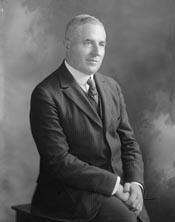
Here you will find contact information for Representative Theodore Frank Appleby, including email address, phone number, and mailing address.
| Name | Theodore Frank Appleby |
| Position | Representative |
| State | New Jersey |
| District | 3 |
| Party | Republican |
| Status | Former Representative |
| Term Start | April 11, 1921 |
| Term End | March 3, 1923 |
| Terms Served | 1 |
| Born | October 10, 1864 |
| Gender | Male |
| Bioguide ID | A000267 |
About Representative Theodore Frank Appleby
Theodore Frank Appleby (October 10, 1864 – December 15, 1924) was an American realtor, insurance agent, banker, and Republican Party politician from Asbury Park, New Jersey, who represented Middlesex, Monmouth, and Ocean counties in the United States House of Representatives from 1921 to 1923. He was born on October 10, 1864, in Old Bridge, New Jersey, to Theodore Appleby and Margaret S. (née Mount) Appleby. Raised in central New Jersey, he attended the public schools of Asbury Park and later studied at Pennington Seminary. He completed his formal education at Fort Edward Collegiate Institute in Fort Edward, New York, graduating in 1885.
After his graduation, Appleby returned to Asbury Park and entered the real estate business, quickly establishing himself in the city’s growing property market. He became a member of the New Jersey Real Estate Exchange and was active in the Asbury Park Building and Loan Association, reflecting his early and sustained involvement in local economic development. He expanded his business interests into insurance, serving for several years as president of the New Jersey Fire Underwriters, and was also a member of the New Jersey Chamber of Commerce. In banking, he served as a director of the Asbury Park and Ocean Grove Bank and attended many conventions of the American Bankers Association, underscoring his prominence in financial circles within the state.
Appleby’s public career began in local education governance. In 1887 he was elected to the Asbury Park Board of Education, on which he served for ten years, from 1887 to 1897. His work in local education led to broader responsibilities at the state level; from 1894 to 1902 he served on the New Jersey Board of Education. He was also appointed by the governor to the board of the New Jersey Geological Survey, reflecting the confidence state officials placed in his judgment on matters of public policy and development. In 1896, he was elected by the New Jersey Republican convention as a district delegate to the Republican National Convention, marking his emergence as a figure of influence within the state Republican Party.
At the municipal level, Appleby played a central role in the governance of Asbury Park during a period of rapid growth. He was elected to the Asbury Park city council in 1899 and served until 1906, holding the position of council president for five terms. He was subsequently elected mayor of Asbury Park twice and served from 1908 to 1912. Beyond city government, he was a member of the Monmouth County Board of Taxation from 1917 to 1920 and served as chair of the Ocean Boulevard Committee, which was involved in regional infrastructure and development along the New Jersey shore. During the controversy over Prohibition in New Jersey, Governor John Franklin Fort appointed Appleby to a commission to investigate excise conditions in the state. The commission’s report alleged that many local officials failed to enforce state liquor laws and that liquor continued to be sold and consumed even in so‑called “dry towns,” placing Appleby in the midst of a contentious statewide policy debate.
Appleby’s federal career began with his election in 1920 as a Republican to the 67th Congress, representing New Jersey’s 3rd congressional district, which then comprised Monmouth County and neighboring Middlesex and Ocean counties. He served one term in the United States House of Representatives from 1921 to 1923. As a member of the House of Representatives during a significant period in American history following World War I, Theodore Frank Appleby participated in the legislative process, contributed to the work of the Republican majority, and represented the interests of his constituents from central New Jersey. He lost his bid for reelection in 1922 but remained active in politics and public affairs. In 1924, he successfully ran again for his former seat and won election to the next Congress. During the 1924 campaign, Appleby received the endorsement of the Ku Klux Klan, a reflection of the complex and often divisive political currents of the era, though he did not live to take the oath of office for this new term.
In his personal life, Appleby married Alice C. Hoffman on April 10, 1889, in Somerville, New Jersey. The couple had three sons: Stewart H. Appleby, born in 1890; Richard H. Appleby, born in 1891; and Theodore F. Appleby II, born in 1895. Appleby was fond of travel and undertook an extensive trip to England, France, and Italy, and he visited the Panama Canal while it was still under construction, reflecting his interest in international affairs and major engineering projects. He was also a member of the Deal Golf Club in Deal, New Jersey, indicating his participation in the social and civic life of the region.
Theodore Frank Appleby died on December 15, 1924, in Baltimore, Maryland, after having been elected to return to Congress but before he could be sworn in for his new term. He was buried in Chestnut Hill Cemetery near Old Bridge in East Brunswick, New Jersey, close to his birthplace. Following his death, his eldest son, Stewart H. Appleby, succeeded him and took his seat in the next Congress, continuing the family’s representation of New Jersey in the United States House of Representatives.