Representative Theodore Arlington Bell
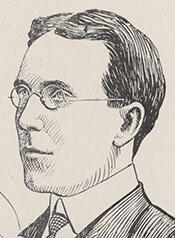
Here you will find contact information for Representative Theodore Arlington Bell, including email address, phone number, and mailing address.
| Name | Theodore Arlington Bell |
| Position | Representative |
| State | California |
| District | 2 |
| Party | Democratic |
| Status | Former Representative |
| Term Start | November 9, 1903 |
| Term End | March 3, 1905 |
| Terms Served | 1 |
| Born | July 25, 1872 |
| Gender | Male |
| Bioguide ID | B000347 |
About Representative Theodore Arlington Bell
Theodore Arlington Bell (July 25, 1872 – September 4, 1922) was an American lawyer and politician who served one term as a Democratic Congressman from California from 1903 to 1905. Born in Vallejo, Solano County, California, on July 25, 1872, he was the son of Charles E. Bell and Catherine J. Bell (née Mills). In 1876, when he was still a young child, the family moved to St. Helena in Napa County, where he attended primary school at the Crystal Spring school. Growing up in what would later become California’s wine country, Bell was exposed early to the agricultural and local economic interests that would later shape aspects of his public career.
As a young man, Bell pursued both education and the study of law. At the age of 18 he received a teaching certificate and taught school for about a year and a half in northern Napa County. During this period he continued to study law independently, preparing himself for a legal career. He was admitted to the bar on July 25, 1893—his twenty‑first birthday—and commenced the practice of law in Napa County. Around this time he married Anna Marie Muller; the couple had one daughter, Maurine. His early legal work and community standing quickly drew him into public office.
Bell’s formal political career began when he was elected district attorney of Napa County, serving from 1895 to 1903. As district attorney he gained a reputation as a capable prosecutor and an energetic young Democrat in a region undergoing rapid economic and social development. His performance in that office, combined with his growing network within the Democratic Party, positioned him for higher office at the state and national levels. During these years he solidified ties with influential party leaders, including former San Francisco mayor James D. Phelan, who would become a key political mentor.
With the backing of Phelan, Bell was elected as a Democrat to the Fifty‑eighth Congress, serving from March 4, 1903, to March 3, 1905, as the representative of California’s 2nd Congressional District. His service in Congress occurred during a significant period in American history marked by Progressive Era reforms and debates over economic regulation and resource development. As a member of the House of Representatives, Bell participated in the legislative process and represented the interests of his California constituents. He served on the House Committee on Irrigation of Arid Lands, a post of particular importance to Western states, where issues of water use, reclamation, and agricultural development were central to regional growth. A member of the Democratic Party throughout his term, he contributed to the deliberations of the House on matters affecting both his district and the broader nation. In the 1904 election he was defeated for reelection by Republican Duncan E. McKinlay, bringing his congressional service to a close after one term.
After leaving Congress, Bell remained a prominent figure in California politics. He was the Democratic candidate for the United States Senate in 1905 but lost to Republican Frank P. Flint. He then turned repeatedly to the gubernatorial arena, running for Governor of California three times. In 1906 he was the Democratic nominee and came within 2.6 percent of defeating Republican James Gillett, receiving roughly 38 percent of the vote in a closely contested race. He again ran for governor as a Democrat in 1910, securing around 40 percent of the vote, and later sought the office as an Independent in 1918, when he received about 36 percent. Although unsuccessful in each bid, these campaigns underscored his continuing influence and visibility in state politics.
Bell also played a notable role in national Democratic affairs. He served as a delegate to the 1908 Democratic National Convention, where he delivered the nomination speech for William Jennings Bryan, the party’s presidential standard-bearer. He was again a delegate to the Democratic National Convention in 1912, participating in the proceedings that led to the nomination of Woodrow Wilson. Over time, however, his political views and affiliations evolved. Despite his long service as a Democrat and his prominence within the party, Bell ultimately changed his party allegiance and became a Republican in 1921, reflecting shifting political currents in California and the nation in the years following World War I.
Throughout his career, Bell’s representation of California’s wine-producing region influenced his stance on alcohol regulation. Although he was not a prohibitionist, his mentor Phelan was a strong teetotaler. Seeking to reconcile these competing pressures, Bell supported measures that would regulate alcohol in ways that did not unduly harm local vintners. He notably lobbied for a tax increase on wines with added sugar, which were largely imported from out of state. This approach aimed to raise tax revenue and respond to temperance concerns while protecting the economic interests of California’s wine industry and reducing the likelihood of more sweeping prohibition measures that could have damaged his constituents’ livelihoods.
Theodore Arlington Bell’s life was cut short on September 4, 1922, when he was killed in an automobile accident in Marin County, California. His death ended a career that had spanned local, state, and national politics during a transformative era in American public life. He was interred at Odd Fellows Cemetery in St. Helena, Napa County, returning in death to the community where he had grown up, begun his professional life, and built the political base that carried him to the United States Congress.