Senator Theodore Elijah Burton
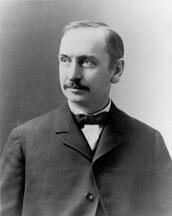
Here you will find contact information for Senator Theodore Elijah Burton, including email address, phone number, and mailing address.
| Name | Theodore Elijah Burton |
| Position | Senator |
| State | Ohio |
| Party | Republican |
| Status | Former Representative |
| Term Start | December 2, 1889 |
| Term End | October 28, 1929 |
| Terms Served | 14 |
| Born | December 20, 1851 |
| Gender | Male |
| Bioguide ID | B001159 |
About Senator Theodore Elijah Burton
Theodore Elijah Burton (December 20, 1851 – October 28, 1929) was an American attorney and Republican politician from Ohio who served in the United States House of Representatives, the United States Senate, and the Cleveland City Council. Over the course of a long public career that extended from the late nineteenth century into the late 1920s, he represented Ohio in Congress during a significant period in American history and contributed to the legislative process in both chambers, ultimately serving a combined total of fourteen terms in the House and Senate.
Burton was born on December 20, 1851, in Jefferson, Ashtabula County, Ohio, the son of Elizabeth (Grant) Burton and the Rev. William Burton. He attended public schools in Ohio and pursued further studies at the Grand River Institute in Austinburg, Ohio, and at Iowa College in Grinnell, Iowa. He completed his formal higher education at Oberlin College, from which he graduated in 1872. After college, he read law in Chicago under Lyman Trumbull, a close associate of Abraham Lincoln and a longtime United States senator from Illinois, receiving a legal training that combined practical instruction with exposure to national politics.
Admitted to the bar in the mid-1870s, Burton commenced the practice of law in 1875 and became a prominent attorney in Cleveland, Ohio. His legal work, including corporate practice, brought him into contact with business interests and civic affairs in the growing industrial city. His first public office was as a member of the Cleveland City Council, on which he served from 1886 through 1888. This municipal experience marked his entry into elective politics and provided a foundation for his subsequent service at the national level.
Burton was elected as a Republican to the United States House of Representatives from Ohio’s 21st Congressional District for the Fifty-first Congress in the election of 1888. He served from March 4, 1889, to March 3, 1891, but was defeated for re-election in 1890 by Democrat Tom L. Johnson. Not renominated by his party in 1892, Burton returned to private life until he was again nominated in 1894. That year he won election to the Fifty-fourth Congress, defeating his former opponent and then-incumbent Tom L. Johnson. He was subsequently re-elected seven times, serving continuously in the House from March 4, 1895, until his resignation in 1909 following his election to the Senate. During this extended House service he became known for his opposition to wasteful spending, particularly on waterways projects, and for his efforts to preserve Niagara Falls. Despite his background as a corporate lawyer, he resisted the influence of big business and, in his first term, co-sponsored the Sherman Antitrust Act, a landmark measure aimed at curbing monopolistic practices. He also played a key role in sponsoring legislation authorizing the construction of the Panama Canal, an undertaking of major strategic and commercial importance to the United States.
In recognition of his expertise on rivers and harbors and his interest in conservation and infrastructure, President Theodore Roosevelt appointed Burton chairman of the Inland Waterways Commission in 1907 and of the National Waterways Commission in 1909. After his re-election to the House in 1908, Burton was chosen by the Ohio legislature as a United States senator, and he resigned his House seat to take up his new office. He served in the Senate from 1909 to 1915, during which time he chaired the Senate Committee on Rivers and Harbors and continued his advocacy for responsible development of the nation’s waterways and opposition to unnecessary or extravagant public works. He did not seek a second full Senate term and, at the conclusion of his service in 1915, moved to New York City, where he worked in banking for several years. By 1916, his national standing within the Republican Party was such that he was considered a possible presidential candidate; at the 1916 Republican National Convention he received 77½ votes on the first ballot out of 987.
Burton returned to Ohio politics in 1920 and was elected once more to the House of Representatives, this time from Ohio’s 22nd Congressional District, whose boundaries had been altered in 1912. He served in the House during this later period from March 4, 1921, and was re-elected in 1922, 1924, and 1926. During these years he again participated actively in the legislative process and represented the interests of his Ohio constituents. President Warren G. Harding appointed him in 1922 to the World War Debt Funding Commission, which was charged with addressing the complex issue of war debts owed to the United States by foreign governments following World War I. In 1925 he served as chairman of the United States delegation to the international conference for the control of the traffic in arms at Geneva, Switzerland, reflecting his growing involvement in questions of international policy and peace.
In addition to his congressional responsibilities, Burton was active in organized peace efforts. As president of the American Peace Society, he hosted the First World Conference on International Justice in Cleveland in 1928, an event attended by approximately 13,000 participants, including a number of world leaders and prominent advocates of international cooperation. That same year he chose not to seek another term in the House. Instead, following the death of Senator Frank B. Willis on March 30, 1928, Burton ran in and won a special election to fill the unexpired Senate term. He took his seat in the Senate on December 15, 1928, resuming his role as a Republican senator from Ohio and serving during the opening months of the Hoover administration. His final period in the Senate extended his overall congressional career, which, in combination with his earlier House and Senate service, spanned from 1889 to 1929 and encompassed fourteen terms in office.
Outside his formal public duties, Burton maintained ties to Ohio through his residence and personal interests. From 1900 to 1912 he owned a country home in Dover, now Westlake, Ohio, in a house originally built in 1838 by Thomas and Jane Hurst. This property was later documented by the Historic American Buildings Survey in 1936 and commemorated by an Ohio Historical Marker in 2002, underscoring its historical significance and association with Burton. He died in office on October 28, 1929, while serving in the United States Senate. His death occurred one day before Black Tuesday, October 29, 1929, the date of the catastrophic Wall Street crash that marked a pivotal moment in American economic history. His passing placed him among the members of the United States Congress who died in office during the first half of the twentieth century.