Representative Theodore Christianson
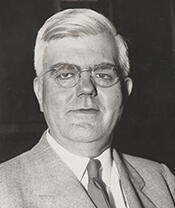
Here you will find contact information for Representative Theodore Christianson, including email address, phone number, and mailing address.
| Name | Theodore Christianson |
| Position | Representative |
| State | Minnesota |
| District | 5 |
| Party | Republican |
| Status | Former Representative |
| Term Start | March 9, 1933 |
| Term End | January 3, 1937 |
| Terms Served | 2 |
| Born | September 12, 1883 |
| Gender | Male |
| Bioguide ID | C000381 |
About Representative Theodore Christianson
Theodore Christianson (September 12, 1883 – December 9, 1948) was an American lawyer, newspaper editor, governor, and United States Representative from Minnesota. Born in Lac qui Parle Township, Minnesota, he was of Norwegian descent and grew up in western Minnesota, where he would later build both his legal and political careers. He attended Dawson High School in Dawson, Minnesota, laying the foundation for a lifelong engagement with public affairs and civic life in the region.
Christianson pursued higher education at the University of Minnesota, graduating in 1906. He continued his studies at the University of Minnesota Law School, from which he graduated in 1909. That same year, he was admitted to the Minnesota State Bar, formally beginning his legal career. His education in law and his early professional experiences would shape his approach to governance, particularly his emphasis on fiscal restraint and administrative reform.
Before entering statewide politics, Christianson developed dual careers in western Minnesota as both a practicing attorney and a journalist. He practiced law while serving as editor and publisher of the Dawson Sentinel for fifteen years. During his tenure at the newspaper, he published anti-German and anti-Bolshevik editorials, notably targeting Albert Pfaender of New Ulm, the son of William Pfaender. Christianson also entered elective office as a member of the Minnesota House of Representatives, where he served for five terms, gaining legislative experience and building a reputation as a fiscal conservative.
Christianson rose to statewide prominence when he was elected the 21st Governor of Minnesota. Running in 1924 with the campaign slogan “More Ted, Less Taxes,” he assumed office on January 6, 1925. As governor, he limited taxes and cut expenditures at every level of state government and was re-elected twice, serving until January 6, 1931. His administration established a three-member Commission of Administration and Finance—often referred to as the “Big Three”—which strengthened the veto power of the chief executive and enabled him to slash budget appropriations he considered extravagant. During his tenure, the Minnesota Senate and House of Representatives passed a eugenics-based sterilization bill; Christianson signed it into law, and on January 8, 1926, six women living in a mental asylum in Faribault were sterilized under its provisions. He also maintained correspondence and met with H. E. Kettering, the Minnesota Grand Dragon of the Ku Klux Klan, and in 1926 received a letter from W. A. Kanorr describing Klan members working in postmaster positions across Minnesota and the United States to monitor citizens’ mail.
In 1930, Christianson sought federal office as a candidate in the Republican primary for the United States Senate from Minnesota, placing second to incumbent Senator Thomas Schall. Following this defeat, he took a three-year hiatus from elective politics, during which he wrote a five-volume history of Minnesota titled The Land of Sky-Tinted Waters: A History of the State and Its People. He returned to public office when he was elected as a Republican to the United States House of Representatives in 1932. Christianson served as a Representative from Minnesota in the United States Congress from March 4, 1933, to January 3, 1937, encompassing two terms in office during a significant period in American history marked by the Great Depression and the early New Deal era. As a member of the House of Representatives, he participated in the democratic process, contributed to the legislative work of the 73rd and 74th Congresses, and represented the interests of his Minnesota constituents as a member of the Republican Party.
Christianson chose not to run for re-election to the House in 1936, instead launching another bid for the United States Senate in the 1936 election. He secured the Republican nomination and ran against former congressman Ernest Lundeen of the Farmer–Labor Party. In the general election, Christianson was defeated, receiving approximately 37 percent of the vote. This loss effectively ended his career in elective office, and he transitioned into national trade association and public relations work.
After leaving Congress and electoral politics, Christianson moved to Chicago, Illinois. From 1937 to 1939, he served as secretary-manager of the National Association of Retail Grocers. Beginning in 1938, he also worked as public relations counsel for the National Association of Retail Druggists, a position he held until 1945. From 1945 until his death in 1948, he was editor of The Journal of the National Association of Retail Druggists: Official Organ of the N.A.R.D., continuing his long-standing involvement with publishing and public communication. Christianson eventually retired to Dawson, Minnesota. He died there of a heart attack on December 9, 1948, at the age of 65, and was interred at Sunset Memorial Park Cemetery in Minneapolis, Minnesota. His family’s public service legacy continued through his son, also named Theodore Christianson, who served on the Minnesota Supreme Court. In 1989, Christianson was posthumously honored in his hometown of Dawson as the first person to be depicted as a community “gnome”; the wooden “Governor Ted” gnome, part of an annual tradition recognizing local service, is displayed in the Dawson Public Library.