Senator Theodore Foster
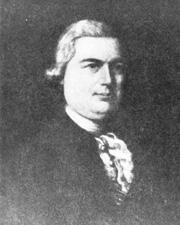
Here you will find contact information for Senator Theodore Foster, including email address, phone number, and mailing address.
| Name | Theodore Foster |
| Position | Senator |
| State | Rhode Island |
| Party | Republican |
| Status | Former Representative |
| Term Start | June 12, 1790 |
| Term End | March 3, 1803 |
| Terms Served | 3 |
| Born | April 29, 1752 |
| Gender | Male |
| Bioguide ID | F000313 |
About Senator Theodore Foster
Theodore Foster (April 29, 1752 – January 13, 1828) was an American lawyer and politician from Rhode Island who became one of the first two United States senators from that state and, following John Langdon, served as dean of the Senate. Born in Brookfield, Massachusetts, he was the son of Jedediah Foster, a prominent jurist who served as a justice of the Massachusetts Supreme Judicial Court and who had graduated from Harvard University in 1744. Theodore Foster was the elder brother of Dwight Foster, who later served as a United States senator from Massachusetts, and he was the great-uncle of Dwight Foster, who became attorney general of Massachusetts and a justice of the Massachusetts Supreme Judicial Court.
Foster pursued classical studies at the college in the English Colony of Rhode Island and Providence Plantations, now Brown University, from which he graduated in 1770. During his time in Rhode Island he became closely associated with Stephen Hopkins, the first chancellor of Brown University, chief justice of the colony, and a leading revolutionary patriot, and Foster was regarded as Hopkins’s protégé. After completing his undergraduate studies, Foster read law while living with fellow student Solomon Drowne, and he was admitted to the bar in 1771. He established his law practice in Providence, Rhode Island, where he quickly became involved in local affairs. He later received a master’s degree from Dartmouth College in 1786. Foster married the sister of Arthur Fenner, who would go on to serve as governor of Rhode Island and Providence Plantations, thereby further strengthening his ties to the state’s political leadership.
Even before the outbreak of the American Revolutionary War, Foster was active in the growing resistance to British authority. He played a role in the Gaspee Affair of 1772, an attack on and destruction of the British customs schooner HMS Gaspee in Narragansett Bay, carried out by John Brown and other Rhode Island patriots. This incident is widely regarded as one of the significant precursors to the Revolution, and Foster’s participation underscored his early commitment to colonial rights. During the Revolutionary era he distinguished himself as a staunch supporter of General George Washington and of the emerging Federalist cause. At the same time, he advanced in local public service, serving as town clerk of Providence from 1775 to 1787 and holding various other positions in the government of Rhode Island up to 1790.
Foster’s rising prominence in Rhode Island politics led to his selection for national office after the state ratified the United States Constitution. Until 1790 he held a variety of posts in the state government, and on June 12, 1790, he was elected to the United States Senate as one of Rhode Island’s first two senators. Although one source describes him as a member of the Republican Party, he was in fact aligned with the Federalist Party during his Senate career and later associated with the National Republican Party. Rhode Island’s state legislature re-elected him to the Senate in 1791 and again in 1797, and he served three terms, remaining in office from June 12, 1790, until March 3, 1803. During this period, which encompassed the administrations of George Washington, John Adams, and the early years of Thomas Jefferson’s presidency, Foster participated in the legislative process at a formative time in American history, representing the interests of his Rhode Island constituents and contributing to the development of federal policy. As his tenure progressed he became, after John Langdon, the dean of the Senate, recognized as its senior member.
After leaving the Senate in 1803, Foster initially retired from active public life and devoted himself to writing and historical research. He became an avid collector of documents relating to colonial and early Providence, assembling an extensive archive of manuscripts and records, many of which have never been published. His scholarly and antiquarian interests brought him into association with leading learned societies of the era. In 1820 he was elected a member of the American Antiquarian Society, reflecting national recognition of his contributions to historical preservation. He also served as a trustee of Brown University during this later period, maintaining his long-standing connection with the institution where he had been educated.
Foster’s retirement from politics was not permanent. He returned to public life to serve in the Rhode Island state legislature from 1812 to 1816, again taking part in the governance of the state during the years surrounding the War of 1812. He resided in the town of Foster, Rhode Island, which was named in his honor, further testifying to his standing in the state. When his old friend and former housemate Solomon Drowne returned to Rhode Island, Drowne settled on a farm known as Mount Hygeia adjacent to Foster’s property, and the two maintained their long association. In 1822 Foster helped to found the Rhode Island Historical Society, an institution dedicated to preserving the state’s historical record. After his death, his heirs sold his extensive collection of historical documents to the Society in 1833, ensuring that the materials he had gathered would remain available to future generations of scholars.
Theodore Foster died on January 13, 1828. He was interred in Swan Point Cemetery in Providence, Rhode Island. His life encompassed service as a lawyer, local official, United States senator, state legislator, and historian, and his efforts in both public office and historical preservation left a lasting imprint on Rhode Island’s political and cultural institutions.