Senator Theodore Francis Green
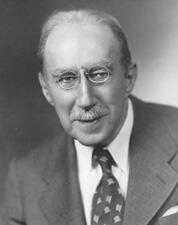
Here you will find contact information for Senator Theodore Francis Green, including email address, phone number, and mailing address.
| Name | Theodore Francis Green |
| Position | Senator |
| State | Rhode Island |
| Party | Democratic |
| Status | Former Representative |
| Term Start | January 5, 1937 |
| Term End | January 3, 1961 |
| Terms Served | 4 |
| Born | October 2, 1867 |
| Gender | Male |
| Bioguide ID | G000418 |
About Senator Theodore Francis Green
Theodore Francis Green (October 2, 1867 – May 19, 1966) was an American politician from Providence, Rhode Island, who became one of the longest-serving and oldest members of the United States Senate. A Democrat, he served as the 57th Governor of Rhode Island from 1933 to 1937 and represented Rhode Island in the United States Senate from January 3, 1937, to January 3, 1961, completing four terms in office. Green was a strong supporter of Wilsonian internationalism during the administrations of Franklin D. Roosevelt and Harry S. Truman and emerged as an influential liberal voice on both domestic and foreign policy. He served as chairman of the Senate Foreign Relations Committee from 1957 to 1959 and, at the time of his retirement in 1961, set a record as the oldest person ever to serve in the Senate at age 93, a mark later surpassed by Strom Thurmond.
Green was born in Providence, Rhode Island, to Arnold Green, a lawyer, and Cornelia Abby Burges. He graduated from Providence High School in 1883 and from Brown University in 1887, receiving a Master of Arts degree from Brown in 1888. He then pursued legal studies at Harvard Law School from 1888 to 1890 and continued his education in Europe at the University of Bonn and the University of Berlin from 1890 to 1892. Admitted to the Rhode Island bar in 1892, he embarked on a long legal career in Providence. A lifelong bachelor, Green devoted himself to the law, politics, and a wide range of civic, business, and cultural activities in his home state.
In addition to his legal practice, Green was active in business and military affairs. During the Spanish–American War he served in the Rhode Island Militia as a first lieutenant in command of a provisional infantry company. In the private sector he held prominent leadership positions, serving as president of the Morris Plan Bankers Association from 1900 to 1929 and as president of the J. P. Coats Company, a major textile-thread manufacturer, from 1912 to 1923. These roles gave him substantial experience in finance and industry that later informed his approach to economic and labor issues in public office.
Green entered public life in 1907 as a member of the Rhode Island House of Representatives. Over the following decades he became a central figure in the state Democratic Party, serving as chairman of party committees and as a delegate to Democratic National Conventions. His early electoral career was marked by repeated defeats: he was an unsuccessful candidate for governor in 1912, 1928, and 1930, and for the U.S. House of Representatives in 1920. Nevertheless, his persistence and party loyalty, combined with the political realignments brought on by the Great Depression, helped secure his election as governor in 1932. He took office in January 1933 and served two terms as governor from 1933 to 1937.
Green’s governorship coincided with a critical turning point in Rhode Island politics. Until the 1934 elections, the Republican Party had long dominated the Rhode Island Senate, in part because each municipality, regardless of population, elected one senator. This system allowed sparsely populated, largely Protestant Republican towns—such as West Greenwich, with 485 residents—to have the same senatorial representation as heavily populated, largely Democratic and immigrant cities such as Providence, with about 275,000 residents. Democrats denounced this arrangement as “feudal” and likened it to the “rotten boroughs” of pre-reform Britain. In the Democratic landslide of 1934, Green won reelection as governor and Democrats captured the Rhode Island House of Representatives but fell just short of a Senate majority, winning 20 seats to the Republicans’ 22. Democrats alleged fraud in two close Senate races. On January 1, 1935, Lieutenant Governor Robert E. Quinn refused to seat two Republican senators who had been certified as elected, and a three-member Senate committee—two Democrats and one Republican—recounted the ballots behind closed doors and unanimously declared the Democrats the winners. With the Senate thus brought under Democratic control, the General Assembly swiftly reorganized state government, vacated the state Supreme Court, and removed many Republican-dominated boards and commissions. The Providence Journal compared the episode to a Central American “coup d’état,” while state Democrats celebrated it as a “Bloodless Revolution” that ended decades of minority rule and significantly enhanced the power of the Democratic governor.
At the age of 69, Green was elected to the United States Senate in the national Democratic landslide of 1936 and took his seat on January 3, 1937. He would serve four consecutive terms, remaining in office until January 3, 1961, and throughout this period he represented Rhode Island during a transformative era encompassing the New Deal, World War II, the early Cold War, and the beginnings of the modern civil rights movement. Known as “the president’s man,” he was a loyal supporter of the Democratic presidents with whom he served and, to a greater extent than many northern Democrats, of Republican President Dwight D. Eisenhower. In domestic policy Green vigorously backed New Deal legislation. He supported President Franklin D. Roosevelt’s controversial 1937 proposal to reorganize, or “pack,” the Supreme Court, though the measure ultimately failed. He voted for key New Deal measures including wages and hours legislation and low-cost housing bills, and he consistently advocated farm and work relief, sustaining continuing appropriations for New Deal relief programs.
Green’s Senate career was particularly distinguished in the field of foreign relations. Beginning in 1938 he served for 20 of his 24 Senate years on the Senate Foreign Relations Committee, with only a brief interruption from 1947 to 1949. Before and during World War II he was a strong internationalist and an early opponent of Nazi expansion in Europe. He advocated expansion of the Navy and Army, pressed for revision of U.S. neutrality laws in the face of isolationist resistance, and championed the Lend-Lease Act, which he characterized in radio addresses as “Aid to America.” During the war he opposed proposals to exempt farm workers from the draft as a means of boosting agricultural production, and he secured passage of legislation authorizing the release of government-owned silver for war purposes. He also supported a law providing for absentee voting by servicemen stationed within the United States and chaired a Senate committee investigating violations of the Hatch Act. In an April 1943 confidential analysis prepared for the British Foreign Office, scholar Isaiah Berlin described Green as a former governor and “typical ‘progressive’ pro-New Deal businessman” who, though of “limited intellect,” was “right-minded to a degree and a completely reliable ally of the Administration” and a free trader with a particular antipathy toward the “Silver Bloc” in the Senate.
In the postwar years Green remained a steadfast advocate of international cooperation and a robust American role in world affairs. He was an early and committed supporter of the United Nations, which he called at the 1952 UN General Assembly—where President Truman appointed him as a U.S. delegate—the “last great hope of mankind.” He strongly backed Truman’s Cold War initiatives, including the Truman Doctrine, the Marshall Plan, the North Atlantic Treaty Organization, and U.S. intervention in Korea. In the Senate he joined a minority of 31 senators who, by a single vote, blocked the two-thirds majority needed to adopt the Bricker Amendment, which would have sharply limited presidential authority in foreign policy. Although wary of cuts in foreign aid under President Eisenhower, Green was one of the few northern Democrats who frequently supported Eisenhower administration measures in the Republican-controlled Senate of the Eighty-third Congress. In the Eighty-fifth Congress (1957–1958) he rose to become chairman of the Senate Foreign Relations Committee, and throughout his later Senate years he was a loyal ally of Democratic Majority Leader Lyndon B. Johnson.
Green also played a consistent role in advancing civil rights and civil liberties. Throughout his Senate career he supported federal civil rights legislation, working to outlaw the poll tax, to make lynching a federal crime, and to reform Senate rules to make it easier to end filibusters that were often used to block civil rights bills. Working closely with Majority Leader Johnson, he helped secure eastern liberal support for the Civil Rights Act of 1957, the first major civil rights legislation enacted since Reconstruction. As the nation shifted politically to the right in the early Cold War era, Green maintained his liberal convictions. He voted to sustain President Truman’s vetoes of the McCarran Internal Security Act of 1950 and the McCarran–Walter Immigration and Nationality Act of 1952, both of which he viewed as unduly restrictive and discriminatory. During the height of McCarthyism he voted to censure Senator Joseph R. McCarthy, aligning himself with those who opposed the excesses of anti-communist investigations.
By the late 1950s Green’s health was declining. In 1959, at age 92, he resigned the chairmanship of the Foreign Relations Committee but continued to serve in the Senate until the end of his term in January 1961, at which point he retired at age 93 as the oldest person ever to have served in that body. Following the death of Fenimore Chatterton of Wyoming on May 9, 1958, Green had become the oldest living former U.S. governor, and after the death of former Senator George Pepper in 1961 he was also the oldest living former U.S. senator. He spent his final years in Providence, where he remained a respected elder statesman of Rhode Island politics. Green died in Providence on May 19, 1966, at the age of 98, and was interred at Swan Point Cemetery in that city.
Green’s legacy in Rhode Island is reflected in several public memorials and in ongoing debate over his record. The state’s principal airport in Warwick, formerly Hillsgrove Airport, was renamed Rhode Island T. F. Green International Airport in his honor. Two bronze busts of Green, sculpted by Margaret Chambers Gould, are on public display, one at the airport in Warwick and the other at the Rhode Island State House in Providence. In 2010, however, some activists in the Rhode Island labor movement initiated a campaign to rename the airport “Workers Memorial Airport,” citing Green’s role in the violent suppression of a textile workers’ strike in Saylesville, Rhode Island, in 1934 during his governorship. His long career in law, business, state government, and the United States Senate, together with his prominence in foreign affairs and civil rights, secured him a lasting, if sometimes contested, place in both Rhode Island and national political history.