Representative Theodore Franklin Kluttz
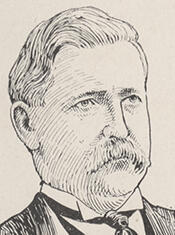
Here you will find contact information for Representative Theodore Franklin Kluttz, including email address, phone number, and mailing address.
| Name | Theodore Franklin Kluttz |
| Position | Representative |
| State | North Carolina |
| District | 8 |
| Party | Democratic |
| Status | Former Representative |
| Term Start | December 4, 1899 |
| Term End | March 3, 1905 |
| Terms Served | 3 |
| Born | October 4, 1848 |
| Gender | Male |
| Bioguide ID | K000275 |
About Representative Theodore Franklin Kluttz
Theodore Franklin Kluttz (October 4, 1848 – November 18, 1918) was a Democratic U.S. Representative from North Carolina who served three consecutive terms in the United States House of Representatives from 1899 to 1905. Born in Salisbury, Rowan County, North Carolina, he spent his early years in that community and attended the common schools there. Growing up in the years immediately following the Civil War, he came of age during the Reconstruction era in the South, a period that shaped the political and social environment in which he would later build his legal and political career.
Before entering the legal profession, Kluttz worked as a druggist, a common term of the period for a pharmacist. This early occupation placed him in a position of local responsibility and public trust, serving the medical and commercial needs of his community in Salisbury. His experience as a druggist preceded his formal legal training and likely contributed to his familiarity with local affairs and the concerns of his neighbors, which would later inform his public service.
Kluttz subsequently turned to the study of law, undertaking the legal education necessary for admission to the bar in North Carolina. He was admitted to the bar in 1881 and commenced the practice of law in Salisbury. Establishing himself as an attorney in his hometown, he entered a profession that was closely tied to politics in the post-Reconstruction South, and his legal practice provided a foundation for his later judicial and legislative roles.
In 1884, Kluttz was appointed or elected presiding justice of the inferior court of Rowan County, North Carolina, a position he held from 1884 to 1886. As presiding justice, he oversaw local judicial matters and exercised authority in the administration of justice at the county level. He resigned from this post in 1886, returning full time to the practice of law. His judicial service enhanced his public profile and demonstrated his capacity for public responsibility in a period when local courts played a central role in community governance.
Kluttz’s involvement in partisan politics became more prominent in the 1890s. A committed member of the Democratic Party, he served as a delegate to the Democratic National Convention in 1896, participating in the national deliberations of his party at a time of intense debate over monetary policy, economic reform, and the direction of the Democratic platform. His role as a national delegate reflected both his standing within the party in North Carolina and his engagement with broader national political issues.
Building on his legal, judicial, and party experience, Kluttz was elected as a Democrat to the Fifty-sixth, Fifty-seventh, and Fifty-eighth Congresses, serving in the U.S. House of Representatives from March 4, 1899, to March 3, 1905. Representing North Carolina during a significant period in American history marked by industrial expansion, the aftermath of the Spanish–American War, and the early stirrings of the Progressive Era, he participated in the legislative process and represented the interests of his constituents in the national legislature. During his three terms in Congress, he contributed to the work of the House as a member of the Democratic minority for much of his tenure, taking part in debates and votes that reflected the concerns of North Carolina and the broader South at the turn of the twentieth century.
In 1904, Kluttz declined to be a candidate for renomination to the Fifty-ninth Congress, thereby ending his congressional career after six years of service. Following his retirement from federal office, he returned to Salisbury and resumed the practice of law. He continued to engage in his profession there, remaining an active figure in the legal community of Rowan County and maintaining his ties to the city in which he had been born, educated, and had spent the greater part of his life.
Theodore Franklin Kluttz practiced law in Salisbury, North Carolina, until his death on November 18, 1918. He died in the same community where he had begun his career and where he had long been a prominent public figure. He was interred in Chestnut Hill Cemetery in Salisbury, leaving a record of service that spanned local judicial office, party leadership at the national convention level, and three terms in the United States House of Representatives.