Senator Theodore Fitz Randolph
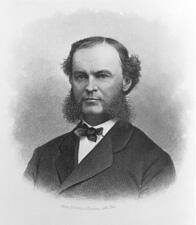
Here you will find contact information for Senator Theodore Fitz Randolph, including email address, phone number, and mailing address.
| Name | Theodore Fitz Randolph |
| Position | Senator |
| State | New Jersey |
| Party | Democratic |
| Status | Former Representative |
| Term Start | December 6, 1875 |
| Term End | March 3, 1881 |
| Terms Served | 1 |
| Born | June 24, 1826 |
| Gender | Male |
| Bioguide ID | R000050 |
About Senator Theodore Fitz Randolph
Theodore Fitz Randolph (June 24, 1826 – November 7, 1883) was an American attorney, businessman, and Democratic politician who served as the 22nd governor of New Jersey from 1869 to 1872 and represented the state in the United States Senate from 1875 to 1881. Over the course of a long public career, he played a prominent role in New Jersey’s mid‑19th‑century political realignment, in wartime and Reconstruction‑era state governance, and in national debates over currency, Reconstruction policy, and corporate regulation. He was the son of U.S. Representative James F. Randolph, continuing a family tradition of public service.
Randolph was born in New Brunswick, New Jersey, on June 24, 1826, to James F. Randolph and Sarah Kent Carman. His father, a printer and publisher of the New Brunswick Fredonian, served as an at-large United States Representative from New Jersey from 1828 to 1833. Growing up in a politically engaged household, Theodore attended the Rutgers Grammar School and, while still a youth, worked as a writer and proofreader for the Fredonian. At the age of sixteen he left the newspaper to enter a mercantile career, engaging in business primarily in the American South. By the time he was twenty he had moved to Vicksburg, Mississippi, where he continued his commercial pursuits before ultimately returning to New Jersey.
After his return north, Randolph was admitted to the bar in 1848, establishing himself as an attorney while also entering into business ventures. In 1850 he settled in Jersey City to work in his father’s extensive coal and iron business, gaining experience in transportation, mining, and industrial enterprise that would later inform his views on corporate taxation and regulation. In 1852 he married Fannie Coleman, the daughter of Kentucky Congressman Nicholas D. Coleman, thereby linking two political families. During these years he also developed a reputation as an inventor, credited with devising a ditching machine and a steam typewriter. In 1862 he resettled in Morristown, New Jersey, where he purchased a ninety‑acre stock farm, reflecting both his growing prosperity and his interest in agricultural improvement.
Randolph’s political career began in the Whig Party, in which he, like his father, supported states’ rights and consistently opposed the abolition of slavery. As the Whig Party rapidly declined after the 1852 elections, he shifted his allegiance to the Democratic Party, where his conservative views on constitutional questions and race placed him among the more traditional wing of the organization. In 1860 a coalition of Democrats and Know‑Nothings elected him to the New Jersey General Assembly from Jersey City. There he served on the Special Joint Committee on National Affairs and took a leading role in an unsuccessful effort to avert the American Civil War, culminating in resolutions appointing New Jersey delegates to the Washington Peace Conference in February 1861.
Following the outbreak of the Civil War, Randolph advanced quickly in state politics. In November 1861 he won a special election to fill a vacancy in the New Jersey Senate and was re‑elected to a full three‑year term in 1862. In the Senate he emerged as the chief legislative ally of Democratic Governor Joel Parker. Together they criticized President Abraham Lincoln’s conduct of the war while opposing anti‑war and Copperhead efforts within their own party. Randolph used his influence to thwart attempts to limit war appropriations and to defeat calls for an armistice. As chairman of the Senate Finance Committee, he led efforts to reform corporate taxation, create a state comptroller’s office, and block a plan under which the state would assume responsibility for paying local bounties to army volunteers. In 1865 he introduced a relief bill to extend equal benefits and enlistment bounties to Black soldiers, arguing that whites should not do injustice to an “inferior” race, yet he opposed adoption of the Thirteenth Amendment to the United States Constitution on the grounds that slavery was already doomed and that the amendment would foreclose the possibility of a negotiated peace with the South.
Randolph’s growing prominence made him a natural candidate for higher office. With Governor Parker term‑limited, he sought the Democratic nomination for governor in 1865 but finished second at the party convention to Theodore Runyon, the Copperhead mayor of Newark, who went on to lose the general election to Republican Marcus Lawrence Ward. After Ward’s term, no Republican would be elected governor for nearly thirty years. In 1867, following his first gubernatorial campaign, Randolph was appointed president of the Morris and Essex Railroad, a position he held until his election as governor in 1868. He also served in 1871 as one of the executors of the estate of Abel Minard, a prominent entrepreneur, industrialist, and banking magnate, further cementing his ties to the state’s business elite.
In 1868 Randolph secured the Democratic nomination for governor and defeated Republican financier and railroad magnate John Insley Blair in the general election, inaugurating a nine‑term streak of Democratic governors in New Jersey. Taking office in 1869, he used his inaugural address to advocate prompt readmission of the former Confederate states to the Union, revision of state election laws, new corporate taxes, greater equity in individual taxation, and the creation of a new riparian commission to manage the state’s waterfront and submerged lands. His term as governor was primarily focused on corporate tax reform, especially the elimination of exemptions granted to powerful transportation monopolies, and it led to the establishment of a more uniform tax code shortly after he left office.
Randolph moved quickly to implement his program. He urged the legislature to replace the existing “transit duties” system—under which certain corporations paid special fees in lieu of general taxation—with a uniform system of corporate taxation. These reforms were particularly aimed at the monopolies enjoyed by the Delaware and Raritan Canal Company and the Camden and Amboy Railroad and Transportation Company. The legislature repealed the transit duties system in 1868, though a comprehensive uniform railroad tax was not enacted until 1873. In 1869, the legislature ended certain corporate exemptions and imposed a two‑percent corporate income tax; this measure, however, proved unenforceable and was repealed in 1872. His administration also expanded government services and accepted higher public costs in order to reform and improve state correctional, educational, and asylum facilities. Motivated in part by a desire to make the prison system self‑sustaining, he advocated better management and increased productivity of convict labor. Acting on the recommendations of a special commission, he urged expansion of Trenton State Prison and the creation of a separate “house of correction” for short‑term convicts, to segregate them from hardened criminals. The prison expansion was approved, but the separate house of correction was never established. In his final annual message, Randolph claimed that his prison reforms had saved the state nearly $200,000. In education, his administration extended the free public school system statewide and laid the groundwork for a new state “lunatic asylum” at Morris Plains, which opened in 1876.
Election reform and the maintenance of public order were additional hallmarks of Randolph’s governorship. In his final year in office, 1871–1872, he secured passage of a stringent election law that disenfranchised both the giver and recipient of any election bribe and placed corporations found guilty of such practices at risk of losing their charters. Despite its severity, the law had limited practical effect, and complaints of bribery continued. With both houses of the legislature controlled by Republicans in 1871, Randolph spent much of his last year vetoing bills he regarded as clearly unconstitutional, mistaken, or unjust. Among the measures he rejected were bills that, in his view, would promote railroad expansion at taxpayer or property‑owner expense and would reorganize municipal governments for partisan advantage. His most significant veto was of a Republican bill to reorganize Jersey City, a measure that ultimately passed over his objections. His tenure was also marked by two major public‑order crises. In 1870 he confronted the “Bergen Riot,” a violent clash between competing railway companies, by calling out the National Guard to restore order, after which the companies resolved their dispute in court. In July 1871 he helped avert a threatened riot in Jersey City when Irish‑Americans sought to disrupt a parade by Protestant Orangemen commemorating the Battle of the Boyne. While publicly criticizing the Orangemen for inflaming sectarian tensions, he issued a proclamation affirming his duty to protect the right of peaceful assembly for all citizens and ordered that up to three thousand troops be raised if necessary. Civil authorities ultimately managed the situation without military intervention.
Randolph’s firm but measured handling of the Orangemen affair brought him national attention, and he was mentioned as a potential Democratic presidential candidate in 1872. Instead, after leaving office in January 1872, he turned his attention to national politics in another way, actively campaigning to recruit a Democratic alternative to both President Ulysses S. Grant and Liberal Republican nominee Horace Greeley. He ultimately joined most Democrats in supporting Greeley, though he faced accusations that he had traded his support for the promise of a cabinet position in a prospective Greeley administration. In 1875 the Democratic-controlled New Jersey legislature elected him to the United States Senate to succeed John P. Stockton, formalizing his transition from state to national office.
As a United States Senator from New Jersey from 1875 to 1881, Randolph served one full term during a critical period in the nation’s postwar development. A member of the Democratic Party, he contributed to the legislative process and represented the interests of his constituents while serving on several important committees. His assignments included the Committees on Commerce, Military Affairs, Education, Civil Service Reform, and the Centennial Exhibition, and he sat on the special committee convened to examine South Carolina’s disputed presidential election returns in 1876. In the Forty‑sixth Congress he chaired the Committee on Military Affairs. Though he spoke infrequently on the Senate floor, he was recognized as a Bourbon Democrat, generally conservative on fiscal and constitutional questions. He opposed President Grant’s Reconstruction policies, resisted proposals for government aid to parochial schools, and opposed the remonetization of silver, favoring instead the early redemption of paper currency and a more orthodox financial policy.
In addition to his public offices, Randolph remained active in civic and educational affairs. He served as a trustee of Rutgers College, reflecting his longstanding ties to New Brunswick and to the institution that had educated him in his youth. He was also president of the Washington Association of New Jersey, an organization dedicated to preserving the memory of George Washington and the Revolutionary War sites in the state, particularly around Morristown. These roles, together with his business interests and inventions, illustrated the breadth of his engagement in the intellectual, economic, and historical life of New Jersey.
Theodore Fitz Randolph died on November 7, 1883. By the time of his death, he had left a substantial imprint on New Jersey’s political and institutional development, particularly in the areas of corporate taxation, prison and educational reform, and the state’s role in national debates over war, Reconstruction, and finance.