Representative Theodore M. Risenhoover
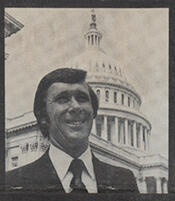
Here you will find contact information for Representative Theodore M. Risenhoover, including email address, phone number, and mailing address.
| Name | Theodore M. Risenhoover |
| Position | Representative |
| State | Oklahoma |
| District | 2 |
| Party | Democratic |
| Status | Former Representative |
| Term Start | January 14, 1975 |
| Term End | January 3, 1979 |
| Terms Served | 2 |
| Born | November 3, 1934 |
| Gender | Male |
| Bioguide ID | R000268 |
About Representative Theodore M. Risenhoover
Theodore Marshall Risenhoover (November 3, 1934 – September 10, 2006) was a community newspaper publisher and American politician who represented northeastern Oklahoma in the United States House of Representatives from 1975 to 1979. A member of the Democratic Party, he served two terms in Congress, during which he participated in the legislative process and represented the interests of his constituents in Oklahoma’s 2nd congressional district during a significant period in American political history.
Risenhoover was born on November 3, 1934, in East Liberty, a town in Haskell County, Oklahoma. He grew up in the region and attended public schools, graduating from Stigler High School in Stigler, Oklahoma, in 1952. After completing high school, he entered the workforce and gained early experience in industry before embarking on military service and higher education, experiences that would shape his later career in business, journalism, and politics.
Following his graduation from Stigler High School, Risenhoover worked for Western Electric for three years. In 1955 he enlisted in the United States Air Force, where he served an eight-year stint until 1963. During his military service, he pursued academic studies, taking courses in government and economics at the University of Alabama. Upon his discharge from the Air Force in 1963, he returned to Oklahoma. He continued his education and, two years later, received a bachelor’s degree in business administration from Northeastern State College in Tahlequah, Oklahoma, in 1965.
Risenhoover’s career in journalism and publishing began even before he completed his degree at Northeastern State College. While still a student, he became involved with the Pictorial Press, a small weekly newspaper in Tahlequah. As part owner and president, he reorganized the paper and expanded his publishing interests by purchasing the Tahlequah Star-Citizen. He became known throughout northeastern Oklahoma for his crime-fighting efforts, publicly charging that organized crime had infiltrated the region. His aggressive reporting and advocacy drew both attention and hostility; at one point the Pictorial Press was bombed in apparent retaliation for its stance against organized crime. In recognition of his efforts, he was appointed to the Oklahoma Crime Commission, on which he served from 1970 to 1974.
Risenhoover’s prominence as a crime-fighting publisher and civic figure helped launch his political career. A committed Democrat, he was selected as a delegate to the Democratic National Mid-term Convention in 1974. That same year, he ran for Congress from Oklahoma’s 2nd congressional district. Elected as a Democrat, he assumed office in the U.S. House of Representatives on January 3, 1975. During his tenure in Congress, which lasted until January 3, 1979, he contributed to the legislative process and represented the interests of his northeastern Oklahoma constituents in the House of Representatives. His service in Congress coincided with a period of national debate over economic policy, energy, and government reform in the post-Watergate era.
Risenhoover served two terms in the House of Representatives. In 1978 he sought renomination but lost the Democratic primary to Mike Synar. His defeat followed the publication of a lifestyle article in The Washington Post that noted, among other personal details, that he slept on a “heart shaped waterbed.” Synar’s campaign seized on the article to question Risenhoover’s judgment, reproducing and widely distributing copies of the story throughout the district. The controversy contributed to his loss of the Democratic nomination, and his congressional service concluded on January 3, 1979.
After leaving Congress, Risenhoover remained in Washington, D.C., for a time. He worked at the Pentagon and later was employed in the office of the Doorkeeper of the House of Representatives. In the early 1980s he returned to Oklahoma, where he sold his newspaper interests and continued to reside in northeastern Oklahoma. In subsequent years he held a variety of jobs, remaining active in his community and drawing on his background in business, publishing, and public service. Over the course of his life, he was married and divorced three times and was the father of a son and a daughter.
Theodore Marshall Risenhoover died on September 10, 2006, in Claremore, Oklahoma. He was interred at Fort Gibson National Cemetery in Fort Gibson, Oklahoma, reflecting his service in the United States Air Force as well as his long connection to the state he represented in Congress.