Representative Thomas Dale Alford
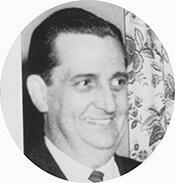
Here you will find contact information for Representative Thomas Dale Alford, including email address, phone number, and mailing address.
| Name | Thomas Dale Alford |
| Position | Representative |
| State | Arkansas |
| District | 5 |
| Party | Democratic |
| Status | Former Representative |
| Term Start | January 7, 1959 |
| Term End | January 3, 1963 |
| Terms Served | 2 |
| Born | January 28, 1916 |
| Gender | Male |
| Bioguide ID | A000105 |
About Representative Thomas Dale Alford
Thomas Dale Alford Sr. (January 28, 1916 – January 25, 2000) was an American ophthalmologist and politician from the U.S. state of Arkansas who served as a conservative Democrat in the United States House of Representatives from Little Rock from 1959 to 1963. A member of the Democratic Party, he represented an Arkansas district in Congress for two terms, contributing to the legislative process during a significant period in American history and participating in the democratic process on behalf of his constituents.
Alford was born to Thomas H. Alford and the former Ida Womack in the small community of Newhope near Murfreesboro in Pike County in southwestern Arkansas. He spent his early years in rural Arkansas before the family moved to far northeastern Arkansas, where he attended public schools in Rector, Clay County. Demonstrating academic ability, he graduated from high school in 1932, a year ahead of schedule. His upbringing in multiple regions of Arkansas later informed his political appeal across the state’s diverse communities.
Following high school, Alford pursued higher education at several Arkansas institutions. He first attended Arkansas State College in Jonesboro in eastern Arkansas, and then Arkansas State Teachers College in Conway. He subsequently enrolled at the University of Arkansas for Medical Sciences in Little Rock, where he completed his professional training and received his medical degree in 1939. Trained as a physician and specializing in ophthalmology, he entered the medical profession at a time when access to specialized care was still limited in much of Arkansas.
With the onset of World War II, Alford entered military service and joined the United States Army Medical Corps. He served from 1940 to 1946, rising to the rank of captain. During the war he was on active duty as a surgeon in the European Theater of Operations, providing medical care to wounded servicemembers under combat conditions. After his discharge from active duty, he briefly entered academic medicine. From 1947 to 1948 he served as an assistant professor at the Methodist-affiliated Emory University School of Medicine in Atlanta, Georgia, before returning to Arkansas to continue his medical practice as an ophthalmologist in Little Rock.
Alford’s political career emerged directly from the intense conflicts over civil rights and school desegregation in the late 1950s. In the aftermath of the 1957–1958 Little Rock Crisis over the integration of Little Rock Central High School, he became a prominent conservative voice opposing federal intervention in local school matters. In the 1958 general election, he ran for Congress from the Little Rock–based district as a write-in candidate against incumbent Democratic Representative Brooks Hays, who had endorsed the integration of Central High School. Alford supporters printed thousands of stickers bearing his name and distributed them at polling places on Election Day. Hays initially led in the vote count until additional ballot boxes arrived containing large numbers of ballots with Alford stickers affixed. When the final tally was completed, Alford prevailed with 30,739 votes (51 percent) to Hays’s 29,483 (49 percent), making him only the third write-in candidate ever elected to the U.S. House of Representatives.
The narrow and contentious nature of Alford’s 1958 victory prompted protests and allegations of irregularities and fraud from Hays’s supporters. Because the contest was a federal election, Osro Cobb, the United States Attorney for the Eastern District of Arkansas, impaneled a federal grand jury and obtained an order from the U.S. District Court impounding all ballots for review. After a detailed examination, the grand jury concluded that the vote count for both Alford and Hays had been unusually accurate and found no evidence to support the accusations of fraud, reportedly considering indictments against those who had made the unfounded allegations. Cobb later recalled his own surprise at Hays’s defeat, noting that he had underestimated the depth of commitment among a majority of voters in the Fifth Congressional District to “separate-but-equal” schools and their fear that integration would destroy their public school system.
Alford took his seat in the U.S. House of Representatives in January 1959 and served two terms, from 1959 to 1963, as a conservative Democrat representing the Little Rock area. His tenure coincided with a critical phase of the civil rights movement and the early years of the presidencies of Dwight D. Eisenhower and John F. Kennedy. From his position in the House, he participated in debates over federal authority, education, and social policy, reflecting the views of many white Arkansans who opposed rapid desegregation. In the 1960 general election, he secured a second term with a commanding margin, winning 57,617 votes (82.7 percent) against Republican L. J. Churchill of Dover in Pope County, who received 12,054 votes (17.3 percent). Churchill, a respected civic leader, former mayor of Dover, school board member, Cumberland Presbyterian, Mason, and former state chairman of the Agricultural Stabilization and Conservation Service, was unable to overcome Alford’s entrenched support in the district.
Following the 1960 census, Arkansas lost a congressional seat because its population had grown more slowly than the national average during the 1950s. Alford’s Little Rock–based district was merged with Arkansas’s 2nd congressional district, represented by Wilbur D. Mills, the powerful chairman of the House Ways and Means Committee and a dominant figure in Arkansas politics. Facing the prospect of almost certain defeat in a 1962 Democratic primary against Mills, Alford chose instead to seek statewide office. He entered the 1962 Democratic gubernatorial primary against incumbent Governor Orval Faubus. In a vigorous multi-candidate race that also included former Governor Sidney Sanders McMath, Vernon H. Whitten, and others, Faubus won renomination with 208,996 votes (51.6 percent), while McMath received 83,437 (20.6 percent), Alford 82,815 (20.4 percent), and Whitten 22,377 (5.5 percent). Faubus then easily defeated Republican nominee Willis Ricketts, a pharmacist from Fayetteville, in the general election.
Alford continued to seek high office after leaving Congress. In 1966 he again ran for governor of Arkansas, entering another crowded Democratic primary. That year he finished fourth, receiving 53,531 votes (12.7 percent), trailing his former congressional rival Brooks Hays, who finished third with 64,814 votes (15.4 percent). The runoff positions went to former Arkansas Supreme Court justices James D. Johnson, a prominent segregationist, and Frank Holt. Johnson narrowly defeated Holt in the Democratic runoff but subsequently lost the general election to Republican Winthrop Rockefeller, marking a turning point in Arkansas politics. Nearly two decades later, in 1984, Alford attempted a political comeback by running in the Democratic primary for Congress in central Arkansas’s Second District for the open seat being vacated by Republican Representative Ed Bethune. In a political climate that had shifted significantly since the 1950s and 1960s, Alford, viewed by many voters as a figure from an earlier era, ran a distant fifth. The nomination was won by Pulaski County Sheriff Tommy Robinson, and Alford was far outpolled by African American candidate Thedford Collins, a Little Rock banker and former aide to U.S. Senator David Pryor.
In his later years, Alford returned to private life in Little Rock, where he continued to be remembered for his unusual write-in election to Congress and his role in Arkansas politics during the era of school desegregation. He died in Little Rock of congestive heart failure on January 25, 2000, three days before his eighty-third birthday.