Representative Thomas Samuel Ashe
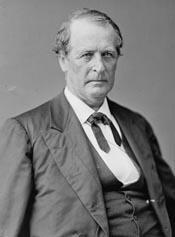
Here you will find contact information for Representative Thomas Samuel Ashe, including email address, phone number, and mailing address.
| Name | Thomas Samuel Ashe |
| Position | Representative |
| State | North Carolina |
| District | 6 |
| Party | Democratic |
| Status | Former Representative |
| Term Start | December 1, 1873 |
| Term End | March 3, 1877 |
| Terms Served | 2 |
| Born | July 19, 1812 |
| Gender | Male |
| Bioguide ID | A000309 |
About Representative Thomas Samuel Ashe
Thomas Samuel Ashe (July 21, 1812 – February 4, 1887) was an American lawyer, jurist, and politician from North Carolina who served in the Confederate Congress and later as a United States Congressman. A member of the Democratic Party, he represented North Carolina in the U.S. House of Representatives from 1873 to 1877, contributing to the legislative process during two terms in office and participating in the broader political realignments of the Reconstruction era.
Ashe was born on July 21, 1812, in Hawfields, Orange County, North Carolina, into a family long established in the state. He grew up in the Piedmont region, where he received his early education in local schools. His upbringing in a predominantly agrarian community shaped his familiarity with the legal and economic issues that would later inform his professional and political life.
Ashe pursued higher education at the University of North Carolina at Chapel Hill, where he studied the liberal arts and prepared for a career in law. After reading law and completing the customary legal training of the period, he was admitted to the bar and began practicing as an attorney in North Carolina. His legal practice, grounded in the concerns of landowners, merchants, and farmers, brought him increasing prominence and laid the foundation for his entry into public life.
Building on his reputation as a lawyer, Ashe entered politics as a Democrat in a state and region increasingly divided over national issues. Before the Civil War, he served in the North Carolina General Assembly, where he gained experience in legislative procedure and state governance. During the Civil War, he was elected to the Second Confederate Congress, representing North Carolina and participating in the legislative affairs of the Confederate government in Richmond. His service in the Confederate Congress placed him among the Southern political leadership grappling with wartime policy, civil-military relations, and the mounting pressures on the Confederate state.
Following the collapse of the Confederacy and the onset of Reconstruction, Ashe resumed his legal career and reengaged in North Carolina politics as the state navigated federal oversight and the reestablishment of civil government. In this context, he was elected as a Democrat to the United States House of Representatives, serving from March 4, 1873, to March 3, 1877. Representing his North Carolina constituency during a significant period in American history, he participated in the democratic process at the national level, addressing issues related to Reconstruction policy, the reintegration of the Southern states, and the evolving balance of power between federal and state authorities. His two terms in Congress coincided with the final years of formal Reconstruction and the contested presidential election of 1876, situating him within some of the most consequential debates of the era.
After leaving Congress in 1877, Ashe continued his public service in North Carolina. He returned to the practice of law and subsequently served on the bench, reflecting the confidence placed in his legal judgment and experience. As a jurist, he contributed to the development and interpretation of state law during a period marked by economic change and the gradual restructuring of Southern society in the postwar decades.
Thomas Samuel Ashe died on February 4, 1887, in Wadesboro, North Carolina. His career, spanning service in the North Carolina legislature, the Confederate Congress, and the United States Congress, as well as his work as a lawyer and judge, reflected the complex political transformations of the nineteenth-century South. Through his roles at both the state and national levels, he remained an active participant in the legislative and judicial life of North Carolina across antebellum, Civil War, and Reconstruction eras.