Representative Thomas Lindsay Blanton
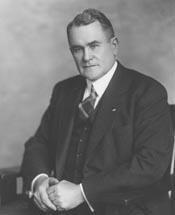
Here you will find contact information for Representative Thomas Lindsay Blanton, including email address, phone number, and mailing address.
| Name | Thomas Lindsay Blanton |
| Position | Representative |
| State | Texas |
| District | 17 |
| Party | Democratic |
| Status | Former Representative |
| Term Start | April 2, 1917 |
| Term End | January 3, 1937 |
| Terms Served | 10 |
| Born | October 25, 1872 |
| Gender | Male |
| Bioguide ID | B000549 |
About Representative Thomas Lindsay Blanton
Thomas Lindsay Blanton (October 25, 1872 – August 11, 1957) was a United States Representative from Texas who served ten terms in Congress between 1917 and 1937. A member of the Democratic Party, he represented his constituents during a significant period in American history, spanning World War I, the interwar years, and the early New Deal era. Over the course of his congressional career, he contributed to the legislative process and participated actively in the workings of the House of Representatives.
Blanton was born in Houston, Texas, on October 25, 1872, and was educated in the public schools. He pursued higher education at the University of Texas at Austin, spending three years in the academic department before entering the law department. He graduated from the law department in 1897 and was admitted to the bar that same year. Shortly thereafter, he commenced the practice of law in Cleburne, Texas, establishing himself professionally in the state’s legal community.
After beginning his legal career in Cleburne, Blanton moved to Albany, Texas, where he continued to practice law. His growing prominence in legal and civic affairs led to his election in 1908 as judge of the 42nd Judicial District of Texas. He was reelected to that judgeship in 1912 and served on the bench until 1916. His judicial service, which lasted until his election to Congress, provided him with extensive experience in the interpretation and application of state law and helped shape his later work as a legislator.
Blanton was elected as a Democrat to the Sixty-fifth Congress and to the five succeeding Congresses, serving from March 4, 1917, to March 3, 1929. During this initial period in the House of Representatives, he represented Texas through World War I and the early 1920s, participating in the democratic process and advocating for the interests of his constituents. His tenure placed him at the center of national debates over war, reconstruction, and domestic policy in the postwar era.
Blanton’s congressional career was marked by a notable controversy during the Sixty-seventh Congress. While serving in the House, he inserted into the Congressional Record a letter purporting to have been written by Millard French, a non-union printer, to George H. Carter, the Public Printer. The letter recounted a conversation between French and Levi Huber, a union printer, and contained language that Representative Franklin Mondell described as “unspeakable, vile, foul, filthy, profane, blasphemous and obscene.” The House voted 313 to 1 to expunge the letter from the Congressional Record. The document, actually an affidavit sent by an employee of the Public Printer on September 3, 1921, related to conditions at the Government Printing Office and included heavily censored obscenities, with many letters replaced by underscores. A motion to expel Blanton from the House failed by only eight votes, but on October 27, 1921, he was unanimously censured for “abuse of leave to print.” Mondell, who authored the expulsion resolution, asserted that the language was the vilest he had ever seen in print and claimed that anyone speaking those words would be subject to fine and imprisonment, while Representative Finis Garrett defended Blanton as having no intention of indecency and seeking only to expose tensions between organized and non-organized labor in the printing office. Later scholarly commentary, such as that by Robert D. Stevens of the University of Hawaii at Manoa in 1982, noted that the remarks, though controversial at the time, were relatively limited in scope and already partially obscured in the Record.
Despite the censure, Blanton’s standing with his constituents appeared largely unaffected. He was reelected to the House in 1922, 1924, and 1926, continuing his service through the Sixty-eighth, Sixty-ninth, and Seventieth Congresses. In 1928 he chose not to be a candidate for renomination to the House and instead sought the Democratic nomination for the United States Senate, though he was unsuccessful in that bid. His initial period of congressional service thus extended from 1917 to 1929, reflecting the existing record that he served as a Representative from Texas from 1917 to 1929 before a brief interruption.
Blanton returned to Congress the following decade. On May 20, 1930, he was elected to the Seventy-first Congress to fill the vacancy caused by the death of his successor, Representative Robert Q. Lee, who had died little more than a year after taking office. Blanton was subsequently reelected to the Seventy-second, Seventy-third, and Seventy-fourth Congresses, serving from May 20, 1930, to January 3, 1937. This second span of service, from 1930 to 1937, coincided with the onset of the Great Depression and the early New Deal period, during which he again took part in the legislative process and represented Texas in national policymaking. He was an unsuccessful candidate for renomination in 1936, bringing his ten terms in the House of Representatives—1917 to 1929 and 1930 to 1937—to a close.
After leaving Congress, Blanton resumed his legal career. He practiced law in Washington, D.C., in 1937 and 1938, remaining close to the federal institutions in which he had long served. In 1938 he returned to Albany, Texas, where he continued to practice law and also engaged in the raising of Hereford cattle, combining his professional work with agricultural pursuits. He remained in Albany for the rest of his life. Blanton died there on August 11, 1957, and was interred in Albany Cemetery. He was part of a family active in Texas public life; his sister, Annie Webb Blanton (1870–1945), served two terms as Texas state superintendent of public instruction and was a former president of the Texas State Teachers Association, spending most of her adult years in Denton.