Senator Thomas Mead Bowen
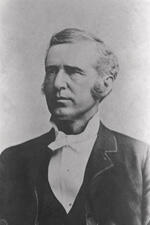
Here you will find contact information for Senator Thomas Mead Bowen, including email address, phone number, and mailing address.
| Name | Thomas Mead Bowen |
| Position | Senator |
| State | Colorado |
| Party | Republican |
| Status | Former Representative |
| Term Start | December 3, 1883 |
| Term End | March 3, 1889 |
| Terms Served | 1 |
| Born | October 26, 1835 |
| Gender | Male |
| Bioguide ID | B000686 |
About Senator Thomas Mead Bowen
Thomas Mead Bowen (October 26, 1835 – December 30, 1906) was a state legislator in Iowa and Colorado, a Union Army officer during the American Civil War, a justice of the Arkansas Supreme Court, briefly the Governor of Idaho Territory, an elected judge in Colorado, and a United States senator from Colorado. A member of the Republican Party in his later political career, he served one term in the United States Senate from 1883 to 1889, during which he contributed to the legislative process and represented the interests of his Colorado constituents at a significant period in American history.
Bowen was born near the present site of Burlington, Iowa, in what was then Michigan Territory, on October 26, 1835. He attended public schools and later the academy at Mount Pleasant, Iowa, receiving the education that prepared him for a legal and political career. He studied law, was admitted to the bar in 1853, and began practicing law while still a young man. Bowen married Margaretta T. Bowen, and his early professional life was rooted in the rapidly developing communities of the American Midwest.
In 1856 Bowen moved to Wayne County, Iowa, where he entered public life as a Democratic member of the Iowa House of Representatives that same year. Two years later, in 1858, he moved farther west to Kansas, continuing his legal practice there. His relocation to Kansas placed him on the frontier of the sectional conflicts that preceded the Civil War and set the stage for his subsequent military service in the Union cause.
During the American Civil War, Bowen served in the Union Army in a series of increasingly responsible commands. On June 11, 1861, he was appointed captain of the 1st Nebraska Infantry Regiment, which was later redesignated the 1st Nebraska Cavalry Regiment. He resigned from the volunteers on February 5, 1862, but rejoined the Union Army on July 11, 1862, as first lieutenant of the 9th Regiment Kansas Volunteer Cavalry. He was promoted to captain on July 30, 1862, and on September 20, 1862, he was appointed colonel of the 13th Regiment Kansas Volunteer Infantry. From October 1862 to March 21, 1864, Bowen served as temporary commander of brigades in the Department of the Missouri and the Department of Arkansas. He later commanded the 1st Brigade, 1st Division, VII Corps, in the Department of Arkansas from March 22, 1865, to June 24, 1865. In recognition of his service, he was appointed a brevet brigadier general of volunteers, to rank from March 13, 1865, and he was discharged from the volunteers on June 28, 1865.
After the war Bowen settled in Arkansas, where he quickly became a prominent figure in Reconstruction-era politics and law. He was a member and president of the Arkansas constitutional convention of 1866, playing a leading role in reshaping the state’s basic law in the aftermath of the Confederacy’s defeat. From 1867 to 1871 he served as a justice of the Arkansas Supreme Court, participating in the reestablishment of civil authority under Reconstruction. During this period he also engaged in business and accumulated a large fortune. On April 19, 1871, President Ulysses S. Grant appointed him Governor of Idaho Territory, but Bowen resigned the post on September 27, 1871, before taking up extended residence there, and returned to Arkansas.
In 1873 Bowen moved to Colorado Territory, where he resumed the practice of law and became involved in the region’s burgeoning economic and political life. He was elected judge of the Fourth Judicial District Court of Colorado, serving from 1876 until 1880, when he suddenly resigned from the bench. His judicial service in Colorado further established his standing as a legal authority in the developing state. Bowen’s growing influence led to his election to the Colorado House of Representatives in 1882. He resigned from the state legislature soon thereafter upon his election as a Republican to the United States Senate.
Bowen served in the United States Senate from March 4, 1883, to March 3, 1889, representing Colorado for one full term. His tenure coincided with a period of rapid industrialization and western development in the United States. While in the Senate, he was chairman of the Committee on Mines and Mining during the Forty-eighth Congress, reflecting both his state’s and his own interests in mineral development. He later served as chairman of the Committee on Enrolled Bills during the Forty-ninth and Fiftieth Congresses. As a senator, Thomas Mead Bowen participated in the democratic process at the national level, contributing to legislation and advocating for the needs and priorities of his constituents in Colorado.
After leaving the Senate, Bowen remained in Colorado and devoted himself to business pursuits, particularly in the mining industry, which was central to the state’s economy. He resided in Pueblo, Colorado, where he continued to be a prominent figure in local affairs. Bowen died in Pueblo on December 30, 1906, at the age of seventy-one. He was interred at Roselawn Cemetery in Pueblo, closing a career that had spanned frontier law practice, Civil War command, Reconstruction jurisprudence, territorial administration, and service in both state legislatures and the United States Senate.