Representative Thomas Burnside
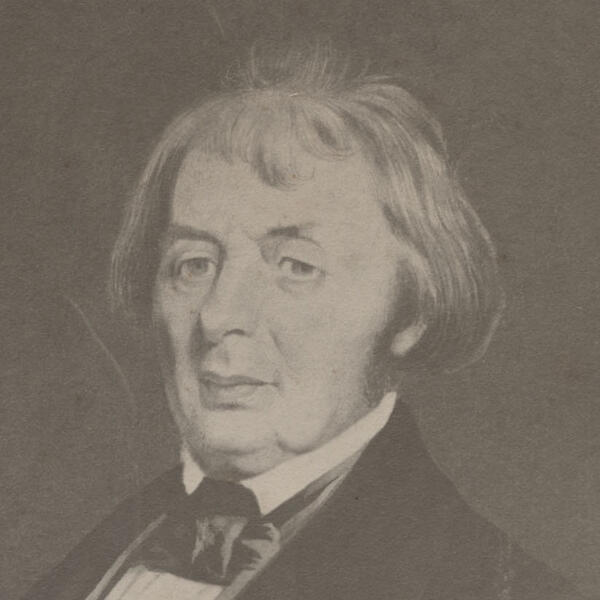
Here you will find contact information for Representative Thomas Burnside, including email address, phone number, and mailing address.
| Name | Thomas Burnside |
| Position | Representative |
| State | Pennsylvania |
| District | 9 |
| Party | Republican |
| Status | Former Representative |
| Term Start | December 4, 1815 |
| Term End | March 3, 1817 |
| Terms Served | 1 |
| Born | July 28, 1782 |
| Gender | Male |
| Bioguide ID | B001132 |
About Representative Thomas Burnside
Thomas Burnside (July 28, 1782 – March 25, 1851) was an American politician and judge who served as a Democratic-Republican member of the United States House of Representatives from Pennsylvania and later as an associate justice of the Supreme Court of Pennsylvania. He represented Pennsylvania’s 9th congressional district in the Fourteenth Congress from 1815 to 1816, completing one term in the United States Congress, and served on the state’s highest court from 1845 until his death in 1851.
Burnside was born near Newtownstewart, County Tyrone, Ireland, on July 28, 1782. In 1793 he emigrated to the United States with his father’s family, who settled in Norristown, Pennsylvania. Growing up in the new republic, he came of age during the formative years of the United States, an experience that shaped his later public service. After receiving his early education in Pennsylvania, he pursued the study of law, preparing for a career in the legal profession that would anchor his subsequent political and judicial work.
Burnside was admitted to the bar in 1804 and commenced the practice of law in Bellefonte, Pennsylvania. His abilities as a lawyer soon brought him to the attention of state authorities, and on January 12, 1809, he was appointed deputy attorney general, a position in which he represented the interests of the Commonwealth in legal proceedings. His growing prominence in legal circles coincided with his entry into elective office, as he began to combine legal practice with legislative responsibilities.
Burnside’s political career in Pennsylvania began in the state legislature. He served in the Pennsylvania State Senate for the 13th district from 1811 to 1814, participating in state governance during the years surrounding the War of 1812. A member of the Republican Party of his era—more precisely the Democratic-Republican Party—he aligned with the dominant Jeffersonian political movement of the time. His service in the state senate established him as an influential figure in Pennsylvania politics and prepared him for national office.
Burnside was elected as a Democratic-Republican to the Fourteenth Congress to fill the vacancy caused by the death of Representative David Bard. He represented Pennsylvania’s 9th congressional district from 1815 to 1816, serving one term in the United States House of Representatives from 1815 to 1817, during a significant period in American history marked by the close of the War of 1812 and the beginning of the “Era of Good Feelings.” In Congress he participated in the legislative process and represented the interests of his constituents in Pennsylvania. He resigned his seat in April 1816, concluding his brief but notable tenure in the national legislature.
While still engaged in congressional service, Burnside’s judicial career advanced. In 1815 he was appointed president judge of the Luzerne district courts, a position he held until his resignation in 1819. Returning to state politics, he again became a member of the Pennsylvania State Senate, serving from 1823 to 1826. During this second period in the senate he also served as Speaker of the Senate in 1823, acting as the presiding officer of the chamber and playing a leading role in managing its legislative business.
Burnside’s judicial responsibilities expanded over the following decades. He was appointed president judge of the fourth judicial district in 1826 and served in that capacity until 1841, overseeing trial courts and administering justice across a broad region of Pennsylvania. After his service in the fourth district, he later presided in the same capacity over the seventh judicial district, continuing his long tenure on the state bench. His extensive experience as a trial judge and his reputation for legal acumen led to his elevation to the Supreme Court of Pennsylvania.
In 1845 Burnside was appointed an associate justice of the Supreme Court of Pennsylvania. He held this office from 1845 until his death, participating in the adjudication of important questions of state law and contributing to the development of Pennsylvania jurisprudence during the mid-nineteenth century. He died in office on March 25, 1851, in Germantown, Pennsylvania, closing a public career that had encompassed service as a legislator at both the state and national levels and as a judge in multiple judicial districts and on the state’s highest court.