Representative Thomas Jefferson Cason
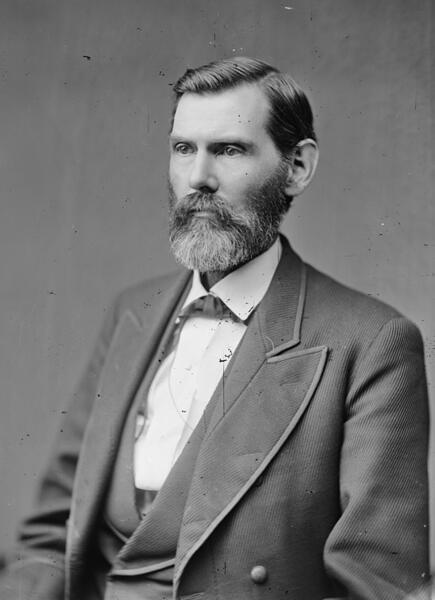
Here you will find contact information for Representative Thomas Jefferson Cason, including email address, phone number, and mailing address.
| Name | Thomas Jefferson Cason |
| Position | Representative |
| State | Indiana |
| District | 9 |
| Party | Republican |
| Status | Former Representative |
| Term Start | December 1, 1873 |
| Term End | March 3, 1877 |
| Terms Served | 2 |
| Born | September 13, 1828 |
| Gender | Male |
| Bioguide ID | C000232 |
About Representative Thomas Jefferson Cason
Thomas Jefferson Cason (September 13, 1828 – July 10, 1901) was an American lawyer, jurist, and Republican politician who served two terms as a U.S. Representative from Indiana from 1873 to 1877. As a member of the House of Representatives during a significant period in American history following the Civil War, he participated in the legislative process and represented the interests of his Indiana constituents in the Forty-third and Forty-fourth Congresses.
Cason was born near Brownsville, Indiana, on September 13, 1828. In 1832, when he was still a small child, he moved with his parents to Boone County, Indiana, where the family settled on a farm near Thorntown. He was educated in the common schools of the area, reflecting the limited but expanding educational opportunities on the Indiana frontier. As a young man, he taught school in Boone County for several years, an experience that helped establish his standing in the community and provided a foundation for his later professional and political career.
While engaged in teaching, Cason pursued legal studies, reading law in Crawfordsville, Indiana. After completing his legal training, he was admitted to the bar in 1850. He then commenced the practice of law in Lebanon, Indiana, the county seat of Boone County. His legal practice grew alongside the development of the region, and he became a well-known attorney in local courts, building the professional reputation that would support his entry into public office.
Cason’s political career began at the state level during the tumultuous years of the Civil War. A member of the Republican Party, he served in the Indiana House of Representatives from 1861 to 1864, participating in state governance as Indiana supported the Union war effort. He then served in the Indiana State Senate from 1864 to 1867, continuing his legislative work during the closing years of the war and the early period of Reconstruction. In April 1867, Governor Conrad Baker appointed him common pleas judge of Boone County. He was subsequently elected to that judicial office in October 1867 for a four-year term. Cason declined to seek reelection in 1871 and returned to the private practice of law in Lebanon.
Building on his legislative and judicial experience, Cason was elected as a Republican to the United States House of Representatives. He represented Indiana in the Forty-third and Forty-fourth Congresses, serving from March 4, 1873, to March 3, 1877. During his two terms in Congress, he contributed to the legislative process at the federal level, participating in debates and votes as the nation continued to address the political, economic, and social issues of the post–Civil War era. His service in Congress occurred during a significant period in American history, and he took part in the democratic process on behalf of his district’s constituents. In 1876 he was an unsuccessful candidate for renomination, which brought his congressional career to a close after four years.
After leaving Congress in 1877, Cason resumed the practice of law in Lebanon, Indiana, returning to the profession in which he had first established himself. He continued to practice until his retirement in 1897. That year he moved to Washington, D.C., where he spent his final years. Thomas Jefferson Cason died in Washington on July 10, 1901. His remains were returned to Indiana, and he was interred in Oak Hill Cemetery in Lebanon, Indiana, closing a life closely associated with the legal and political development of his state.