Senator Thomas Clayton
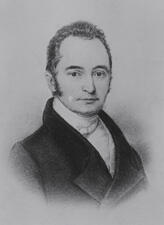
Here you will find contact information for Senator Thomas Clayton, including email address, phone number, and mailing address.
| Name | Thomas Clayton |
| Position | Senator |
| State | Delaware |
| Party | Whig |
| Status | Former Representative |
| Term Start | December 4, 1815 |
| Term End | March 3, 1847 |
| Terms Served | 4 |
| Gender | Male |
| Bioguide ID | C000499 |
About Senator Thomas Clayton
Thomas Clayton (July 1777 – August 21, 1854) was an American lawyer, jurist, and politician from Dover in Kent County, Delaware, who served as a U.S. Representative and U.S. Senator from Delaware and held numerous high offices in his home state. Over a public career spanning more than half a century, he was successively a member of the Delaware General Assembly, Attorney General of Delaware, Secretary of State of Delaware, Chief Justice of the Delaware Supreme Court, and a leading figure in the Federalist, National Republican, and Whig parties. He served in the United States Senate during four terms between 1815 and 1847, and in 1846 was one of only two members of the Senate to vote against declaring war on Mexico.
Clayton was born at Massey, in Kent County, Maryland, in July 1777, the son of Dr. Joshua Clayton, a physician who later served as Governor of Delaware, and Rachael McCleary Clayton. Family tradition held that he was born while his mother was fleeing invading British troops moving inland from their Elk River landing toward the Battle of Brandywine during the American Revolutionary War. Although the Claytons were natives of Kent County, Delaware, Rachael McCleary was the niece and adopted daughter of Richard Bassett, an influential Delaware statesman and the aristocratic heir to the extensive Bohemia Manor estates. The family lived at Bohemia Manor, and through this connection Joshua Clayton later acquired his homestead from those estates in Pencader Hundred, New Castle County, Delaware. Thomas Clayton was thus raised in a milieu closely connected to the early political leadership of Delaware and was a cousin of John M. Clayton, who would also become a U.S. Senator.
Clayton received his early education at the Newark Academy in Newark, Delaware, an institution that would later become the University of Delaware. After completing his studies there, he read law under Nicholas Ridgely in Dover and was admitted to the bar, beginning his law practice in Dover in 1799. He married Jennette Macomb; the couple had four children and were members of the Presbyterian Church. His legal training and family connections quickly drew him into public life, and he combined an active law practice with increasingly responsible positions in state government.
Clayton’s public career began in 1800 when he served as clerk of the Delaware House of Representatives. He was elected a member of the Delaware House and served there for eight years between the 1803 and 1814 sessions. In 1808 he was elected to the Delaware Senate, but he resigned that seat to become Secretary of State of Delaware, serving in that office for two years. He was subsequently appointed Attorney General of Delaware, holding that post from 1810 until 1815. During these years he was aligned with the Federalist Party, which was then the dominant political force in Delaware, and he became known for his legal acumen and strict sense of public duty.
In 1814 Clayton was elected as a Federalist to one of Delaware’s two at-large seats in the United States House of Representatives and served a single term from March 4, 1815, to March 3, 1817. During this period, Congress considered changing the compensation of its members from a per diem rate of $6 a day to an annual salary of $1,500. Clayton supported the change, but the measure proved highly controversial with the public, and his support for it cost him the Federalist nomination for reelection, which went instead to Louis McLane. This episode inaugurated a long political rivalry between Clayton and McLane. Clayton narrowly failed in an effort to return to the U.S. House in the 1818 election and then resumed service in the Delaware legislature, returning to the Delaware Senate in 1821. When U.S. Senator Caesar Augustus Rodney resigned, the Delaware General Assembly elected Clayton to fill the vacancy, and he served in the United States Senate from January 8, 1824, to March 3, 1827. In this first Senate term he was one of the last prominent Federalists to sit in that body, as the First Party System of Federalists and Jeffersonian Republicans was giving way to the emerging Jacksonian Democrats and their opponents. Clayton, his family, and much of Delaware’s former Federalist following aligned themselves with John Quincy Adams and the National Republican Party, which would later coalesce into the Whig Party.
After his initial Senate service ended in 1827, Clayton returned to judicial work in Delaware. In 1828 he was appointed Chief Justice of the Delaware Court of Common Pleas. That court was abolished under the Delaware Constitution of 1831, and in 1832 he was appointed Chief Justice of the newly organized Delaware Superior Court. As a jurist he gained a reputation for deep learning in the law, an ability to discern the essential points of a case, and a concise, forceful style in stating facts and conclusions. Contemporary historian Thomas Scharf later wrote that Chief Justice Clayton was “profoundly versed in the principles of the law,” prompt and precise in his decisions, and “eminently impartial” in his judicial capacity, making no distinction between litigants or attorneys regardless of their prominence or personal relationship to him. In 1833 he became one of the initial trustees of Newark College in Newark, Delaware, an institution that would evolve into the University of Delaware, reflecting his interest in education and civic development.
Clayton returned to the United States Senate after the resignation of his cousin, Senator John M. Clayton, in 1837. Elected by the Delaware General Assembly to complete that unexpired term, he took his seat on January 9, 1837, and, after being reelected in 1841, served continuously until March 3, 1847. During this second period of Senate service, he was affiliated first with the National Republican Party and then with the Whig Party as the party system realigned. He served at various times as chairman of the Committee on Printing and as a member of the Committee on Revolutionary Claims. Across these four Senate terms between 1815 and 1847, he represented Delaware during a transformative era in American politics and national expansion. In 1846, as tensions with Mexico escalated, he was one of only two U.S. Senators to vote against declaring war on Mexico, a stance that underscored his independence of judgment and skepticism about the conflict. Throughout his Senate career he participated actively in the legislative process and represented the interests of his Delaware constituents during debates over war, finance, and the evolving federal system.
In his later years, Clayton retired from public life to his home in New Castle, Delaware. He was remembered as a “handsome man with polished manners,” a strict guardian of dignity, decorum, and punctuality in court, once famously ordering himself fined ten dollars for arriving ten minutes late to a court session. He died of pneumonia at his retirement home in New Castle on August 21, 1854. Thomas Clayton was buried in the Old Presbyterian Cemetery in Dover, on the grounds of what is now the Delaware State Museum, leaving a legacy as one of Delaware’s most prominent early nineteenth-century legislators and jurists.