Representative Thomas Jefferson Clunie
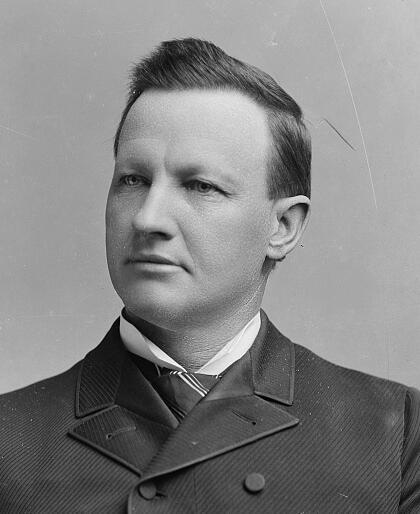
Here you will find contact information for Representative Thomas Jefferson Clunie, including email address, phone number, and mailing address.
| Name | Thomas Jefferson Clunie |
| Position | Representative |
| State | California |
| District | 5 |
| Party | Democratic |
| Status | Former Representative |
| Term Start | December 2, 1889 |
| Term End | March 3, 1891 |
| Terms Served | 1 |
| Born | March 25, 1852 |
| Gender | Male |
| Bioguide ID | C000536 |
About Representative Thomas Jefferson Clunie
Thomas Jefferson Clunie (March 25, 1852 – June 30, 1903) was an American lawyer and Democratic politician who served one term as a U.S. Representative from California from 1889 to 1891. His service in Congress occurred during a significant period in American history, and as a member of the House of Representatives he participated in the legislative process and represented the interests of his California constituents.
Clunie was born in St. John’s, Newfoundland, on March 25, 1852, while his parents were on a visit there from Massachusetts. In 1854 he moved with his parents to California, then subsequently to Maine, and then back to California in 1861. The family settled in Sacramento, where he attended the public schools. His early movements between the East Coast and the West reflected the broader mid-nineteenth-century migration patterns within the United States and its territories, and positioned him from a young age within the developing political and legal culture of California.
After completing his public school education in Sacramento, Clunie studied law under the tutelage of a Harvard College graduate. Demonstrating precocious legal ability, he was admitted to the bar in 1868, before reaching the age of majority, under a special act of the California legislature that allowed him to practice law despite his youth. He began his law practice in Sacramento in 1870, establishing himself as a practicing attorney while still in his late teens and laying the foundation for a career that would combine legal work with public service.
Clunie entered elective office in the California State Assembly, where he served from 1875 to 1877 as one of three members representing a district based in Sacramento County. At only 23 years old, he was the second-youngest member of the Legislature, junior in age only to James G. Maguire, who would also later be elected to Congress. His early legislative service coincided with a period of growth and political realignment in California, and it gave him experience in state-level lawmaking and party politics. He continued to rise within the Democratic Party, serving as a delegate to the Democratic National Convention in 1884, and later served in the California State Senate from 1887 to 1889. In addition to his civil offices, Clunie was active in the state militia; he commanded the 4th Brigade of the National Guard of California and retired with the rank of brigadier general, reflecting his involvement in the organization and leadership of the state’s military forces.
Clunie was elected as a Democrat to the Fifty-first Congress, representing California in the U.S. House of Representatives. He served from March 4, 1889, to March 3, 1891, completing one full term in office. During this time he contributed to the legislative process as a member of the House, participating in debates and votes on national issues and advocating for the interests of his California constituents. A member of the Democratic Party, he served during a period marked by significant economic and political questions, including tariff policy and federal regulation, and his term placed him among the prominent California Democrats of the late nineteenth century. He was an unsuccessful candidate for reelection in 1890 to the Fifty-second Congress, and his congressional service concluded at the end of his term in 1891.
Following his departure from Congress, Clunie resumed the practice of law, returning to his profession and maintaining his standing in California’s legal community. His combined experience as a lawyer, state legislator, militia officer, and member of Congress gave him a broad perspective on both state and national affairs, and he remained a figure of note in California public life into the early twentieth century.
Thomas Jefferson Clunie died in San Francisco, California, on June 30, 1903. He was interred in the Sacramento Historic City Cemetery, in the city where he had been educated, begun his legal career, and first entered public office.