Senator Thomas Terry Connally
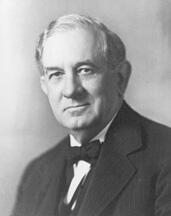
Here you will find contact information for Senator Thomas Terry Connally, including email address, phone number, and mailing address.
| Name | Thomas Terry Connally |
| Position | Senator |
| State | Texas |
| Party | Democratic |
| Status | Former Representative |
| Term Start | April 2, 1917 |
| Term End | January 3, 1953 |
| Terms Served | 10 |
| Born | August 19, 1877 |
| Gender | Male |
| Bioguide ID | C000684 |
About Senator Thomas Terry Connally
Thomas Terry Connally (August 19, 1877 – October 28, 1963) was an American politician who represented Texas in both the U.S. House of Representatives and the U.S. Senate as a member of the Democratic Party. Over the course of a congressional career that extended from 1917 to 1953, he served ten terms in Congress, including service in the House from 1917 to 1929 and in the Senate from 1929 to 1953. A prominent figure in national politics during the first half of the twentieth century, he played a central role in shaping U.S. foreign policy in the World War II and early Cold War eras, while also being a staunch defender of segregation and Jim Crow laws in domestic affairs.
Connally was born on August 19, 1877, in Hewitt, McLennan County, Texas. He grew up in a rural environment in central Texas during the post-Reconstruction era, an experience that helped shape his lifelong identification with Southern Democratic politics and the social and racial order of the Jim Crow South. Details of his early schooling and formative years reflect the typical trajectory of an ambitious young Texan of his generation, moving from local education into the study of law and public affairs as a path to political influence. His early life in Texas provided the regional grounding and constituency ties that would underpin his long career in Congress.
Educated in Texas, Connally studied law and was admitted to the bar, beginning a legal practice that led naturally into public service. His legal training informed his later legislative work, particularly on complex issues of constitutional law, international agreements, and federal authority. Before entering national office, he established himself in state and local circles as a capable advocate and party loyalist, aligning with the dominant Democratic organization in Texas. This background prepared him for his first successful run for Congress and helped him cultivate a reputation as a dependable Wilsonian Democrat during the era of World War I and its aftermath.
Connally was elected to the U.S. House of Representatives in 1916 and took his seat in March 1917, just as the United States entered World War I. He served in the House from 1917 to 1929, representing Texas as a Democrat and participating actively in the legislative process during a period of major domestic and international change. In the House, he was a staunch Wilsonian Democrat who campaigned vigorously in favor of President Woodrow Wilson’s internationalist agenda, including the League of Nations and the World Court. His advocacy for these institutions reflected his early and consistent support for an engaged American role in world affairs, even as many in Congress and the country remained skeptical of such commitments.
In 1928 Connally was elected to the U.S. Senate, beginning a tenure that would last from 1929 to 1953 and span the Great Depression, World War II, and the early Cold War. As a senator, he supported much of President Franklin D. Roosevelt’s New Deal legislation and was closely associated with the passage of the Connally Hot Oil Act of 1935, which attempted to circumvent the Supreme Court’s rejection of a key part of New Deal economic regulation by restricting the interstate shipment of oil produced in violation of state quotas. Although ideologically progressive on many economic issues and generally supportive of the New Deal, Connally did not always back Roosevelt. He notably opposed Roosevelt’s proposal to reform, or “pack,” the Supreme Court, arguing on liberal grounds that such a precedent would allow a future reactionary administration to “restack” the Court and repeal liberal legislation enacted by Democrats.
Connally’s Senate career was marked by his leadership on foreign policy. He chaired the Senate Committee on Foreign Relations beginning in 1941, a position from which he gave strong support to President Roosevelt’s anti-German and anti-Japanese policies during World War II. As chairman, he worked closely with Republican Senator Arthur H. Vandenberg to build bipartisan backing for an internationalist foreign policy, including the creation of the United Nations. He led the committee in supporting the Truman Doctrine in 1947, the Marshall Plan in 1948, and the North Atlantic Treaty Organization (NATO) in 1949, helping to lay the institutional foundations of the postwar international order. During his time in office, he also served as the first United States delegate to the United Nations First Committee (then known as the Political and Security Committee) in 1946, when it met in Lake Success, New York. In that role, he was the first to move that the General Assembly accept the applications of Afghanistan, Iceland, and Sweden for membership after their approval by the Security Council.
At the same time, Connally was firmly rooted in the Southern Democratic establishment and was a segregationist who advocated in favor of Jim Crow laws. He opposed equal education for Black Americans and was a leading opponent of federal civil rights legislation. As a member of the Southern Caucus in the Senate, he resisted federal action on civil rights and in 1937 led a six-week filibuster against an anti-lynching bill, helping to block its passage. He shared, in the words of contemporary observers, “all the beliefs and prejudices of the South” on internal racial issues. Yet he also opposed the Dixiecrat bolt from the Democratic Party in 1948, later recalling in his autobiography that he “strongly opposed the Dixiecrat movement during the Convention,” describing its leaders as “a hard-boiled group of Southern Democrats” who were “extremely conservative” and preoccupied with states’ rights, hatred of Roosevelt, and contempt for President Harry S. Truman. Connally’s stance placed him in conflict with other Southern leaders, including Senator Richard Russell, who chaired the Southern Caucus and pursued a more measured approach on some issues; in these internal disputes, Russell generally prevailed.
Connally’s influence extended beyond legislation to key diplomatic and political controversies of the early 1950s. On October 20, 1951, when President Truman nominated General Mark Wayne Clark to be the U.S. emissary to the Holy See, Connally protested the nomination, citing allegations that Clark had caused a large number of needless deaths at the Battle of Rapido River during World War II. Under mounting criticism, Clark withdrew his nomination on January 13, 1952. Connally’s broader record on foreign affairs was that of a consistent interventionist and a reliable spokesman for the administration and the Department of State, particularly on political and security questions, though his support for reciprocal trade policies was more limited, reflecting the interests of his cattle-producing home state.
In 1953, Connally retired from the Senate, bringing to a close his long career in national politics. His departure ended more than three decades of continuous congressional service, during which he had been a central figure in debates over the New Deal, World War II strategy, the creation of the United Nations, and the early Cold War alliance system, as well as a determined opponent of federal civil rights initiatives. Thomas Terry Connally died on October 28, 1963, leaving a complex legacy as both a principal architect of mid-twentieth-century American foreign policy and a steadfast defender of segregation and the Jim Crow order in the American South.