Representative Thomas Croxton
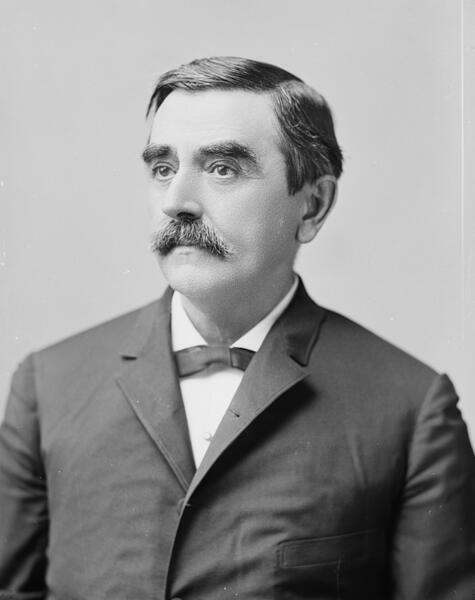
Here you will find contact information for Representative Thomas Croxton, including email address, phone number, and mailing address.
| Name | Thomas Croxton |
| Position | Representative |
| State | Virginia |
| District | 1 |
| Party | Democratic |
| Status | Former Representative |
| Term Start | December 7, 1885 |
| Term End | March 3, 1887 |
| Terms Served | 1 |
| Born | March 8, 1822 |
| Gender | Male |
| Bioguide ID | C000950 |
About Representative Thomas Croxton
Thomas Croxton (March 8, 1822 – July 3, 1903) was a Democratic U.S. Representative from Virginia who served one term in the Forty-ninth Congress from 1885 to 1887. His congressional service occurred during a significant period in American history, and as a member of the House of Representatives he participated in the legislative process and represented the interests of his constituents in Virginia.
Croxton was born in Tappahannock, Essex County, Virginia, on March 8, 1822. He attended primary school in his hometown and continued his studies at the Tappahannock and Rappahannock Academies, institutions that prepared many young men of the region for professional careers. Raised in a community closely tied to the legal and agricultural life of eastern Virginia, he pursued a course of study that would lead him into the law and public service.
For his higher education, Croxton enrolled in the law department of the University of Virginia at Charlottesville, one of the leading legal training institutions in the South. He graduated from the law department in 1842. That same year he was admitted to the bar and commenced the practice of law in Tappahannock, Virginia. Establishing himself as an attorney in his native town, he built a legal practice that would form the foundation of his later public career.
Croxton entered public office as attorney for the Commonwealth, serving as the local prosecuting attorney from 1852 to 1865. In this capacity he was responsible for representing the state in criminal matters in his jurisdiction, a role he held throughout the turbulent decade of the 1850s and into the years of the Civil War. During the Civil War he also served on the staff of Confederate General George E. Pickett, reflecting his alignment with Virginia and the Confederacy during the conflict. He resigned his position as attorney for the Commonwealth in 1865, at the close of the war and the beginning of Reconstruction.
A member of the Democratic Party, Croxton remained active in public affairs in the postwar period and eventually sought national office. In the 1884 elections he was elected as a Democrat to the Forty-ninth Congress, winning a seat in the U.S. House of Representatives with 51 percent of the vote and defeating Republican Robert Murphy Mayo. He served in Congress from March 4, 1885, to March 3, 1887. During his single term, Croxton contributed to the legislative process as a representative from Virginia, participating in debates and votes in the House of Representatives and advocating for the interests of his district during a time of continued adjustment in the post–Reconstruction South.
Croxton was an unsuccessful candidate for reelection in 1886 to the Fiftieth Congress. In that campaign he lost his bid for another term to Republican Thomas Henry Bayly Browne. After his defeat, he returned to private life in Tappahannock, where he resumed the practice of law and engaged in agricultural pursuits, reflecting the dual legal and agrarian character of many Virginia public men of his generation.
In 1892, Croxton reentered public service at the local level when he was elected judge of Essex County, Virginia. He served as county judge from 1892 until his resignation in 1901, overseeing judicial matters and local legal administration during nearly a decade on the bench. After stepping down from the judgeship, he spent his remaining years in Tappahannock. Thomas Croxton died there on July 3, 1903. He was interred in St. John’s Episcopal Churchyard in Tappahannock. Papers relating to his law practice are preserved in the Special Collections Research Center at the College of William and Mary, providing documentary insight into his legal and public career.