Representative Thomas Henry Dale
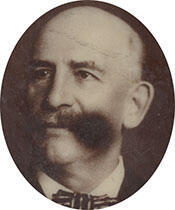
Here you will find contact information for Representative Thomas Henry Dale, including email address, phone number, and mailing address.
| Name | Thomas Henry Dale |
| Position | Representative |
| State | Pennsylvania |
| District | 10 |
| Party | Republican |
| Status | Former Representative |
| Term Start | December 4, 1905 |
| Term End | March 3, 1907 |
| Terms Served | 1 |
| Born | June 12, 1846 |
| Gender | Male |
| Bioguide ID | D000010 |
About Representative Thomas Henry Dale
Thomas Henry Dale (June 12, 1846 – August 21, 1912) was a Republican member of the U.S. House of Representatives from Pennsylvania who served one term in Congress from 1905 to 1907. A lifelong Pennsylvanian, he emerged from business and local politics in the Scranton area to represent his district during a significant period in American political and economic development.
Dale was born on June 12, 1846, in Daleville, Pennsylvania, a small community in Lackawanna County. He received his early education in local schools and continued his studies at Wyoming Seminary in Kingston, Pennsylvania, an institution known in the nineteenth century for preparing students for professional and civic leadership. His formative years coincided with the growing industrialization of northeastern Pennsylvania, particularly the development of the anthracite coal industry that would later shape his business career.
During the American Civil War, Dale enlisted in the Union Army in 1863. Although details of his specific unit and length of service are not extensively documented in the available sources, his enlistment as a young man reflected the broader mobilization of Pennsylvania’s population in support of the Union cause. Following his discharge from military service, he returned to civilian life in a region rapidly expanding its industrial base.
After the war, Dale engaged in business as a coal operator and in the wholesale beef business, enterprises that placed him at the center of the commercial life of northeastern Pennsylvania. He became interested in various other business enterprises in Scranton, Pennsylvania, which was emerging as a major industrial and transportation hub. He was instrumental in organizing the Scranton Board of Trade, an important local body promoting commercial development, and he served as its president for several terms, underscoring his prominence in the city’s business community.
Dale’s success in business and civic affairs led naturally into a political career within the Republican Party. He served for several years as chairman of the Republican county committee, helping to shape party organization and strategy in Lackawanna County. In 1882 he was elected prothonotary of Lackawanna County, Pennsylvania, the chief clerk of the county courts, and he held that office from 1882 to 1892. His decade-long tenure as prothonotary reflected both his administrative ability and his standing in local politics. He further advanced within the party as a delegate to the 1896 Republican National Convention, participating in the national deliberations of the party during a pivotal presidential election year.
Building on this record of local and party service, Dale was elected as a Republican to the Fifty-ninth Congress, serving in the U.S. House of Representatives from Pennsylvania from March 4, 1905, to March 3, 1907. As a member of the House of Representatives, he participated in the legislative process during a significant period in American history marked by rapid industrial growth, labor unrest, and the early stirrings of the Progressive Era. Representing his Pennsylvania constituents, he contributed to the work of Congress and took part in the democratic process at the national level. A member of the Republican Party, he served one term in office and was an unsuccessful candidate for reelection in 1906.
After leaving Congress, Dale returned to his business interests in Scranton. He served as president of the Anthracite Trust Company in Scranton, a position that reflected his longstanding involvement in the regional coal and financial sectors. His post-congressional career continued the pattern of engagement with both commerce and civic affairs that had characterized his earlier life.
Thomas Henry Dale died in Daleville, Pennsylvania, on August 21, 1912, at the age of 66. His life and career linked military service in the Civil War, substantial involvement in the coal-based economy of northeastern Pennsylvania, leadership in local and county Republican politics, and a term of service in the United States Congress representing Pennsylvania during the early twentieth century.