Senator Thomas A. Daschle
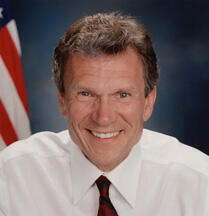
Here you will find contact information for Senator Thomas A. Daschle, including email address, phone number, and mailing address.
| Name | Thomas A. Daschle |
| Position | Senator |
| State | South Dakota |
| Party | Democratic |
| Status | Former Representative |
| Term Start | January 15, 1979 |
| Term End | January 3, 2005 |
| Terms Served | 13 |
| Born | December 9, 1947 |
| Gender | Male |
| Bioguide ID | D000064 |
About Senator Thomas A. Daschle
Thomas Andrew Daschle (DASH-əl; born December 9, 1947) is an American politician and lobbyist who represented South Dakota in the United States Congress from 1979 to 2005, serving in the House of Representatives and later in the Senate. A member of the Democratic Party, he became one of the most influential congressional leaders of his era, leading the Senate Democratic Caucus for the final ten years of his Senate tenure and serving as both Senate Majority Leader and Minority Leader. His rise to leadership made him the highest‑ranking elected official in South Dakota history, a distinction later tied by fellow South Dakotan John Thune in 2025.
Daschle was born in Aberdeen, South Dakota, and was raised in a working‑class Roman Catholic family. He attended local public schools before enrolling at South Dakota State University in Brookings. He graduated in 1969 with a Bachelor of Arts degree in political science. Shortly after completing his undergraduate education, he entered the United States Air Force, serving as an intelligence officer from 1969 to 1972. His military service, which included work in the field of military intelligence during the Vietnam War era, helped shape his later interest in national security and foreign policy issues.
After leaving the United States Air Force in 1972, Daschle returned to South Dakota and began his political career as a congressional staffer. He worked for U.S. Senator James Abourezk as a field director and later as an aide in Washington, D.C., gaining experience in legislative affairs, constituent services, and the internal workings of Congress. During this period he became active in state and local Democratic politics, building relationships that would support his own bid for elective office later in the decade.
In 1978, at the age of 31, Daschle was elected to the United States House of Representatives from South Dakota, winning his first race by a margin of just 139 votes out of more than 129,000 cast, following a recount. He took office in January 1979, marking the beginning of his service in Congress. Daschle served four terms in the House, quickly becoming part of the Democratic leadership and earning a reputation for his mastery of legislative detail and his attentiveness to constituent concerns. During his House service, which lasted until 1987, he focused on agricultural policy, rural development, and issues of particular importance to South Dakota, while also participating fully in the broader legislative process during a significant period in American political history.
In 1986, Daschle ran for the United States Senate and was elected in a close contest against incumbent Republican Senator James Abdnor. He took office in January 1987 and, in his first year in the Senate, was appointed to the influential Committee on Finance, which oversees tax, trade, and many health‑care programs. Over the course of his Senate career, he also served on other key committees and steadily rose within the Democratic Caucus. Although he was not seeking national office, he received 10 delegate votes (0.30%) for Vice President of the United States at the 1980 Democratic National Convention, an early indication of his growing prominence within the party.
Daschle’s Senate service coincided with major national and international developments, and he played a central role in shaping Democratic strategy on domestic and foreign policy. In 1995, following the Republican takeover of Congress in the 1994 midterm elections, he was chosen by his colleagues as Senate Minority Leader. He held that position until 2001, when Democrats briefly gained control of the Senate and he became Senate Majority Leader. From 2001 to 2003, he led the Senate during a period marked by the closely contested 2000 presidential election, the September 11, 2001 terrorist attacks, the war in Afghanistan, and the run‑up to the Iraq War. Democratic losses in the November 2002 elections returned the party to the minority in January 2003, and Daschle reverted to the role of Senate Minority Leader. Throughout his seven terms in Congress—four in the House and three in the Senate—he was deeply involved in the legislative process and in representing the interests of his South Dakota constituents.
In the 2004 Senate election, Daschle sought a fourth Senate term but was defeated in a closely watched and hard‑fought race by Republican challenger John Thune. Thune prevailed by 4,508 votes, winning 50.6 percent of the vote to Daschle’s 49.4 percent. It was the first time since 1952 that a sitting Senate party leader lost a bid for reelection, the previous instance being Republican Barry Goldwater’s defeat of Democratic Majority Leader Ernest McFarland in Arizona. The campaign drew national attention; Senate Majority Leader Bill Frist traveled to South Dakota to campaign for Thune, breaking an unwritten tradition that a leader of one party would not actively campaign for the defeat of the other party’s leader. Throughout the race, Thune, joined by Frist, President George W. Bush, and Vice President Dick Cheney, frequently accused Daschle of being the “chief obstructionist” of the Bush administration’s agenda and charged him with using filibusters to block confirmation of several Bush nominees. Thune also emphasized his strong support for the Iraq War and, in a nationally televised debate on NBC’s “Meet the Press,” accused Daschle of “emboldening the enemy” through his skepticism about the war. Polls throughout 2004 showed a consistently tight contest, with leads shifting within a narrow margin before the final outcome on November 2.
Following his departure from the Senate in January 2005, Daschle remained active in public policy and Democratic politics. He joined a major Washington, D.C. law and lobbying firm as a policy advisor and became a senior fellow at the Center for American Progress, a progressive think tank. He co‑authored a book advocating universal health care and, in 2003, published “Like No Other Time: The 107th Congress and the Two Years That Changed America Forever,” recounting his experiences in the Senate from 2001 to 2003. With Charles Robbins, he also wrote “The U.S. Senate,” part of the Fundamentals of American Government series, offering an insider’s perspective on the institution. Daschle was an early supporter of Barack Obama’s presidential candidacy in 2008 and served as an informal advisor during the campaign.
After the 2008 election, President‑elect Obama nominated Daschle to serve as Secretary of the Department of Health and Human Services, a role in which he was expected to play a central part in the administration’s health‑care reform efforts. However, amid growing controversy over his failure to properly report and pay certain income taxes, Daschle withdrew his name from consideration on February 3, 2009. He subsequently continued his work in the private sector and in policy advocacy. He is currently working for The Daschle Group, a public policy advisory of Baker Donelson, a large law firm and lobbying group, where he remains engaged in health policy, national security, and other public affairs issues while maintaining a prominent voice in Democratic and national political circles.