Senator Thomas Coleman du Pont
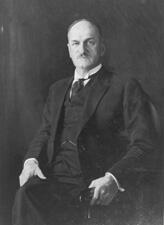
Here you will find contact information for Senator Thomas Coleman du Pont, including email address, phone number, and mailing address.
| Name | Thomas Coleman du Pont |
| Position | Senator |
| State | Delaware |
| Party | Republican |
| Status | Former Representative |
| Term Start | July 7, 1921 |
| Term End | March 3, 1929 |
| Terms Served | 2 |
| Born | December 11, 1863 |
| Gender | Male |
| Bioguide ID | D000560 |
About Senator Thomas Coleman du Pont
Thomas Coleman du Pont (December 11, 1863 – November 11, 1930) was an American engineer, industrialist, and Republican politician from Greenville, Delaware, who served parts of two terms as a United States Senator from Delaware. A member of the Republican Party, he represented Delaware in the Senate during a significant period in American history, contributing to the legislative process during service that extended from 1921 to 1929 in two nonconsecutive terms. He was also president of E. I. du Pont de Nemours and Company, the family-founded chemical enterprise that became one of the nation’s leading industrial firms.
Du Pont was born in Louisville, Kentucky, and was a member of the prominent du Pont family. He was a cousin of U.S. Senator Henry A. du Pont and a great-grandson of Eleuthère Irénée du Pont, the French émigré who founded E. I. du Pont de Nemours and Company in the early nineteenth century. Raised within this influential industrial and political dynasty, he was positioned from an early age to play a significant role in both business and public affairs. His family background and connections would later shape his leadership in corporate management and Republican Party politics in Delaware and nationally.
For his education, du Pont attended preparatory school at Urbana University in Ohio. He then pursued higher education at the Massachusetts Institute of Technology, where he earned an engineering degree. While at MIT, he was initiated into the Sigma Chi fraternity, reflecting his engagement in collegiate social and professional networks that complemented his technical training. His engineering education provided the foundation for his subsequent work in industry and helped prepare him for the executive responsibilities he later assumed within the du Pont company.
Du Pont’s business career was closely tied to the family firm, E. I. du Pont de Nemours and Company, where he rose to become president. Under his leadership, the company expanded and modernized, further solidifying its position as a major American industrial concern. His executive experience and prominence in the business community enhanced his influence in public life and Republican politics. In 1915 he retired from active business activities, turning his attention more fully to political organization and public service, although his reputation as an industrial leader continued to shape perceptions of his career.
In his personal life, du Pont married a cousin, Alice Elsie du Pont, a granddaughter of Charles I. du Pont, thereby reinforcing ties within the extended family network. The couple had one daughter, Alice Hounsfield du Pont, born in 1891. In 1921, their daughter married Clayton Douglass Buck, who would later serve as a U.S. Senator and two-term governor of Delaware. The younger Alice inherited her father’s family home, Buena Vista, near New Castle, Delaware. In 1965, she and her husband sold Buena Vista to the State of Delaware for $1; the property is now operated as the Buena Vista Conference Center and was added to the National Register of Historic Places in 1971. In 1922, Thomas Coleman du Pont and his wife also donated property on the Chesapeake Bay in Maryland to the Del-Mar-Va Council of the Boy Scouts of America for the development of what is now known as Camp Rodney, reflecting his interest in civic and youth-oriented philanthropy.
Du Pont became deeply involved in Republican Party politics after stepping back from business. He served as a member of the Republican National Committee from 1908 until his death in 1930. During this period, he played a central role in Delaware politics, and it was largely under his leadership that the Union Republicans and Regular Republicans in the state reconciled their differences and reunited, laying the foundation for the modern Delaware Republican Party. His organizational skills, financial resources, and family prestige made him a key figure in shaping Republican strategy and candidate selection at both the state and national levels.
Du Pont’s congressional service began when he was appointed to the United States Senate on July 7, 1921, to fill the vacancy caused by the resignation of Senator Josiah O. Wolcott. In this first period of service, he sat with the Republican majority in the 67th Congress during the administration of President Warren G. Harding. A member of the Republican Party, he participated in the democratic process and represented the interests of his Delaware constituents during a time of post–World War I adjustment and early 1920s economic expansion. However, his initial tenure was brief. In the special election held on November 7, 1922, he lost his bid to complete the unexpired term, and on the same day he also lost his campaign for the full six-year term that was to follow. In both contests he was defeated by Democrat Thomas F. Bayard Jr., a Wilmington lawyer who was married to one of du Pont’s cousins. His first Senate service thus extended from July 7, 1921, until November 21, 1922.
Du Pont returned to the Senate two years later. In 1924 he sought the Republican nomination for the state’s Senate seat and defeated the incumbent Republican Senator L. Heisler Ball in the primary. He then won the general election, defeating Democrat James M. Tunnell, a lawyer from Georgetown, Delaware. In this second period of service, he again sat with the Republican majority, this time in the 69th and 70th Congresses, during the administration of President Calvin Coolidge. His second term ran from March 4, 1925, until December 9, 1928, when health problems compelled him to resign. Across his two nonconsecutive terms, he served in the Senate from 1921 to 1929, contributing to legislative deliberations during a decade marked by economic growth, evolving transportation policy, and emerging national scandals.
During his Senate career, du Pont was particularly associated with proposals to improve the nation’s transportation infrastructure. In 1927 he introduced a bill calling for the construction of a coast-to-coast superhighway, five hundred feet wide and as direct as possible from the Atlantic to the Pacific coast. Although this ambitious proposal anticipated later developments in national highway planning, it was never realized, due in part to the economic pressures that culminated in the Great Depression. In his later years, du Pont’s public reputation was affected by his implication in the broader context of the Teapot Dome scandal, one of the major political controversies of the 1920s, as well as by lawsuits arising from various Florida real estate ventures in which he had been involved. These difficulties, combined with declining health, overshadowed some of his earlier achievements in business and politics.
Thomas Coleman du Pont died on November 11, 1930. At the time of his death, he had remained active in Republican Party affairs as a member of the Republican National Committee and was remembered as both a leading figure in American industry and a significant, if sometimes controversial, participant in Delaware and national politics. His career encompassed leadership of a major industrial corporation, the reorganization of his state’s Republican Party, and service in the United States Senate during a transformative era in the nation’s economic and political life.