Senator Thomas Ewing
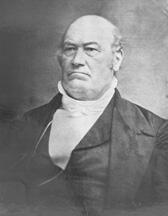
Here you will find contact information for Senator Thomas Ewing, including email address, phone number, and mailing address.
| Name | Thomas Ewing |
| Position | Senator |
| State | Ohio |
| Party | Whig |
| Status | Former Representative |
| Term Start | December 5, 1831 |
| Term End | March 3, 1851 |
| Terms Served | 2 |
| Born | December 28, 1789 |
| Gender | Male |
| Bioguide ID | E000281 |
About Senator Thomas Ewing
Thomas Ewing Jr. (August 7, 1829 – January 21, 1896) was an American attorney, the first chief justice of Kansas, a leading Free State advocate, a Union Army general during the American Civil War, and a two-term United States Congressman from Ohio, serving from 1877 to 1881. He was also the son and namesake of Thomas Ewing, a prominent Ohio Whig who served as a United States Senator from Ohio from 1831 to 1851 and contributed to the legislative process during two terms in office. The younger Ewing emerged as a significant figure in the turbulent politics of “Bleeding Kansas,” in the Union war effort, and in postwar Democratic politics, including a narrowly unsuccessful campaign for governor of Ohio in 1879.
Ewing Jr. was born on August 7, 1829, in Lancaster, Fairfield County, Ohio, into a politically influential family. His father, Thomas Ewing, was a leading member of the Whig Party who represented Ohio in the United States Senate from 1831 to 1851, participating in the democratic process during a significant period in American history and representing the interests of his constituents in the upper chamber of Congress. Growing up in this environment, Ewing Jr. was exposed early to national politics and public affairs. He was also closely associated with the family of William Tecumseh Sherman, who had been informally adopted into the Ewing household and later became one of the most prominent Union generals of the Civil War, further strengthening Ewing Jr.’s ties to national political and military circles.
Educated in Ohio and influenced by his father’s legal and political career, Ewing Jr. studied law and was admitted to the bar, beginning his practice as an attorney. Seeking opportunity on the expanding western frontier, he moved to the Kansas Territory in the 1850s, where the national conflict over slavery was playing out in violent form. There he quickly became a leading Free State advocate, aligning himself with the anti-slavery cause in the struggle known as “Bleeding Kansas.” His legal ability and political prominence in the territory led to his selection as the first chief justice of Kansas. In that role, he helped establish the foundations of the state’s judicial system at a time when Kansas was transitioning from a contested territory into a free state admitted to the Union.
Ewing resigned his judgeship in 1862 to enter the military during the American Civil War. With no prior military experience, he recruited the 11th Kansas Infantry and was elected as its first colonel. Under his command, the regiment served in the Trans-Mississippi theater and fought in the division of General James G. Blunt in several important engagements, including the battles of Old Fort Wayne, Cane Hill, and Prairie Grove. For his leadership at the Battle of Prairie Grove, Ewing was promoted to brigadier general on March 13, 1863. He was subsequently given command of the District of the Border, which comprised Kansas and western Missouri, a region plagued by guerrilla warfare and deep-seated sectional animosities.
As commander of the District of the Border, Ewing became responsible for one of the most controversial actions of his career: General Order No. 11, issued in 1863 in the aftermath of William Quantrill’s devastating raid on Lawrence, Kansas, in which approximately 450 raiders shot and killed about 150 men and boys. In an effort to suppress Confederate bushwhackers and their support networks, the order commanded that civilians with Southern sympathies living in four Missouri counties be expelled from their homes, with the threat that those who did not leave voluntarily would be forced out by Union cavalry. While intended as a security measure in a brutal guerrilla war, the order caused widespread suffering and displacement and left a lasting black mark on Ewing’s legacy. The severity of the measure later became a subject of political attack, including in the use of George Caleb Bingham’s famous painting “General Order No. 11” in campaigns against him.
In the later stages of the war, Ewing continued to play a significant military role. In September and October 1864, as deputy commander of the St. Louis district under Major General William S. Rosecrans, he took a leading part in thwarting Confederate General Sterling Price’s invasion of Missouri. Ewing commanded the defense of Fort Davidson at Pilot Knob, Missouri, where his force of about 1,500 soldiers (roughly 900 effectives) and a few Black civilians held off repeated assaults by a much larger Confederate army of approximately 15,000 men. His successful defense bought critical time for Union forces to strengthen the defenses of St. Louis. Rather than surrender, Ewing and his men slipped away under cover of darkness and conducted a fighting withdrawal to Rolla, Missouri. On February 23, 1865, he resigned his commission to return to civilian life, tendering his resignation directly to President Abraham Lincoln, a personal friend, just a month before Lincoln’s assassination. On February 24, 1866, President Andrew Johnson nominated Ewing for appointment to the brevet rank of major general of volunteers, to rank from March 13, 1865, and the United States Senate confirmed the nomination on May 4, 1866.
After the war, Ewing resumed his legal career and entered national politics. He returned to Ohio, where his family name and his own record in Kansas and the Union Army gave him prominence in Democratic Party circles. In 1876 he was elected as a Democrat to the United States House of Representatives from Ohio and served two consecutive terms in Congress from 1877 to 1881. During his service in the House, he represented Ohio constituents in the national legislature at a time of Reconstruction’s end and the onset of the Gilded Age, contributing to the legislative process as part of the Democratic opposition in a period marked by debates over economic policy, civil service reform, and the lingering issues of the Civil War. His congressional tenure echoed the earlier national service of his father, Thomas Ewing, who had served as a United States Senator from Ohio from 1831 to 1851 as a member of the Whig Party.
Ewing’s most ambitious political effort came in 1879, when he was the Democratic candidate for governor of Ohio. In a closely contested race, he was narrowly defeated. Contemporary observers and later scholars have debated the factors that contributed to his loss, including the possible impact of attacks on his Civil War record. There is scholarly controversy over whether the use of George Caleb Bingham’s painting “General Order No. 11” in anti-Ewing campaign materials, highlighting the harshness of his 1863 order in Missouri, made the decisive difference in the election. The defeat effectively ended his pursuit of high elective office.
On March 3, 1881, Ewing closed his second term as a representative in Congress and subsequently moved to New York City to resume his law career. In New York he practiced as an attorney and remained a respected figure in legal and political circles, though he never again ran for public office. He lived there for the remainder of his life, maintaining connections with former comrades and colleagues from his years in Kansas, the Civil War, and Congress. Thomas Ewing Jr. died on January 21, 1896, leaving a legacy that spanned frontier state-building, controversial wartime command, and national legislative service, and that was closely intertwined with the earlier senatorial career of his father, Thomas Ewing of Ohio.