Representative Thomas Aloysius Flaherty
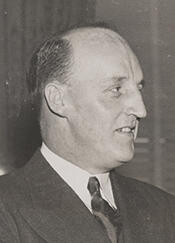
Here you will find contact information for Representative Thomas Aloysius Flaherty, including email address, phone number, and mailing address.
| Name | Thomas Aloysius Flaherty |
| Position | Representative |
| State | Massachusetts |
| District | 11 |
| Party | Democratic |
| Status | Former Representative |
| Term Start | January 5, 1937 |
| Term End | January 3, 1943 |
| Terms Served | 3 |
| Born | December 21, 1898 |
| Gender | Male |
| Bioguide ID | F000183 |
About Representative Thomas Aloysius Flaherty
Thomas Aloysius Flaherty (December 21, 1898 – April 27, 1965) was a Democratic member of the United States House of Representatives from Massachusetts who served three consecutive terms in Congress from 1937 to 1943. He was born in Boston, Suffolk County, Massachusetts, on December 21, 1898, and spent his early years in the city that would remain the center of his personal and professional life. Raised in Boston’s public school system, he developed an early familiarity with the concerns of urban residents that later informed his work in state and municipal government.
Flaherty attended the Boston public schools and then Boston College High School, receiving a secondary education grounded in both classical and civic studies. He went on to study law at Northeastern University Law School in Boston. His legal education, combined with his later work in public administration, provided him with a foundation in statutory interpretation and regulatory matters that would prove useful in his legislative and regulatory career. Although records do not indicate that he practiced law extensively, his legal training was a consistent underpinning of his public service.
During World War I, Flaherty served in the United States Army as a private in 1918. His military service coincided with the final year of the conflict and reflected the participation of many young men of his generation in the national war effort. Following his discharge, he returned to Boston and entered federal service with the United States Veterans’ Administration in Boston. In that role he was involved in the administration of benefits and services to former servicemembers, gaining direct experience with veterans’ issues and federal bureaucracy at a time when the nation was adjusting to the postwar period and, later, the economic strains of the Great Depression.
Flaherty’s formal political career began at the state level. He was elected to the Massachusetts House of Representatives in 1934, representing his constituents in the state legislature during the mid-1930s, a period marked by New Deal reforms and intense debate over economic recovery measures. As a state legislator, he participated in shaping policies affecting Massachusetts during a time of significant social and economic transition, building a reputation that positioned him for higher office.
In 1937, Flaherty was elected as a Democrat to the Seventy-fifth Congress to fill the vacancy caused by the resignation of Representative John P. Higgins. He took his seat on December 14, 1937, and was subsequently reelected to the Seventy-sixth and Seventy-seventh Congresses, serving continuously from December 14, 1937, to January 3, 1943. Representing a Massachusetts district during the later New Deal years and the early period of American involvement in World War II, he contributed to the legislative process in the House of Representatives and participated in the democratic governance of the nation at a time of profound domestic and international challenges. He was not a candidate for renomination in 1942, thus concluding his congressional service at the end of his third term.
After leaving Congress, Flaherty continued a long career in public service, particularly in municipal and state regulatory roles. He served as transit commissioner for the city of Boston from 1943 to 1945, a position that placed him at the center of issues involving public transportation in a major urban area during and immediately after World War II. He then moved to state-level regulatory work, becoming chairman of the Massachusetts Department of Public Utilities from 1946 to 1953. In this capacity he oversaw the regulation of public service corporations, including transportation and utilities, during a period of postwar growth and infrastructure expansion. He continued with the Department of Public Utilities as commissioner from 1953 to 1955, maintaining a central role in the oversight of essential services to Massachusetts residents.
Flaherty later returned to municipal service in Boston, serving as chairman of the Board of Review within the Assessing Department of the city from 1956 to 1960. In that position he was involved in the review and administration of property assessments, an important component of local finance and taxation policy. Alongside his public roles, he worked as a real estate broker and appraiser, applying his knowledge of property values and urban development in the private sector. He resided in the Charlestown neighborhood of Boston, remaining closely connected to the community he had long represented and served.
Thomas Aloysius Flaherty died in Charlestown, Massachusetts, on April 27, 1965. He was interred at Holy Cross Cemetery in Malden, Massachusetts. His career encompassed military service, federal administrative work, state legislative office, three terms in the United States House of Representatives, and significant regulatory and administrative positions in both state and city government, reflecting a lifetime devoted to public service in Massachusetts.