Representative Thomas Bacon Fugate
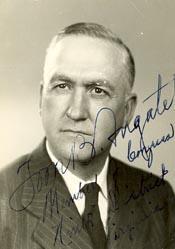
Here you will find contact information for Representative Thomas Bacon Fugate, including email address, phone number, and mailing address.
| Name | Thomas Bacon Fugate |
| Position | Representative |
| State | Virginia |
| District | 9 |
| Party | Democratic |
| Status | Former Representative |
| Term Start | January 3, 1949 |
| Term End | January 3, 1953 |
| Terms Served | 2 |
| Born | April 10, 1899 |
| Gender | Male |
| Bioguide ID | F000399 |
About Representative Thomas Bacon Fugate
Thomas Bacon Fugate (April 10, 1899 – September 22, 1980) was an American businessman, banker, farmer, and politician who served as a Democratic Representative from Virginia in the United States Congress from 1949 to 1953. Elected as a member of the Democratic Party, he represented his Virginia constituency in the Eighty-first and Eighty-second Congresses, contributing to the legislative process during a significant period in American history.
Born on April 10, 1899, Fugate came of age at the turn of the twentieth century, a time of rapid economic and social change in the United States. His early life in Virginia helped shape his understanding of rural communities, agriculture, and local commerce, experiences that would later inform his work as a farmer, businessman, and public official. Growing up in this environment, he developed close ties to the economic and social fabric of his region, which later underpinned his political appeal as a representative of local interests.
Fugate’s education prepared him for a career that bridged both private enterprise and public service. He pursued studies that supported his later work in business and banking, gaining the skills necessary to manage financial affairs and agricultural operations. This educational background, combined with his familiarity with the needs of his community, positioned him to move naturally into leadership roles in commerce and local affairs.
Before entering national politics, Fugate established himself as a businessman, banker, and farmer in Virginia. In banking, he was involved in managing financial resources and credit in his community, helping to support local businesses and agricultural enterprises. As a farmer, he was directly engaged in the agricultural economy that was central to much of Virginia’s life in the first half of the twentieth century. His combined experience in business, finance, and agriculture gave him a practical understanding of economic issues that would later influence his perspective as a legislator.
Fugate was elected to the United States House of Representatives as a Democrat and served from January 3, 1949, to January 3, 1953, encompassing the Eighty-first and Eighty-second Congresses. His tenure in Congress coincided with the early Cold War era, post–World War II economic adjustments, and the beginnings of major national debates over domestic policy and international engagement. As a member of the House of Representatives, Thomas Bacon Fugate participated in the democratic process and represented the interests of his Virginia constituents, bringing to the national stage the concerns of farmers, small business owners, and rural communities. During his two terms in office, he contributed to the legislative process and took part in deliberations that shaped federal policy in this transformative period.
After leaving Congress in 1953, Fugate returned to private life in Virginia, resuming his activities in business, banking, and farming. Drawing on his congressional experience, he remained a figure of local influence, with his background in both public service and private enterprise continuing to connect him to the civic and economic life of his region. His post-congressional years reflected a continued engagement with the community and the sectors in which he had long worked.
Thomas Bacon Fugate died on September 22, 1980. His life and career spanned eras of profound change in American society, from the early twentieth century through the postwar period. As a businessman, banker, farmer, and Democratic Representative from Virginia, he left a record of service that linked local economic interests with national legislative responsibilities during his two terms in the United States Congress from 1949 to 1953.