Representative Thomas J. Geary
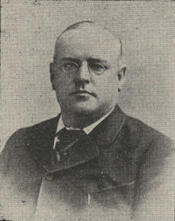
Here you will find contact information for Representative Thomas J. Geary, including email address, phone number, and mailing address.
| Name | Thomas J. Geary |
| Position | Representative |
| State | California |
| District | 1 |
| Party | Democratic |
| Status | Former Representative |
| Term Start | December 2, 1889 |
| Term End | March 3, 1895 |
| Terms Served | 3 |
| Born | January 18, 1854 |
| Gender | Male |
| Bioguide ID | G000113 |
About Representative Thomas J. Geary
Thomas J. Geary (January 18, 1854 – July 6, 1929) was an American lawyer and Democratic politician who served three terms as a U.S. Representative from California from 1890 to 1895. Over the course of his congressional service, he represented his California constituents during a significant period in American history and contributed to the legislative process in the House of Representatives.
Geary was born in Boston, Massachusetts, on January 18, 1854. In April 1863 he moved with his parents to San Francisco, California, where he was raised. He attended the public schools in San Francisco and later pursued legal studies at St. Ignatius College, a Jesuit institution in the city. His education there prepared him for a legal career in the rapidly developing communities of northern California.
After completing his legal studies, Geary was admitted to the bar in 1877. He commenced the practice of law in Petaluma, California, where he established himself as a young attorney. In 1882 he moved to Santa Rosa, California, which would become the principal base of his professional and political life. His legal abilities and growing reputation led to his election as district attorney of Sonoma County, California, a position he held in 1883 and 1884. Following his term as district attorney, he resumed the private practice of law in Santa Rosa, continuing to build his standing in local and state Democratic circles.
Geary entered national politics as a member of the Democratic Party. He was elected as a Democrat to the Fifty-first Congress to fill the vacancy caused by the resignation of Representative John J. De Haven. He was subsequently reelected to the Fifty-second and Fifty-third Congresses, serving in the U.S. House of Representatives from December 9, 1890, to March 3, 1895. During these three terms in office, he participated actively in the legislative process and represented the interests of his California constituents in a period marked by economic change, immigration debates, and shifting national policies. He was an unsuccessful candidate for reelection in 1894 to the Fifty-fourth Congress, bringing his formal congressional career to a close in March 1895.
Geary is most widely remembered for authoring and sponsoring the Geary Act, a United States law passed by Congress on May 5, 1892, which extended and strengthened the Chinese Exclusion Act of 1882. The Geary Act imposed stringent new requirements on Chinese residents of the United States, including a mandate that every Chinese resident carry a resident permit at all times. Failure to carry this permit was punishable by deportation or by a year of hard labor. The law further restricted the rights of Chinese residents by providing that Chinese citizens were not allowed to bear witness in court and could not receive bail in habeas corpus proceedings. These provisions made the act one of the most severe pieces of federal anti-Chinese legislation of its era and placed Geary at the center of contemporary controversies over immigration and civil rights.
After leaving Congress, Geary resumed the practice of law. In 1900, drawn by the opportunities associated with the Alaska Gold Rush, he moved to Nome, Alaska, where he continued his legal work in a frontier environment shaped by rapid economic development and population influx. He returned to California in 1902, settling again in San Francisco, and then, in 1903, moved back to Santa Rosa. There he continued his legal practice and remained a figure of local prominence. He retired from active pursuits in 1923, concluding a long professional life that had spanned local prosecution, national legislative service, and private practice in multiple jurisdictions.
Thomas J. Geary died in Santa Rosa, California, on July 6, 1929. He was interred in the Santa Rosa Rural Cemetery. His career, marked by three consecutive terms in Congress and his authorship of the Geary Act, left a lasting imprint on both California’s political history and the national debate over immigration policy in the late nineteenth century.