Representative Tom S. Gettys
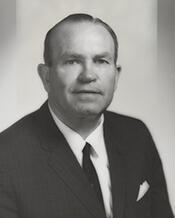
Here you will find contact information for Representative Tom S. Gettys, including email address, phone number, and mailing address.
| Name | Tom S. Gettys |
| Position | Representative |
| State | South Carolina |
| District | 5 |
| Party | Democratic |
| Status | Former Representative |
| Term Start | January 9, 1963 |
| Term End | January 3, 1975 |
| Terms Served | 6 |
| Born | June 19, 1912 |
| Gender | Male |
| Bioguide ID | G000144 |
About Representative Tom S. Gettys
Thomas Smithwick Gettys (June 19, 1912 – June 8, 2003) was a Democratic U.S. Representative from South Carolina who served six terms in the United States Congress from 1963 to 1975. His congressional tenure spanned a significant period in American history, encompassing the civil rights era, the Great Society programs, and the Vietnam War, during which he participated in the legislative process and represented the interests of his South Carolina constituents.
Gettys was born in Rock Hill, York County, South Carolina, on June 19, 1912. He was educated in the Rock Hill public schools, reflecting early roots in the community he would later represent in Congress. After completing his primary and secondary education locally, he pursued higher education within the state and region, laying the academic foundation for a career that combined education, public service, and law.
Following his graduation from Rock Hill schools, Gettys attended Clemson College and then enrolled at Erskine College in Due West, South Carolina, where he received an A.B. degree in 1933. He continued his studies through graduate work at Duke University in Durham, North Carolina, and at Winthrop College in Rock Hill. This combination of liberal arts and graduate-level study prepared him for his early professional life as an educator and administrator and later informed his work in public administration and legislative affairs.
Before entering national politics, Gettys built a career in education and local public service. He worked as a teacher and served as school administrator of Central School in Rock Hill from 1935 to 1941. His experience in the classroom and in school administration gave him firsthand knowledge of public education issues. He later became a member and chairman of the board of trustees of Rock Hill School District Three, serving in that capacity from 1953 to 1960, where he helped oversee local educational policy and governance.
During World War II, Gettys served in the United States Navy from 1942 to 1946, contributing to the nation’s war effort in uniform. Concurrent with and following this period, he began his engagement with federal legislative work. From 1942 to 1951 he served on the staff of United States Representative James P. Richards of South Carolina, gaining extensive experience in congressional operations, constituent service, and legislative procedure. After his staff service, he was appointed postmaster of Rock Hill, South Carolina, serving from 1951 to 1954. He subsequently entered the practice of law as a lawyer in private practice, further broadening his professional background in public affairs, administration, and legal matters.
Gettys was elected as a Democrat to the Eighty-eighth Congress and to the Eighty-ninth Congress by special election to fill the vacancy caused by the resignation of United States Representative Robert W. Hemphill. He took office on November 3, 1964, and was reelected to the four succeeding Congresses, serving continuously until December 31, 1974. His service thus extended through the Eighty-eighth, Eighty-ninth, Ninetieth, Ninety-first, Ninety-second, and Ninety-third Congresses. As a member of the House of Representatives during a transformative era in national politics, Gettys participated in the democratic process and contributed to the legislative work of the chamber on behalf of his South Carolina district. He resigned his seat on December 31, 1974, and was not a candidate for reelection to the Ninety-fourth Congress in 1974.
In his later years, Gettys remained closely associated with Rock Hill, the community in which he had been born, educated, and long active in public life. He died in Rock Hill, South Carolina, on June 8, 2003. He was interred in Neely’s Creek Associate Reformed Church Cemetery in Rock Hill, underscoring his lifelong ties to the region he served in both local and national capacities.