Senator Thomas Pryor Gore
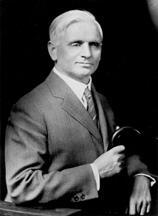
Here you will find contact information for Senator Thomas Pryor Gore, including email address, phone number, and mailing address.
| Name | Thomas Pryor Gore |
| Position | Senator |
| State | Oklahoma |
| Party | Democratic |
| Status | Former Representative |
| Term Start | December 2, 1907 |
| Term End | January 3, 1937 |
| Terms Served | 4 |
| Born | December 10, 1870 |
| Gender | Male |
| Bioguide ID | G000323 |
About Senator Thomas Pryor Gore
Thomas Pryor Gore (December 10, 1870 – March 16, 1949) was an American politician who served as one of the first two United States senators from Oklahoma, holding office from 1907 to 1921 and again from 1931 to 1937. A member of the Democratic Party, he was a prominent figure in the progressive wing of his party and an outspoken pacifist whose anti-war beliefs brought him into conflict with Democratic presidents Woodrow Wilson and Franklin D. Roosevelt. Blind from childhood, Gore built a notable career as a lawyer, orator, and legislator, and became a central figure in Oklahoma and national politics during a significant period in American history. He was the maternal grandfather of the author Gore Vidal.
Gore was born on December 10, 1870, near Embry in Webster County, Mississippi, the son of Caroline Elizabeth (née Wingo) and Thomas Madison Gore. The Gore family was one of the nineteen original families who owned farmland in the area that later became the District of Columbia. Of Anglo-Irish origin from County Donegal, the Gores arrived in North America at the end of the seventeenth century and tended to intermarry with other Anglo-Irish families, particularly in Virginia. When the District of Columbia was established in 1790, families dispossessed to make way for the capital, including the Gores, received substantial compensation; many who remained became wealthy by selling their land in lots or developing homes and hotels. The branch of the family from which Thomas Pryor Gore descended moved west to Mississippi. His family later settled in Walthall, the county seat, after his father was elected chancery clerk of Sumner (later Webster) County.
Gore lost his eyesight as a child through two separate accidents, but he did not abandon his ambition to enter public life and become a senator. Despite his blindness, he excelled in school and developed a marked talent for debate and oratory. He taught school briefly after graduation and, in 1882, served as a page in the Mississippi Senate, gaining early exposure to legislative procedure. In 1891 he moved to Lebanon, Tennessee, to study law, and in 1892 he received a law degree from Cumberland University Law School. He was admitted to the Mississippi bar and joined his father’s law firm in Mississippi, beginning a legal career that would run parallel to his growing political involvement.
Gore’s family were prominent members of the Southern Farmers’ Alliance, and by 1888 the young Gore was already addressing Alliance meetings. The Alliance nominated him for the Mississippi state legislature, but he was compelled to withdraw because he was still a minor. Instead, he entered national politics as a presidential elector for the Populist Party in 1892, an experience that enhanced his reputation as an orator. In 1894 the Populist Party of Navarro County, Texas, invited him to Corsicana to assist in local campaigns; he and his brother Ellis moved there in December 1894 and opened a law office. Gore returned to Mississippi to run unsuccessfully for the state legislature in 1895. Remaining aligned with the Populists, he ran as the Populist candidate for Texas’s 6th Congressional District in 1898, but was defeated as the party declined. He served as a delegate to the Populist convention that year. In 1899, just before moving to Oklahoma Territory, he formally joined the Democratic Party and campaigned vigorously from Utah to New York for William Jennings Bryan, the Democratic presidential nominee in 1900.
On December 27, 1900, Gore married Nina Belle Kay (1877–1963), the daughter of a Texas plantation owner. She was often described as his “constant companion” and his “eyes,” assisting him in both his private and public life. The couple moved to Lawton in Oklahoma Territory in June 1901, where Gore established a law practice. In 1902 he entered territorial politics and was elected to the Oklahoma Territorial Senate. He declined an opportunity to run as a territorial representative to the U.S. Congress, but became an adviser to the Oklahoma Constitutional Convention of 1907. That same year, upon Oklahoma’s admission to the Union, he was elected to the United States Senate as one of the new state’s first two senators. He was reelected in 1908 and 1914, serving continuously from November 16, 1907, to March 4, 1921.
During his initial Senate tenure, Gore emerged as a progressive Democrat who supported many of Woodrow Wilson’s domestic reforms and worked cooperatively with progressive Republicans such as Robert M. La Follette. His blindness did not prevent him from being an active legislator, though it occasionally posed procedural challenges; La Follette later recounted an episode in which a filibuster failed because Gore, unaware that his relief speaker had left the chamber, did not continue speaking. Some colleagues attempted to exploit his inability to read documents by tricking him into signing measures contrary to his party’s interests, but Gore became known for turning the tables and inducing such colleagues to sign documents they had not intended to endorse. These stories, widely reported in the press, earned him the nickname “The Blind Cowboy.” In 1910 he publicly accused lobbyist Jake L. Hamon Sr. of attempting to bribe him. In 1914 he was accused by a woman of having “taken advantage” of her in a hotel room; when prosecutors declined to bring criminal charges, she filed a civil suit, which Gore won when the jury found in his favor.
Gore was a staunch pacifist and anti-interventionist, often labeled an isolationist, who campaigned against militarism and denounced what he called the “malefactors of wealth” whom he believed were pushing the United States toward war. He was an early and strong supporter of Woodrow Wilson, and was widely acknowledged as the first major elected official to endorse Wilson’s presidential candidacy in 1911. Gore and William H. “Alfalfa Bill” Murray co-led Wilson’s Oklahoma campaign in 1912. However, as World War I unfolded, Gore broke with the Wilson administration over foreign policy. In the early stages of the war he co-authored the Gore–McLemore Resolutions, urging Americans not to travel on belligerent nations’ merchant vessels, which were under threat from German U-boats, arguing that American deaths on such ships endangered U.S. neutrality. He voted against most World War I–related legislation advanced by the Wilson administration, opposed American entry into the war, and fought conscription, warning that a draft would create “an army of conscripted slackers” and asking why American boys should be “branded” as conscripts rather than allowed to earn “the glory of an American volunteer.” He was also one of the earliest and most vigorous advocates of a constitutional amendment requiring a popular referendum before any congressional declaration of war. After the war he opposed Wilson’s plan for U.S. participation in the League of Nations. These positions alienated many Oklahoma voters, who largely favored aiding the Allies, and weakened his relationship with Wilson, contributing to his defeat in the 1920 Democratic primary by Representative Scott Ferris. Ferris subsequently lost the general election to Republican John W. Harreld. Leaving the Senate in March 1921, Gore returned to full-time law practice in Washington, D.C.
Gore remained active in Democratic politics and Oklahoma affairs during the 1920s and staged a political comeback at the onset of the Great Depression. He was elected again to the United States Senate in 1930 and took office on March 4, 1931, serving until January 3, 1937. Initially he supported Franklin D. Roosevelt’s New Deal, but he soon clashed with the administration over relief and spending programs. In 1935 he helped lead opposition to funding the Works Progress Administration (WPA). In a widely quoted written response to constituents who favored the WPA, he declared that their attitude “shows how the dole spoils the soul. Your telegram intimates that your votes are for sale. Much as I value votes I am not in the market. I cannot consent to buy votes with the people’s money. I owe a debt to the taxpayer as well as to the unemployed.” After dictating this letter, the blind senator was led to the Senate floor, where he cast the lone vote against the WPA appropriation. His opposition to key New Deal measures contributed to his overwhelming defeat in the 1936 Democratic primary, in which he finished fourth with about 18 percent of the vote, behind Representative Joshua B. Lee, Governor E. W. Marland, and attorney Gomer Smith; Lee ultimately won the nomination in a runoff against Marland. Gore’s Senate service thus extended over four terms, from 1907 to 1937, encompassing some of the most consequential decades in modern American history.
After leaving the Senate in January 1937, Gore retired from elective office but continued to practice law in Washington, D.C., maintaining his interest in public affairs. On domestic policy he had long been a supporter of farmers and Native Americans, reflecting both his Populist roots and his Oklahoma constituency. He was inducted into the Oklahoma Hall of Fame in 1932, and his name was later commemorated in Oklahoma by the naming of Gore Boulevard, a major thoroughfare in Lawton, and the town of Gore in eastern Oklahoma. Through his daughter Nina S. Gore (1903–1978), who married aviator and businessman Eugene Luther Vidal in 1922 (divorcing in 1935) and later married Hugh D. Auchincloss in 1935 (divorcing in 1941), he was the grandfather of writer Gore Vidal (1925–2012), Nina Gore Auchincloss (born 1937), and Thomas Gore Auchincloss (born 1939). His son, Thomas Notley Gore (1910–1964), continued the family line. Gore Vidal later described his grandfather as an atheist with a pronounced misanthropic streak, quoting him as saying, “If there was any race other than the human race, I’d go join it,” and observing that although he was a genuine populist, “he did not like people very much” and “always said no to anyone who wanted government aid.”
Thomas Pryor Gore died on March 16, 1949, in Washington, D.C. He was initially buried at Rosehill Cemetery in Oklahoma City, Oklahoma, but on July 19, 1949, his remains were reinterred in Fairlawn Cemetery, also in Oklahoma City. According to his grandson Gore Vidal, he was “the first and, I believe, last senator from an oil state to die without a fortune,” a reflection of his independence from the oil wealth that shaped much of Oklahoma’s political landscape.