Representative Thomas Walter Harrison
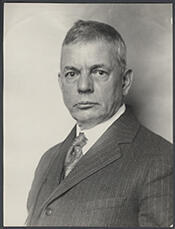
Here you will find contact information for Representative Thomas Walter Harrison, including email address, phone number, and mailing address.
| Name | Thomas Walter Harrison |
| Position | Representative |
| State | Virginia |
| District | 7 |
| Party | Democratic |
| Status | Former Representative |
| Term Start | December 6, 1915 |
| Term End | March 3, 1929 |
| Terms Served | 7 |
| Born | August 5, 1856 |
| Gender | Male |
| Bioguide ID | H000277 |
About Representative Thomas Walter Harrison
Thomas Walter Harrison (August 5, 1856 – May 9, 1935) was a Virginia lawyer, judge, and Democratic politician who served in the Senate of Virginia and in the United States House of Representatives. He represented Virginia in the U.S. Congress from 1915 to 1929, serving seven terms in the House of Representatives during a significant period in American history, and was noted for his long legal career, his judicial service, and his role in state and national politics.
Harrison was born in Leesburg, Loudoun County, Virginia, to attorney Matthew Harrison (1822–1875) and his wife, the former Anne Harriott of Washington, D.C. He was descended from the First Families of Virginia. His grandfather, Burr William Harrison, was a lawyer who represented Loudoun County in the Virginia House of Delegates from 1840 to 1847. His great-grandfather, Richard Henry Lee, served in the Continental Congress, including as its president, and in the Virginia House of Burgesses, and was a delegate to the Constitutional Convention of 1787. Harrison had two sisters, an older sister Sallie and a younger sister Harriet. He attended local academies in Leesburg, Middleburg, and Hanover. Although his father owned relatively little property before the American Civil War, the family’s holdings increased by 1870 despite wartime devastation, enabling Harrison to pursue higher education.
Harrison studied at the University of Virginia in Charlottesville, attending both the academic and law departments, and graduated in 1879. That same year he was admitted to the bar and began the practice of law in Winchester, Virginia, which would remain his professional and political base for the rest of his life. In addition to his legal work, Harrison entered the newspaper business; in 1883 he and fellow Democratic lawyer Richard Evelyn Byrd Sr. purchased the Winchester Times from Robert W. Hunter. Under their ownership the paper became an influential local voice, and by 1899 the Times had become the weekly edition of Byrd’s Winchester Evening Star. The weekly’s last issue was published on March 29, 1905. Harrison also developed a reputation as a legal scholar, which later culminated in his multi-volume treatise, Harrison on Wills and Administration for Virginia and West Virginia, published by the Michie Company in Charlottesville in 1927.
Harrison’s political career began in state government. Voters in Virginia’s 12th Senatorial District, composed of Clarke, Frederick, and Warren counties, elected him to the Senate of Virginia in 1887, succeeding Berryville attorney Marshall McCormick. He was re-elected once and served in the state senate from 1887 to 1895. In 1895 the General Assembly substantially changed the district boundaries, creating a new district of Frederick and Shenandoah counties, represented by J. G. Cune, and another district of Clarke, Page, and Warren counties, represented by E. H. Jackson. Harrison did not seek re-election to the reconfigured senate seat because the Virginia General Assembly elected him circuit judge for what was then the 17th Judicial District. He served as circuit judge from 1895 until September 1, 1916. During this period he also participated in the Virginia Constitutional Convention of 1901–1902, representing Winchester and Frederick County, where he took part in revising the state’s fundamental law.
Harrison entered national politics when he sought election to the U.S. House of Representatives from Virginia’s 7th Congressional District following the resignation of Representative James Hay. A Democrat, he was first elected to the Sixty-fourth Congress in a special election on November 7, 1916, receiving 61.29 percent of the vote and defeating Republican John Paul and Independent E. C. Garrison; he was simultaneously elected unopposed in the general election. He thus began his congressional service on November 7, 1916. He was re-elected to the Sixty-fifth Congress in 1918 with 88.99 percent of the vote, again defeating Republican John Paul, and was re-elected in 1920 over Paul for the Sixty-sixth Congress. Harrison’s service in Congress occurred during a transformative era that encompassed the final years of World War I and the beginning of the interwar period, and he participated in the legislative process and represented the interests of his Virginia constituents throughout these years.
Harrison’s tenure in the Sixty-seventh Congress was marked by an electoral contest. Although he was initially declared the winner of the 1920 election and took his seat on March 4, 1921, Republican John Paul Jr. contested the results. After a prolonged challenge, the House awarded the seat to Paul, and Harrison’s service in that Congress ended on December 15, 1922. Harrison returned to the House after defeating Paul in the subsequent election and served in the Sixty-eighth Congress. When Paul later became United States Attorney for the Western District of Virginia, Harrison faced other Republican opponents and secured re-election to the Sixty-ninth and Seventieth Congresses, serving from March 4, 1923, to March 3, 1929. In these later campaigns he was re-elected in 1922 with 62.29 percent of the vote over John Paul, in 1924 with 59.15 percent of the vote over Republican J. H. Ruebush and fellow Democrat Dabney C. Harrison, and in 1926 with 64.92 percent of the vote over Republican Walter R. Talbot and Independent Dabney C. Harrison. In 1928, however, he lost his bid for re-election to the Seventy-first Congress to Republican businessman Jacob A. Garber, ending his seven-term congressional career.
In his personal life, Harrison married twice. His first marriage was to Julia Knight. They had three daughters—Katherine Young Harrison (1884–1973), Harriett Harrison (1886–1892), and Julia K. Harrison (1888–1889)—and a son, Burr Powell Harrison (1904–1973). Burr Powell Harrison followed his father into public service, later serving in the Virginia Senate and in the U.S. Congress. After the death of his first wife, Harrison married Nellie Cover. Throughout his years in public office, Harrison maintained close ties to Winchester and the surrounding region, reflecting the local base from which his legal and political career had grown.
After leaving Congress in 1929, Harrison resumed the practice of law in Winchester, Virginia, where he continued to work until his death. He remained a respected figure in the legal community, in part due to his judicial service and his widely used legal treatise on wills and administration. Thomas Walter Harrison died in Winchester on May 9, 1935. He was interred in Mount Hebron Cemetery in Winchester, closing a life that spanned from the post–Civil War era through the early twentieth century and that combined legal scholarship, judicial duty, and extensive legislative service at both the state and national levels.