Representative Thomas Hedge
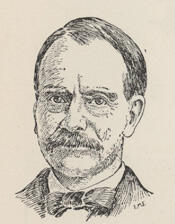
Here you will find contact information for Representative Thomas Hedge, including email address, phone number, and mailing address.
| Name | Thomas Hedge |
| Position | Representative |
| State | Iowa |
| District | 1 |
| Party | Republican |
| Status | Former Representative |
| Term Start | December 4, 1899 |
| Term End | March 3, 1907 |
| Terms Served | 4 |
| Born | June 24, 1844 |
| Gender | Male |
| Bioguide ID | H000441 |
About Representative Thomas Hedge
Thomas Hedge (June 24, 1844 – November 28, 1920) was a four-term Republican U.S. Representative from Iowa’s 1st congressional district, in southeastern Iowa. He served as a Representative from Iowa in the United States Congress from 1899 to 1907, during which time he contributed to the legislative process and participated actively in the democratic governance of the nation. A member of the Republican Party, he represented the interests of his constituents in a period marked by significant political, economic, and social change in the United States.
Born on June 24, 1844, Hedge came of age in the mid-nineteenth century, a time when the United States was rapidly expanding and sectional tensions were intensifying. Although detailed records of his early childhood and family background are limited in the available sources, his later public career reflects the trajectory of a man shaped by the Civil War era and the subsequent transformation of American political life. Growing up in this environment likely influenced his later alignment with the Republican Party, which emerged as the dominant political force in many northern and Midwestern states following the war.
Hedge’s formal education and early professional formation are not extensively documented in the surviving summaries, but his eventual rise to national office indicates that he attained the legal, commercial, or civic experience typical of congressional representatives of his generation. Men who entered Congress in the late nineteenth century from Iowa’s southeastern counties frequently did so after establishing themselves in law, business, or local public service, and Hedge’s later responsibilities in Washington suggest a comparable grounding in public affairs and community leadership within Iowa.
Hedge’s principal public career was defined by his service in the United States House of Representatives. Elected as a Republican from Iowa’s 1st congressional district, he entered Congress at the opening of the Fifty-sixth Congress in 1899. He was subsequently re-elected, serving four consecutive terms that extended through the Fifty-seventh, Fifty-eighth, and Fifty-ninth Congresses, concluding his service in 1907. During these eight years, he took part in debates and votes on issues that confronted the nation at the turn of the twentieth century, including questions of economic policy, regulation of commerce, and the evolving role of the federal government in American life. His tenure coincided with the presidencies of William McKinley and Theodore Roosevelt, a period in which the Republican Party held national power and pursued policies of industrial expansion and, increasingly, regulatory reform.
As a member of the House of Representatives, Hedge participated in the legislative process at a time when the United States was emerging as a global power and grappling with the consequences of rapid industrialization. Representing southeastern Iowa, he was responsible for advancing the interests of a district whose economy was rooted in agriculture, trade, and growing urban centers along the Mississippi River. Within this context, his work in Congress involved balancing local concerns with national priorities, a central task for representatives from the Midwest during an era of expanding markets, transportation networks, and federal oversight.
After leaving Congress in 1907, Hedge returned to private life. While specific details of his later professional activities are not extensively recorded in the brief public-domain accounts, former members of Congress of his era commonly resumed careers in law, business, or civic leadership in their home states. Hedge’s withdrawal from national office marked the close of his direct participation in federal legislative affairs, but his years in Washington placed him among the cohort of Republican lawmakers who helped shape policy in the early Progressive Era.
Thomas Hedge died on November 28, 1920. His life spanned from the antebellum period through the Civil War, Reconstruction, the Gilded Age, and into the aftermath of World War I. Remembered as a four-term Republican representative from Iowa’s 1st congressional district, he served his constituents in southeastern Iowa during a significant period in American history and contributed to the work of the United States Congress between 1899 and 1907.