Senator Thomas Andrews Hendricks
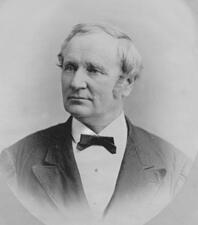
Here you will find contact information for Senator Thomas Andrews Hendricks, including email address, phone number, and mailing address.
| Name | Thomas Andrews Hendricks |
| Position | Senator |
| State | Indiana |
| Party | Democratic |
| Status | Former Representative |
| Term Start | December 1, 1851 |
| Term End | March 3, 1869 |
| Terms Served | 3 |
| Born | September 7, 1819 |
| Gender | Male |
| Bioguide ID | H000493 |
About Senator Thomas Andrews Hendricks
Thomas Andrews Hendricks (September 7, 1819 – November 25, 1885) was an American politician and lawyer from Indiana who served as the 16th governor of Indiana from 1873 to 1877 and the 21st vice president of the United States from March 4, 1885, until his death later that year. A lifelong Democrat and a noted fiscal conservative, he represented Indiana in both houses of Congress, serving in the U.S. House of Representatives from 1851 to 1855 and in the U.S. Senate from 1863 to 1869. Over a public career that spanned four decades, he also served in the Indiana General Assembly, as commissioner of the United States General Land Office, and as a national party standard-bearer in three vice-presidential campaigns.
Hendricks was born in Muskingum County, Ohio, on September 7, 1819. In 1820 his parents moved west to Indiana, and by 1822 the family had settled in Shelby County, where he was raised. He attended local schools and later enrolled at Hanover College in southern Indiana, graduating with the class of 1841. After college he read law in Shelbyville, Indiana, and in Chambersburg, Pennsylvania, completing the traditional legal apprenticeship of the period. He was admitted to the Indiana bar in 1843 and began his law practice in Shelbyville. Hendricks married Eliza C. Morgan, and the couple established themselves among the rising professional and political class of mid‑nineteenth‑century Indiana.
Hendricks’s public career began at the state level. He represented Shelby County in the Indiana General Assembly from 1848 to 1850, gaining early experience in legislative procedure and party politics. In 1850–1851 he served as a delegate to the Indiana constitutional convention, which drafted the state’s second constitution and reshaped its governmental framework. His work at the convention increased his visibility within the Democratic Party and helped launch his national career. In 1860 he moved from Shelbyville to Indianapolis, the state capital, where he would thereafter base both his legal and political activities.
In national politics, Hendricks first entered Congress as a Democrat in the U.S. House of Representatives, serving from 1851 to 1855. During this period he contributed to the legislative process on behalf of his Indiana constituents at a time of growing sectional tension in the United States. After leaving the House, he was appointed commissioner of the United States General Land Office, a position he held from 1855 to 1859, administering federal land policy during a period of rapid western expansion. In 1862 he established a private law partnership in Indianapolis with Oscar B. Hord; the firm evolved into Baker & Daniels, later one of Indiana’s leading law firms. Hendricks was elected to the U.S. Senate as a Democrat and served from 1863 to 1869, a tenure that spanned the American Civil War and the early Reconstruction era. As a senator he defended Democratic positions, opposed Radical Republican policies, and voted against the Thirteenth, Fourteenth, and Fifteenth Amendments to the U.S. Constitution. He also opposed the attempt to remove President Andrew Johnson from office following Johnson’s impeachment in the House of Representatives. His views, including explicitly racist arguments about African Americans’ capacity for advancement and their historical contributions, were sharply criticized by political opponents and reflected the racial attitudes that underpinned his opposition to the Reconstruction amendments. When Republicans regained a majority in the Indiana General Assembly in 1868, the same year his Senate term expired, Hendricks lost his bid for reelection and was succeeded by Republican Daniel D. Pratt, who resigned the U.S. House seat to which he had just been elected in order to accept the Senate seat.
Hendricks remained a central figure in Indiana Democratic politics after leaving the Senate. He ran three times for governor of Indiana, finally winning on his third attempt in 1872. In that election he defeated General Thomas M. Brown by a narrow margin of 1,148 votes and took office as the state’s 16th governor in January 1873. His administration coincided with a strong Republican majority in the Indiana General Assembly and the national financial crisis triggered by the Panic of 1873, followed by a prolonged economic depression. These conditions limited his legislative program, but he became known as a careful steward of state finances and a prominent spokesman for Democratic principles. One of his lasting legacies as governor was initiating discussions and planning to fund construction of the present-day Indiana Statehouse; although the building was completed after he left office, a memorial statue of Hendricks was later installed on the southeast corner of its grounds in 1890. During this period he continued his legal practice and resided in the Bates-Hendricks House in Indianapolis from 1865 to 1872, a property later listed on the National Register of Historic Places.
On the national stage, Hendricks emerged as a leading Democratic candidate for the vice presidency. In the disputed presidential election of 1876 he ran as the Democratic nominee for vice president on the ticket headed by New York governor Samuel J. Tilden. Hendricks did not attend the Democratic National Convention in St. Louis, but the party pursued a strategy of carrying the “Solid South” along with New York and Indiana, and the Indiana delegation successfully urged his unanimous nomination for the second spot on the ticket. Tilden and Hendricks won a majority of the popular vote, but the outcome turned on contested electoral votes in several states. A fifteen-member Electoral Commission, composed of five members each from the House, Senate, and U.S. Supreme Court, decided the dispute. In an 8–7 partisan vote, the commission awarded all twenty contested electoral votes from South Carolina, Louisiana, Florida, and Oregon to the Republican candidates, Rutherford B. Hayes and William A. Wheeler, giving them victory in the Electoral College by a single vote. Tilden and Hendricks, though deeply disappointed, accepted the decision. The Democrats nominated Hendricks again for vice president in 1880, but he declined the nomination for health reasons. That same year, while visiting Hot Springs, Arkansas, he suffered a bout of paralysis; although he returned to public life, his health remained fragile, and within two years he was reportedly no longer able to stand for extended periods, a fact known only to his family and physicians.
Despite his declining health, Hendricks remained influential in party councils. As chairman of the Indiana delegation, he attended the Democratic National Convention in Chicago in 1884, where he was again nominated unanimously as the party’s vice-presidential candidate, this time on a ticket headed by New York governor Grover Cleveland. The Democratic strategy again emphasized winning New York and Indiana along with the Solid South. Cleveland and Hendricks narrowly carried New York, Indiana, and two additional Northern states, together with the Southern states, and won the election. Hendricks thus became the 21st vice president of the United States, taking office on March 4, 1885. His tenure was brief—about eight months—but his election underscored Indiana’s pivotal role in national politics during this era. He was one of four vice presidents from Indiana elected between 1868 and 1920, along with Schuyler Colfax, Charles W. Fairbanks, and Thomas R. Marshall; several other Indiana politicians, including George Washington Julian, Joseph Lane, Samuel Williams, John W. Kern, and William Hayden English, were unsuccessful vice-presidential nominees in the same period.
Hendricks died unexpectedly while in office. On November 24, 1885, during a trip home to Indianapolis, he complained of feeling ill and retired early. He died in his sleep the following day, November 25, 1885, at the age of 66, reportedly of a heart attack; his last words were said to have been “Free at last!” His funeral at Saint Paul’s Episcopal Cathedral in Indianapolis drew hundreds of dignitaries, including President Grover Cleveland, and thousands of citizens lined the streets to view the 1.2‑mile‑long funeral cortege as it proceeded to Crown Hill Cemetery, where he was interred. Hendricks was widely regarded as an honest public servant, a powerful orator, and a man of firm convictions who maintained cordial relations with many political opponents even amid intense partisan conflict. His widow, Eliza Hendricks, later funded construction of the Thomas A. Hendricks Library (Hendricks Hall) at Hanover College in 1903 as a memorial to her husband; the building, overlooking the Ohio River near Madison, Indiana, was added to the National Register of Historic Places in 1982.
Hendricks’s memory has been preserved in numerous public honors. The Thomas A. Hendricks Monument on the Indiana Statehouse grounds, at 11 feet in height, is the tallest bronze statue at the capitol. The Bates-Hendricks House in Indianapolis, where he lived during part of his career, is listed on the National Register of Historic Places. The community of Hendricks in Minnesota and the adjacent lake, as well as the town of Hendricks, West Virginia, were named in his honor. Unusually for a vice president who never became president, his engraved portrait appeared on a $10 “tombstone” silver certificate, so called for the tombstone-shaped border around his likeness, making him the only non-presidential vice president to appear on U.S. paper currency.